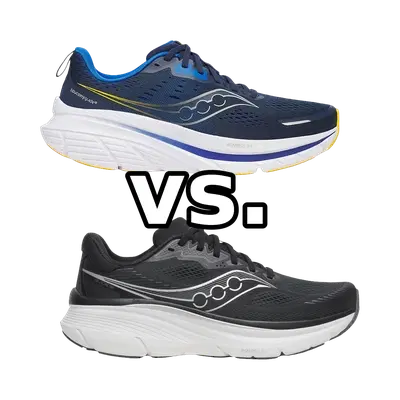
Saucony Guide 18 vs Asics GT-2000 14:
Which to Choose
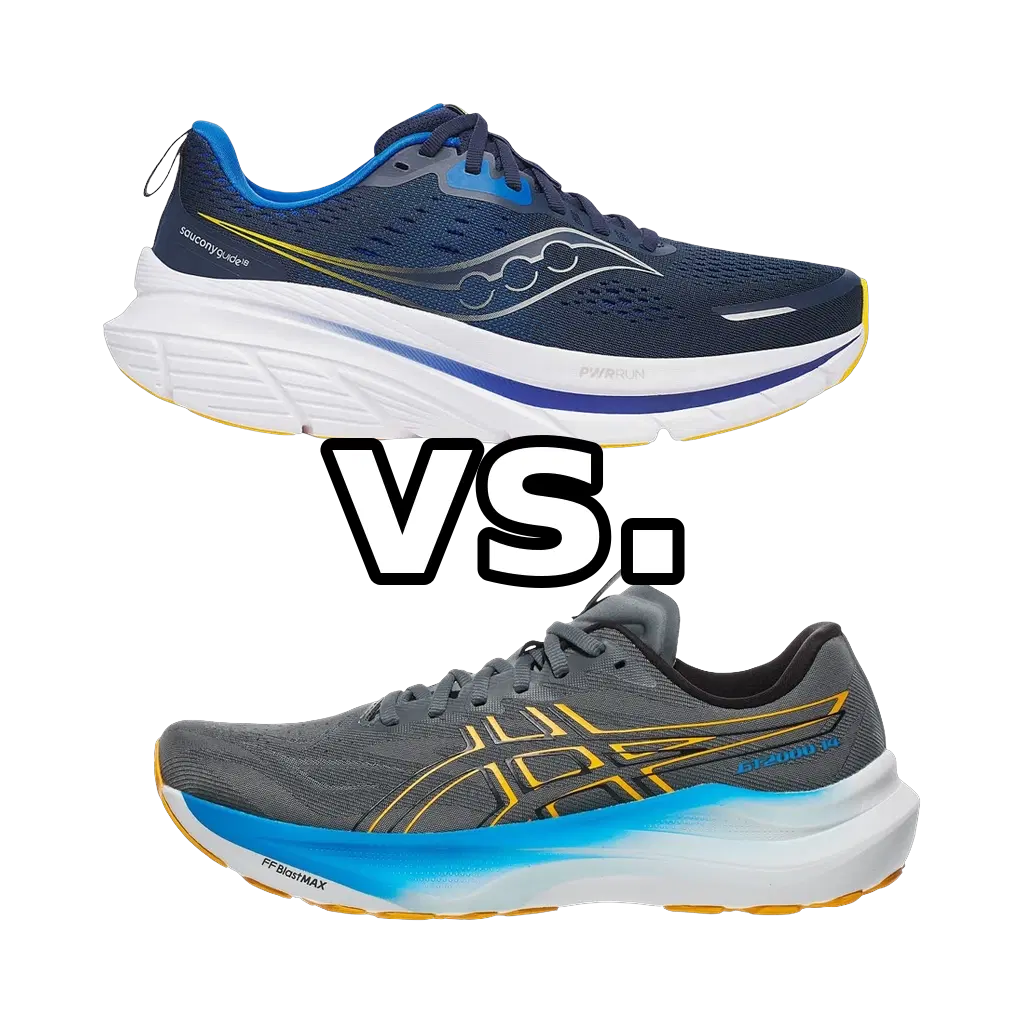
Verdict
These are genuinely close rivals doing the same job, so the choice is about feel and fit, not capability. Go Guide 18 for a lower-drop, rockered, smoother ride and a roomier, more breathable fit; go GT-2000 14 for a softer, slightly bouncier FF Blast Max feel, a higher 8 mm-drop heel, and more direct guidance — as long as your foot suits its narrower last. Try both on if you can; the upper fit will likely decide it faster than the specs will.
Pace
3 of 6
Cushioning
4 of 6
Responsiveness
3 of 6
Stability
5 of 6
Drop
6 mm
Support
Stability
Plate
None
Distances
10KHalfMarathon
Pace
3 of 6
Cushioning
4 of 6
Responsiveness
3 of 6
Stability
5 of 6
Drop
8 mm
Support
Stability
Plate
None
Distances
10KHalfMarathon
At a Glance
Saucony Guide 18Asics GT-2000 14
Who Should Choose Each Shoe
Choose
Saucony Guide 18
Choose the Saucony Guide 18 if you want the smoother, more rolling daily trainer and prefer a lower 6 mm drop that doesn't push you onto your heel. It's the better pick for runners with normal-to-wider feet or anyone who runs warm, thanks to its roomier, more breathable upper, and it rewards those who value a predictable, planted roll-through over underfoot bounce across half-marathon and marathon training.
Choose
Asics GT-2000 14
Choose the Asics GT-2000 14 if you like a slightly softer, livelier feel underfoot and are comfortable with a more traditional 8 mm drop and a higher heel for cushioned heel-strike landings. It's the stronger option for runners who want more direct, predictable medial guidance on long steady efforts — provided you have a narrower-to-medium foot and don't mind an upper that holds heat on warm runs.
Head-to-Head
Start with how close these two really are. Weight is effectively a wash — the Guide 18 comes in around 9.6 oz (roughly 272 g) in a men's sample and the GT-2000 14 at 269 g, a difference you will never feel on the run. Cushioning volume is also comparable: the Guide sits at a 35 mm heel / 29 mm forefoot stack, the GT-2000 at 37 mm / 28 mm. The most meaningful spec gap is drop — 6 mm on the Guide versus 8 mm on the GT-2000 — which, combined with that taller 37 mm heel, gives the Asics a slightly more pronounced heel-strike bias, while the Guide's lower, more even geometry feels a touch flatter and more forefoot-friendly. Where they genuinely diverge is ride character and the foam driving it. The Guide 18 runs on PWRRUN, a serviceable EVA-based foam, and leans on CenterPath geometry plus a rockered, sidewall-supported platform: the result is a controlled, rolling, planted ride that prioritizes smooth transitions over bounce. The GT-2000 14 uses the newer FF Blast Max, which reads as a bit softer and livelier underfoot while still staying composed and grounded — marginally more cushioned feel, but still honest rather than springy. Neither is built for speed; both top out around 5:15 min/km before the non-plated foam flattens out. Stability philosophy differs too: both ditch the old rigid medial post for a wide, geometry-based approach, but the GT-2000 delivers a slightly more direct, predictable guidance feel while the Guide's broad base keeps you centered in a softer, less overt way. Fit is the last real differentiator — the GT-2000 14 has a narrower toebox and a denser upper that runs warm on hot days, whereas the Guide 18 pairs a mildly tapered, slightly lower-volume toebox with a more breathable engineered mesh.
Similar Comparisons
Asics GT-2000 13 vs Asics GT-2000 14
Saucony Guide 18 vs New Balance Fresh Foam X Vongo v6
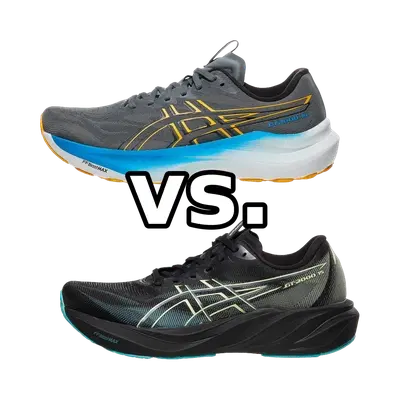
Asics GT-2000 14 vs Asics GT-2000 15
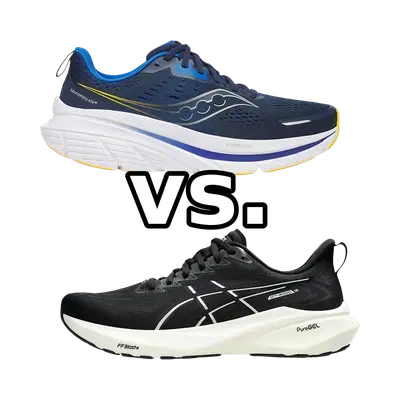
Saucony Guide 18 vs Asics GT-2000 13
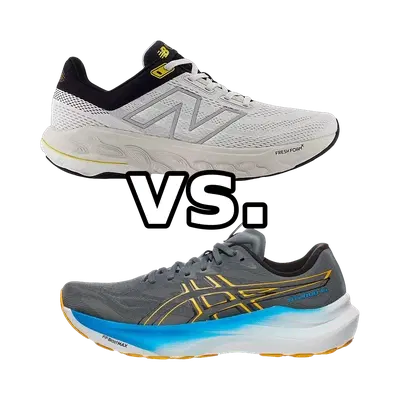
New Balance Fresh Foam X 860v14 vs Asics GT-2000 14
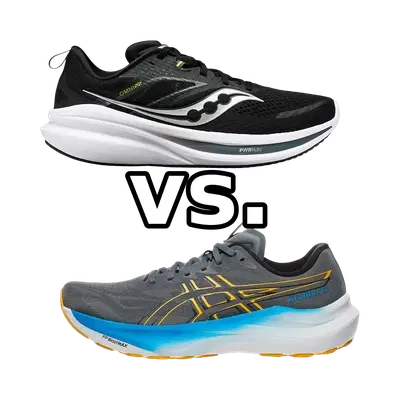
Saucony Omni 22 vs Asics GT-2000 14
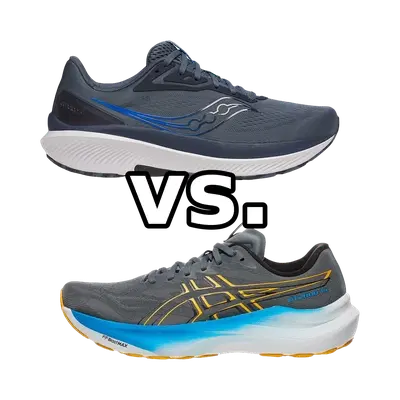
Saucony Echelon 10 vs Asics GT-2000 14
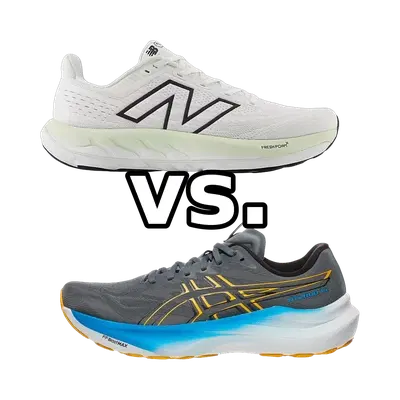
New Balance Fresh Foam X Vongo v6 vs Asics GT-2000 14
© 2026 longrunshoes.ai | All rights reserved.
Use of materials from this site is permitted only with proper attribution and a link to longrunshoes.ai.