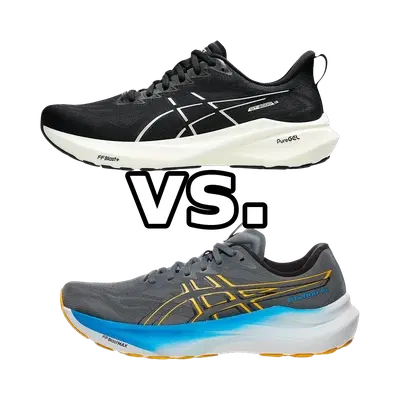
New Balance Fresh Foam X 860v14 vs Asics GT-2000 14:
Which to Choose
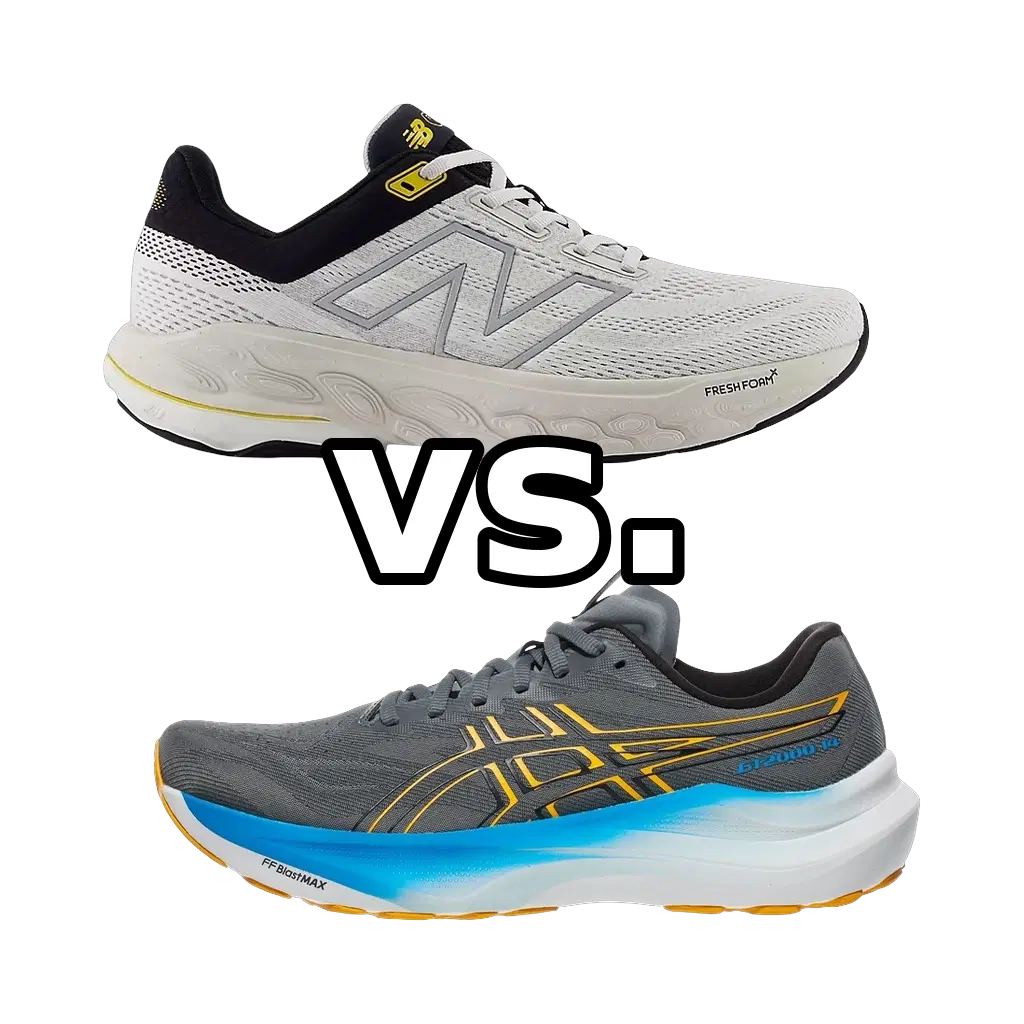
Verdict
This one comes down to feel, not capability, because both are excellent stability trainers for the same distances. Go with the GT-2000 14 for a softer, lighter, lower-drop ride built around easy, comfortable long miles, and the 860v14 for a firmer, more substantial, higher-drop platform that comes alive when you run with intent and offers a more accommodating fit.
Pace
3 of 6
Cushioning
4 of 6
Responsiveness
3 of 6
Stability
5 of 6
Drop
10 mm
Support
Stability
Plate
None
Distances
10KHalfMarathon
Pace
3 of 6
Cushioning
4 of 6
Responsiveness
3 of 6
Stability
5 of 6
Drop
8 mm
Support
Stability
Plate
None
Distances
10KHalfMarathon
At a Glance
New Balance Fresh Foam X 860v14Asics GT-2000 14
Who Should Choose Each Shoe
Choose
New Balance Fresh Foam X 860v14
Choose the Fresh Foam X 860v14 if you want a firm, grounded, no-nonsense stability trainer that rewards purposeful running — steady runs and honest half-marathon efforts more than slow shuffles. It's the better pick for heel strikers who prefer a traditional 10mm drop to ease the calves and Achilles, for runners who like a planted feel over softness, and for anyone who wants a roomier upper or occasionally nudges the pace toward tempo.
Choose
Asics GT-2000 14
Choose the GT-2000 14 if your priority is comfortable, cushioned support for long, easy, everyday miles and you'd rather have a slightly softer, smoother-rolling ride than a firm one. Its lower ~8mm drop, lighter weight, and forefoot rocker make it the friendlier cruiser for relaxed daily training, especially for runners who value predictable stability and a bit of toe-off spring — just be mindful if you have a wider foot or run in the heat.
Head-to-Head
These two are genuinely close relatives — same 4/6 cushioning, 3/6 responsiveness, and 5/6 stability scores, both plateless, both built on wide, guidance-focused platforms with medial support for pronators, and both happiest across 10K, half, and marathon distances. The differences are in feel and geometry. The biggest split is the foam: the 860v14 rides on Fresh Foam X, a firmer, EVA-class midsole that feels planted and grounded and returns energy only when you run with purpose — it can feel a touch dead at gentle recovery jogs. The GT-2000 14 uses the newer FF Blast Max, a softer, springier compound paired with a forefoot rocker and a small trampoline-style toe-off pod, giving a smoother, marginally livelier roll while still staying composed rather than bouncy. Geometry differs too: the 860v14 keeps a traditional ~10mm drop, which takes load off the calves and Achilles for heel strikers, while the GT-2000 14 sits at a lower ~8mm. Weight favors the Asics — it comes in around 269g in a men's US 9 versus roughly 298g for the 860v14 at the same size, so the New Balance feels the more substantial, heavy-duty of the pair. That extra mass tracks with the New Balance's slightly broader effective pace range: it's tuned for about 5:00–6:00 min/km and can be pushed toward 4:45, whereas the GT-2000 14 is dialed for a more relaxed 5:30–6:45 everyday tempo. One practical note on the Asics: its toebox runs narrow and the dense upper doesn't ventilate especially well on warm runs, where the 860v14's engineered mesh is the more forgiving fit.
Similar Comparisons
Asics GT-2000 14 vs Asics GT-2000 15
© 2026 longrunshoes.ai | All rights reserved.
Use of materials from this site is permitted only with proper attribution and a link to longrunshoes.ai.