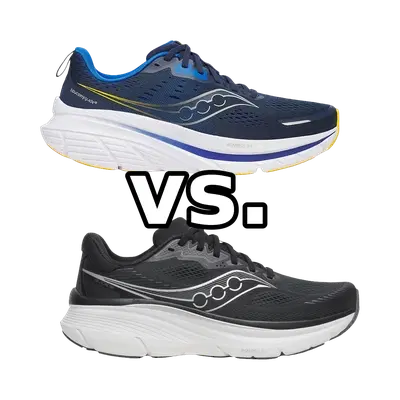
Saucony Guide 18 vs Saucony Cohesion 18:
Which to Choose
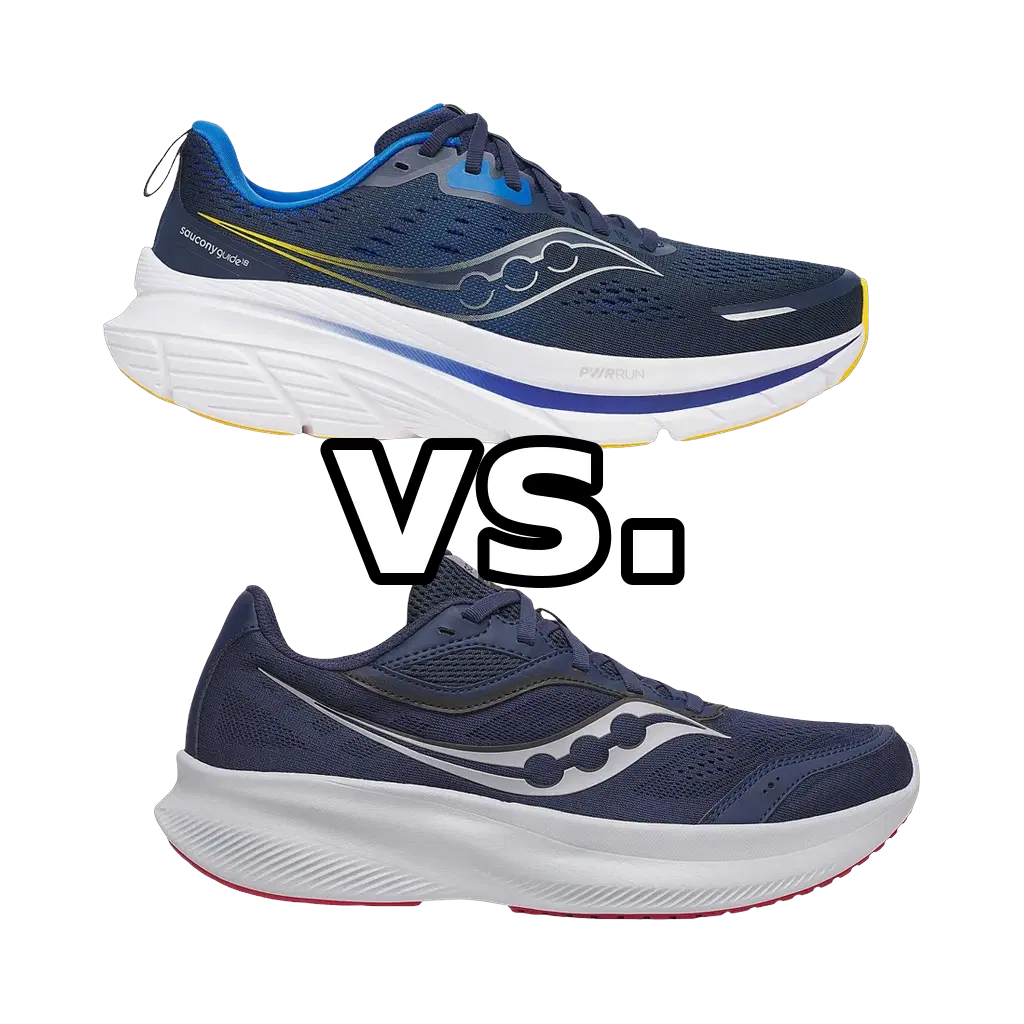
Verdict
It depends on where you are as a runner and whether you need support. If you're putting in real mileage, want stability and more cushioning, and value a shoe that stays composed when you pick it up, the Guide 18 is the clear choice. If you're starting out or just want a straightforward, durable trainer for easy jogs and short base runs without stability features, the Cohesion 18 does that job honestly — just don't expect it to flex up to serious training the way the Guide can.
Pace
3 of 6
Cushioning
4 of 6
Responsiveness
3 of 6
Stability
5 of 6
Drop
6 mm
Support
Stability
Plate
None
Distances
10KHalfMarathon
Pace
2 of 6
Cushioning
2 of 6
Responsiveness
2 of 6
Stability
3 of 6
Drop
8 mm
Support
Neutral
Plate
None
Distances
10KHalf
At a Glance
Saucony Guide 18Saucony Cohesion 18
Who Should Choose Each Shoe
Choose
Saucony Guide 18
Choose the Guide 18 if you're training with purpose — regularly running 10Ks, halfs, or a marathon — and want structured support underfoot, especially if you're a mild-to-moderate overpronator or just like feeling centered and planted when you're tired late in a long run. It's the better pick for higher weekly mileage and for anyone who wants a single shoe that can handle steady, moderate-effort days as well as easy ones. Runners coming from other guidance-geometry stability trainers will find it familiar and reassuring.
Choose
Saucony Cohesion 18
Choose the Cohesion 18 if you're newer to running, walk-to-run jogging, or building a base, and you want a dependable, no-surprises neutral shoe for easy, conversational miles rather than premium foam or pronation support. Its firm, high-drop platform and genuinely durable build suit heel strikers logging unhurried 10K-and-under outings who don't need the shoe to do anything clever. It's the simpler, lighter, more basic option — good enough to protect easy mileage, not meant to pamper or push the pace.
Head-to-Head
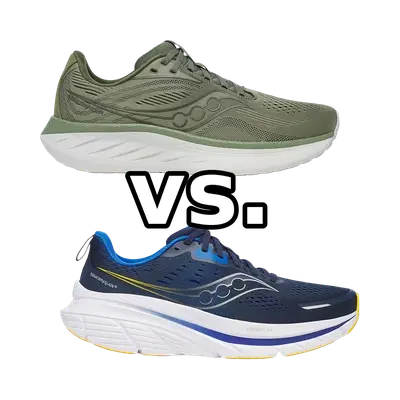
These two are closer to different tiers than to direct rivals. The Guide 18 runs on PWRRUN foam with CenterPath guidance geometry and a wide, sidewall-supported base, giving it genuine mild-overpronation support (5/6 stability) and above-average cushioning (4/6) that holds up across marathon-distance volume. The Cohesion 18 uses a simpler, firmer VERSARUN EVA midsole, a neutral setup with no added pronation control (3/6 stability) and distinctly lower, more protective-than-plush cushioning (2/6) — it's happiest on easy base mileage and tops out at a relaxed half. Neither shoe has a plate, and neither is built for speed, but the Guide is the more capable of the two when you lift the effort, comfortable toward roughly 5:15 min/km before its firm foam flattens out, whereas the Cohesion feels dead past about 6:30 min/km. Weight tracks that difference: in a men's size 9 the Guide comes in around 279g against roughly 244g for the lighter, simpler Cohesion. The drops are where they diverge most in feel — the Guide's moderate 6mm offset encourages a smooth, centered roll-through, while the Cohesion's traditional 12mm offset sits high at the heel and favors heel strikers easing pressure off the calves. Both lean firm and planted rather than bouncy, and both back that up with durable rubber outsoles, so neither will surprise you underfoot; the Guide simply offers more structure, more foam, and a wider effective pace range, while the Cohesion offers a stripped-down, dependable platform and less to get in the way of simple easy runs.
© 2026 longrunshoes.ai | All rights reserved.
Use of materials from this site is permitted only with proper attribution and a link to longrunshoes.ai.