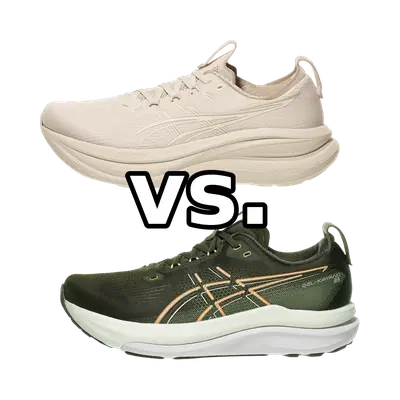
Asics Gel-Kayano 33 vs Hoka Arahi 8:
Which to Choose
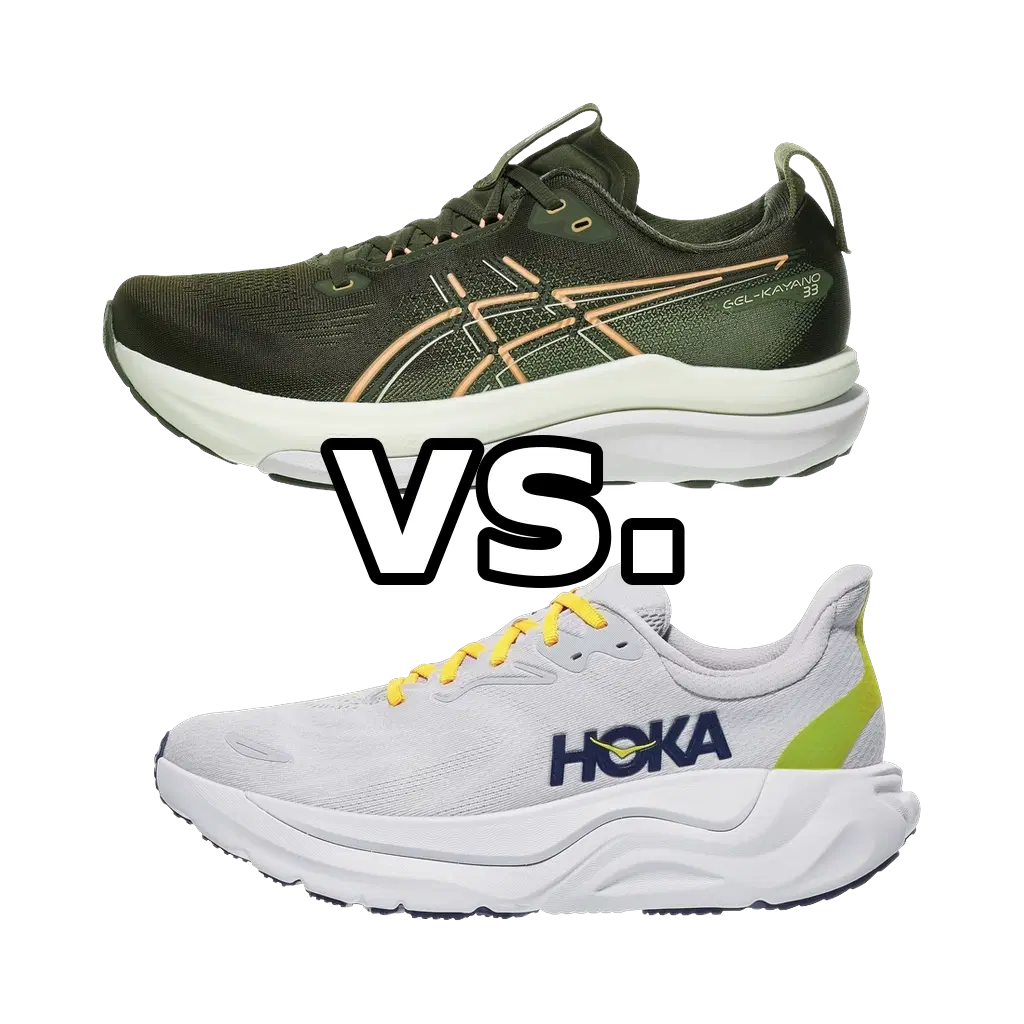
Verdict
These are close relatives, not opposites — both are excellent plateless max-stability trainers for the same distances and paces, so neither is "better" outright. Pick the Kayano 33 if you want plush cushioning and a slightly springier ride and will accept the extra ~39 g; pick the Arahi 8 if you want a lighter, firmer, higher-drop shoe that keeps heel strikers tracking straight. It comes down to feel: softer and more protective versus leaner and more planted.
Pace
3 of 6
Cushioning
5 of 6
Responsiveness
4 of 6
Stability
6 of 6
Drop
8 mm
Support
Stability
Plate
None
Distances
10KHalfMarathon
Pace
3 of 6
Cushioning
4 of 6
Responsiveness
3 of 6
Stability
6 of 6
Drop
11 mm
Support
Stability
Plate
None
Distances
10KHalfMarathon
At a Glance
Asics Gel-Kayano 33Hoka Arahi 8
Who Should Choose Each Shoe
Choose
Asics Gel-Kayano 33
Choose the Gel-Kayano 33 if you prioritize plush, protective cushioning and don't mind carrying a bit more weight for it — it's the softer, more forgiving landing of the two, ideal for higher-mileage weeks and long steady runs where comfort and joint protection matter most. It's a natural pick for mild-to-moderate overpronators who like a guided ride without an aggressive medial post, and for runners coming from a previous Kayano or another soft, structured trainer who want that same cushioned-but-controlled feel.
Choose
Hoka Arahi 8
Choose the Arahi 8 if you want the same maximum stability in a lighter, lower-fuss package and prefer a firmer, planted feel over plushness — at roughly 259 g it's the nimbler daily-mileage stability trainer. Its higher measured 11 mm drop and secure H-Frame make it especially well suited to committed heel strikers who want their foot tracked straight through long, controlled runs, and to overpronators chasing injury-free volume rather than a soft, cushioned ride.
Head-to-Head
Start with what they share: both are guided, controlled, no-plate stability shoes with a nearly identical 28 mm forefoot and near-matching heel stacks (37 mm on the Kayano, 39 mm on the Arahi), and both peg the same "optimal" window of roughly 5:00–6:00 min/km, running out of rebound past about 4:45. The differences are in cushioning, weight, and drop. The Kayano 33 is the plusher, softer ride — its dual-layer FF Blast Max over FF Blast+ (cushioning 5/6) gives a soft, mildly springy first impression over a firmer, controlled base, and it earns a slightly livelier 4/6 responsiveness. The Arahi 8 is firmer and more workmanlike: compression-molded CMEVA (cushioning 4/6, responsiveness 3/6) lands planted and predictable rather than soft, and it's a touch too firm for pure recovery jogs. The two also guide the foot differently — the Kayano leans on Asics' 4D Guidance and FluidSupport for adaptive, post-free correction, while the Arahi uses its firmer-EVA H-Frame to physically track the foot straight. Weight is the other real gap: the Arahi 8 is about 259 g in a men's US 9 versus roughly 298 g for the Kayano 33, so the Hoka feels noticeably lighter and less clunky on foot, while the Asics trades that ~39 g for a plusher, more protective platform. Finally, drop: the Kayano sits at an 8 mm offset (lab-measured closer to 9 mm), while the Arahi measures around 11 mm despite Hoka's 8 mm marketing figure — a higher, more heel-friendly ramp for pronounced heel strikers.
Similar Comparisons

Hoka Clifton 10 vs Hoka Arahi 8
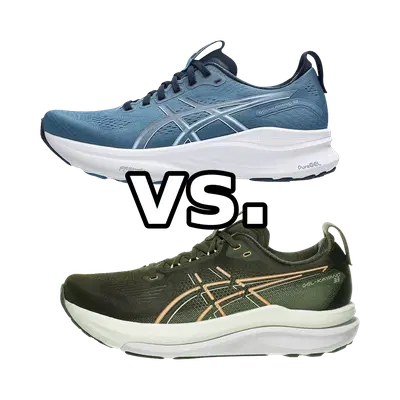
Asics Gel-Kayano 32 vs Asics Gel-Kayano 33

Hoka Arahi 7 vs Hoka Arahi 8
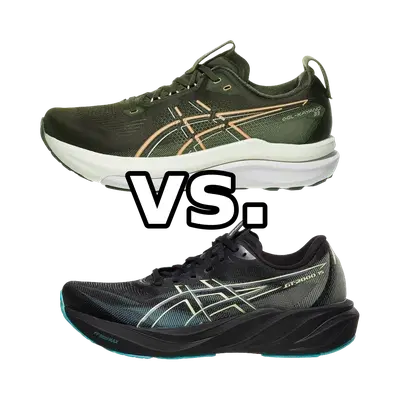
Asics Gel-Kayano 33 vs Asics GT-2000 15

Asics Gel-Kayano 32 vs Hoka Arahi 8
Asics Gel-Kayano 33 vs Brooks Glycerin GTS 23

Hoka Bondi 9 vs Hoka Arahi 8
Asics Gel-Kayano 33 vs Brooks Ariel GTS 26
© 2026 longrunshoes.ai | All rights reserved.
Use of materials from this site is permitted only with proper attribution and a link to longrunshoes.ai.