
Hoka Bondi 9 vs Hoka Arahi 8:
Which to Choose
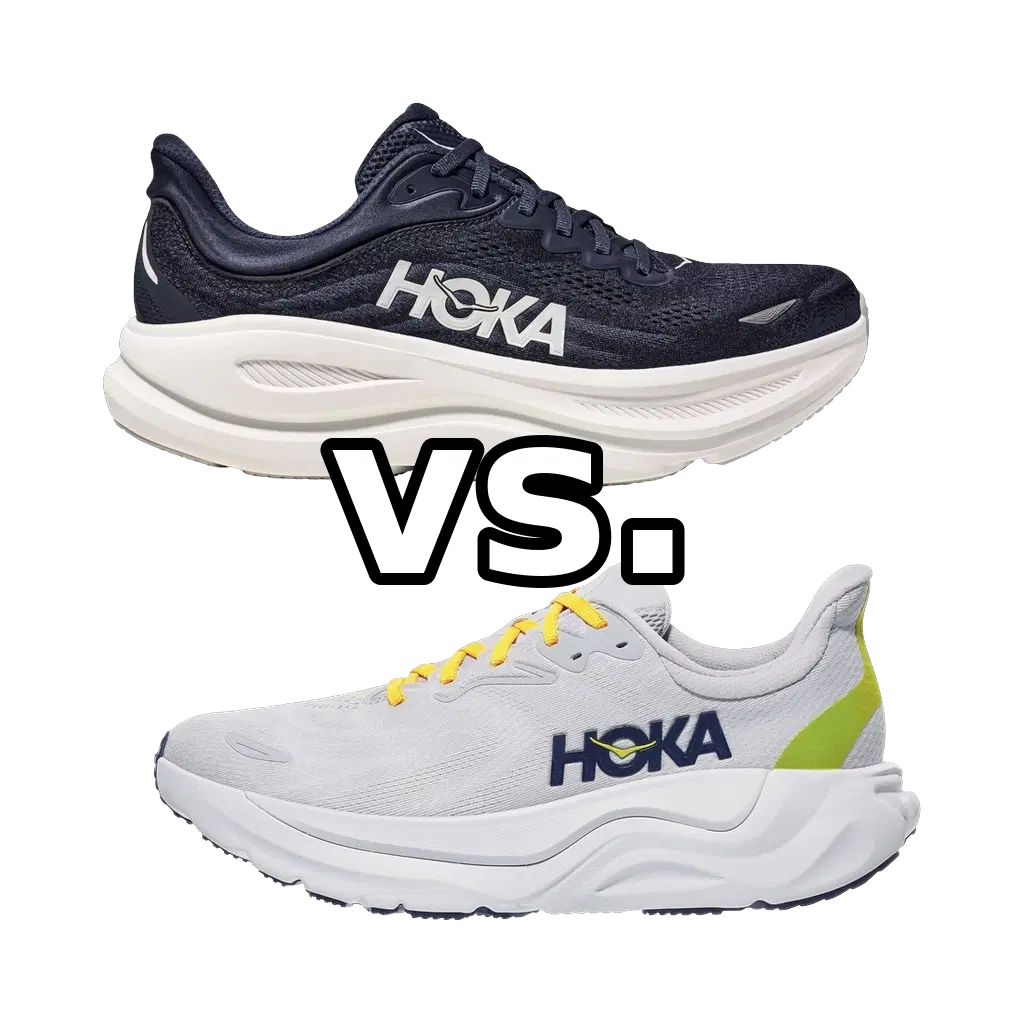
Verdict
It genuinely depends on your gait and what you want from the ride: go Bondi 9 for the plushest, most protective neutral cushioning on easy and recovery miles, and go Arahi 8 if you need real stability and pronation control, a firmer and slightly lighter feel, a higher drop, or a trainer that can carry you to the marathon. If you don't need the correction, the Bondi's softer landing wins; if you do — or you're a heel striker chasing controlled daily volume — the Arahi is the clearer choice.
Pace
2 of 6
Cushioning
6 of 6
Responsiveness
3 of 6
Stability
5 of 6
Drop
5 mm
Support
Stable Neutral
Plate
None
Distances
10KHalf
Pace
3 of 6
Cushioning
4 of 6
Responsiveness
3 of 6
Stability
6 of 6
Drop
11 mm
Support
Stability
Plate
None
Distances
10KHalfMarathon
At a Glance
Hoka Bondi 9Hoka Arahi 8
Who Should Choose Each Shoe
Choose
Hoka Bondi 9
Choose the Bondi 9 if your priority is maximum protection underfoot on easy days, recovery jogs, and long slow miles, and you don't need pronation correction. It's an excellent fit for beginners building volume, heavier runners, and neutral runners whose legs want a forgiving, deeply cushioned landing rather than snap — especially those who prefer a lower 5mm drop and a plush, planted ride over a firm one.
Choose
Hoka Arahi 8
Choose the Arahi 8 if you overpronate or simply want structured, guided support without a heavy, clunky shoe, and you log consistent daily and long-run mileage. Its firmer CMEVA and H-Frame keep the foot tracking straight through transitions, and the tall 11mm drop suits committed heel strikers — making it the better everyday stability trainer and the one to pick if your training reaches marathon distance.
Head-to-Head
These shoes share a family resemblance — soft-ish EVA-based foams, no carbon plate, a signature rockered geometry, and a medium (3/6) rebound that rewards steady aerobic running over speed — but the details pull them apart. The Bondi 9 is the more cushioned shoe, with a 43mm heel / 38mm forefoot stack of supercritical EVA that lands plush and protective (6/6 cushioning) versus the Arahi 8's firmer CMEVA at 39mm heel / 28mm forefoot (4/6). That difference shows up in drop, too: the Bondi runs a low 5mm offset for a balanced, planted transition, while the Arahi's tall 11mm measured drop clearly favors heel strikers. Stability is where the Arahi separates itself — its active H-Frame guidance system delivers genuine pronation control (6/6, a true stability shoe), whereas the Bondi is stable-neutral (5/6), leaning on a wide base and sidewalls rather than any corrective structure. The Bondi is also the heavier shoe at about 297g (men's US 9) against the Arahi's roughly 259g, and its softer foam feels more muted when you push, so its usable range tops out around easy-to-steady pace; the firmer Arahi holds a slightly quicker, more controlled tempo and stretches to full marathon distance, where the Bondi's sweet spot stays in relaxed 10K-to-half long runs. Neither is a race-day or tempo weapon — if you want pop and speed, look elsewhere in Hoka's plated lineup.
Similar Comparisons

Hoka Clifton 10 vs Hoka Arahi 8

Hoka Bondi 9 vs Asics Gel-Nimbus 28

Hoka Arahi 7 vs Hoka Arahi 8

Hoka Bondi 9 vs Saucony Paramount Max

Asics Gel-Kayano 32 vs Hoka Arahi 8

Hoka Bondi 9 vs Brooks Ghost Max 3

Asics Gel-Kayano 33 vs Hoka Arahi 8

Hoka Bondi 9 vs Brooks Glycerin Max 2
© 2026 longrunshoes.ai | All rights reserved.
Use of materials from this site is permitted only with proper attribution and a link to longrunshoes.ai.