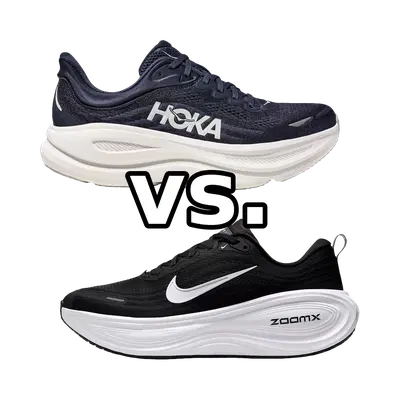
Hoka Bondi 9 vs Saucony Paramount Max:
Which to Choose
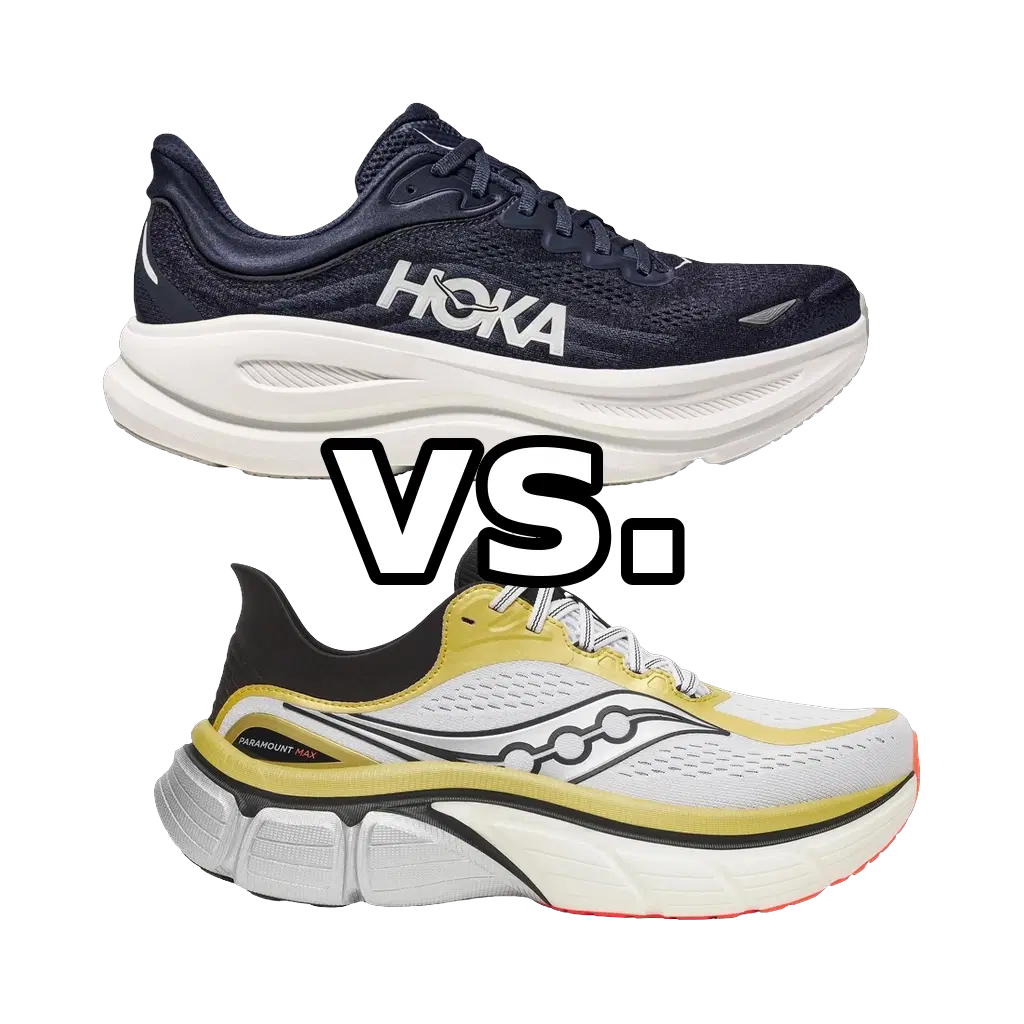
Verdict
These are the same amount of shoe — near-identical stack, drop, and weight — so the choice comes down to what you want the cushioning to do. Pick the Bondi 9 for maximum, muted protection and a planted, stable ride on easy 10K-to-half miles, especially if you're newer, heavier, or value steadiness over spring. Pick the newer Paramount Max if you want that same deep cushioning with genuine bounce and a livelier ride that carries you comfortably from the half out to the marathon. If you're torn, let distance and ride feel decide: shorter and steadier leans Bondi, longer and springier leans Paramount Max.
Pace
2 of 6
Cushioning
6 of 6
Responsiveness
3 of 6
Stability
5 of 6
Drop
5 mm
Support
Stable Neutral
Plate
None
Distances
10KHalf
Pace
3 of 6
Cushioning
6 of 6
Responsiveness
5 of 6
Stability
4 of 6
Drop
6 mm
Support
Neutral
Plate
None
Distances
HalfMarathon
At a Glance
Hoka Bondi 9Saucony Paramount Max
Who Should Choose Each Shoe
Choose
Hoka Bondi 9
Choose the Bondi 9 if your priority is a soft, protective landing and a rock-solid, planted platform over any sense of pop — it's the better call for beginners building volume, heavier runners, and anyone who wants their easy and recovery days to feel forgiving and stable rather than energetic. It's also the safer pick if you've historically wanted a bit more structure underfoot, since its wider base and sidewalls hold your foot steady in a way the more neutral Saucony doesn't. Just don't expect it to come alive when you push; this is a shoe for banking calm aerobic miles up to about half-marathon distance.
Choose
Saucony Paramount Max
Choose the Paramount Max if you want that same tall, plush protection but with a foam that actually returns energy, keeping long runs feeling alive instead of flat — it's the stronger option for neutral recreational marathoners who spend most of the week on easy days and long runs and want one shoe that can also handle steady marathon-effort miles. Its incrediRUN foam holds a livelier pace and more time on feet than the Bondi's EVA, making it the better fit if your training tops out at the half-to-full range rather than the 10K. Be aware it's a genuine neutral shoe with no medial structure, so its height can feel slightly less grounded at very slow jog paces.
Head-to-Head
Start with the geometry, because it's nearly a wash: the Bondi 9 runs a 43 mm heel / 38 mm forefoot stack at a 5 mm drop, and the Paramount Max runs 43 mm / 37 mm at 6 mm, with both shoes landing at essentially the same weight. That means the headline difference isn't dimensions — it's foam. The Bondi 9's supercritical-EVA midsole is tuned for pure protection: it swallows impact with a soft, muted landing and a gentle rocker that rolls you forward at conversational effort, but it gives very little back and starts to feel dead and heavy the moment you try to pick up the pace. The Paramount Max uses Saucony's TPEE-based incrediRUN foam — the same superfoam family as the Endorphin Elite race line — which is just as deep and plush underfoot but pushes back with a real, springy rebound, so long miles stay lively rather than damped. That shows up in the responsiveness gap (a mid-pack score for the Bondi versus a notably higher one for the Paramount Max) and in their pace windows: the Bondi is happiest at relaxed 5:45–6:45 min/km efforts and turns dull past roughly 5:30, while the Paramount Max holds a livelier 5:00–6:00 window and stays composed at steady marathon effort. The trade-off runs the other way on stability. The Bondi is the more planted, foot-under-you shoe — a wide base with structured sidewalls gives it a stable-neutral feel that flatters heavier runners and beginners — whereas the Paramount Max is a true neutral trainer whose tall, softer, bouncier stack can feel a touch tippy at very slow recovery-jog paces. That difference also maps onto distance: the Bondi peaks around the 10K-to-half range of relaxed aerobic mileage, while the springier Paramount Max is built to keep going, excelling from the half out to the full marathon.
© 2026 longrunshoes.ai | All rights reserved.
Use of materials from this site is permitted only with proper attribution and a link to longrunshoes.ai.