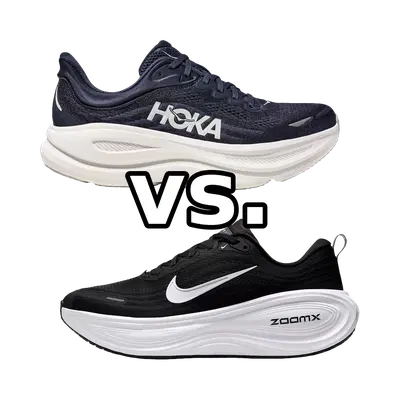
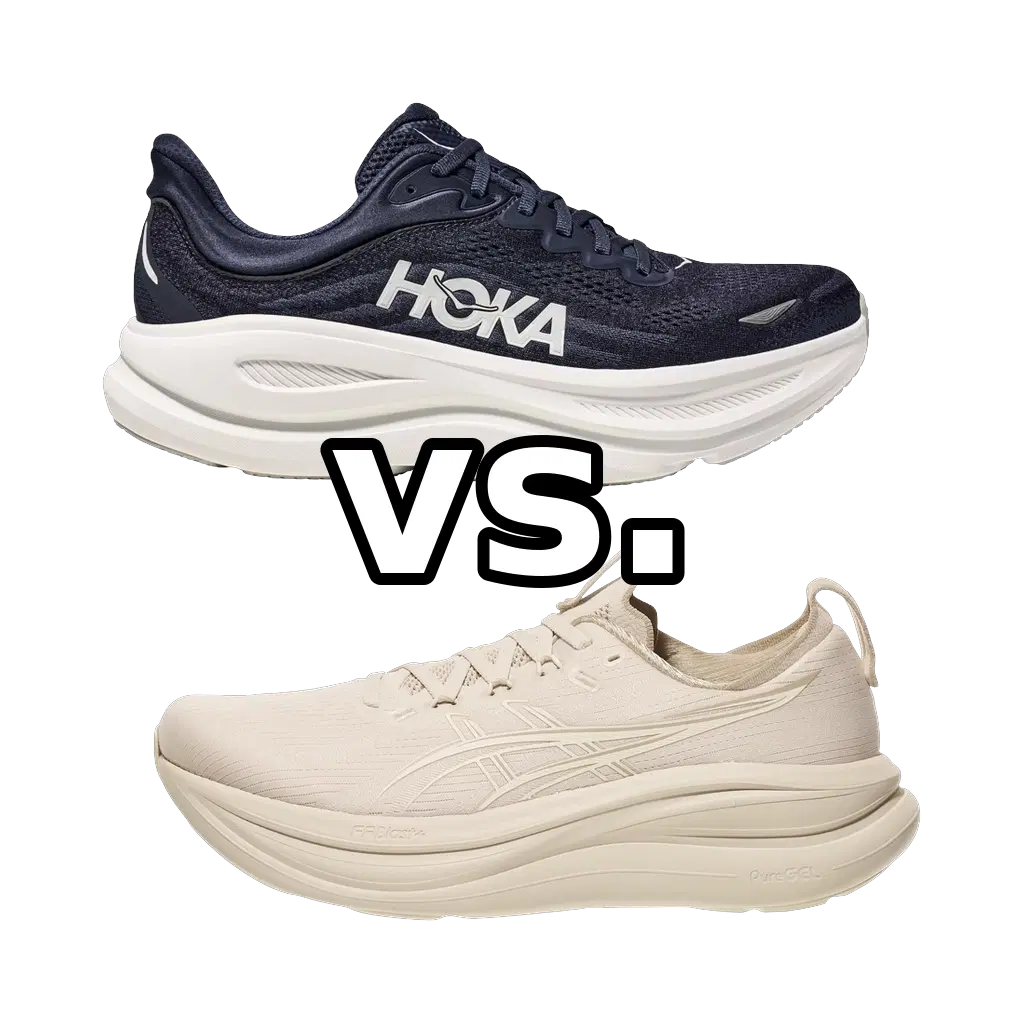
Hoka Bondi 9 vs Asics Gel-Nimbus 28:
Which to Choose
Verdict
These are two takes on the same job — plush, stable-neutral, no-plate trainers for easy and long miles at 10K-to-half distances — so you won't go wrong either way, and neither is a speed shoe. It comes down to feel and weight: pick the Nimbus 28 if you want the lighter, slightly livelier ride with a GEL-smoothed heel for versatile daily mileage, or the Bondi 9 if you want the heavier but maximally planted, rocker-driven protection for your slowest, most forgiving miles.
Pace
2 of 6
Cushioning
6 of 6
Responsiveness
3 of 6
Stability
5 of 6
Drop
5 mm
Support
Stable Neutral
Plate
None
Distances
10KHalf
Pace
3 of 6
Cushioning
6 of 6
Responsiveness
4 of 6
Stability
5 of 6
Drop
6 mm
Support
Stable Neutral
Plate
None
Distances
10KHalf
At a Glance
Hoka Bondi 9Asics Gel-Nimbus 28
Who Should Choose Each Shoe
Choose
Hoka Bondi 9
Choose the Bondi 9 if you want the most planted, roll-forward protection you can get and you value a strong rocker that carries you through the stride at easy effort. It's the better pick for beginners building volume, heavier runners, and anyone who wants a deeply cushioned, muted landing on recovery days and long slow miles and doesn't mind the extra weight to get it. If you've gotten along with previous Bondis or crave that signature soft, dead-calm max-cushion feel, this is your shoe.
Choose
Asics Gel-Nimbus 28
Choose the Gel-Nimbus 28 if you want max cushioning that feels a bit lighter and slightly more responsive underfoot, giving you a little more range for the occasional steady pickup within an easy-to-moderate daily zone. It's the stronger fit for higher-mileage runners logging steady daily trainers and long sessions who are heel strikers, since the PureGEL insert makes heel-first landings especially smooth. If the half marathon is your comfort sweet spot and you'd rather not lug the extra grams, the Nimbus is the pick.
Head-to-Head
On paper these two are near-twins: both rate maximum cushioning, both are stable-neutral with a wide, planted base and no plate, both are happiest at 10K and half-marathon distances, and both are honest about not being built for fast running. Stack heights are almost the same — roughly 41mm at the heel on the Bondi versus 40mm on the Nimbus, with the Nimbus carrying a touch more forefoot foam (about 34mm to the Bondi's 32mm) — and the drops are close too, 5mm on the Bondi against 6mm on the Nimbus. The most concrete separation is weight: the Bondi 9 lands around 303g while the Nimbus 28 comes in near 278g, so the Asics is meaningfully lighter on the foot, which shows up in its slightly livelier rating and marginally quicker effective ceiling. The foams differ in character, too — the Bondi uses a supercritical-EVA midsole tuned for deep, muted, impact-soaking protection, while the Nimbus rides on FF Blast+ with a PureGEL insert under the heel that smooths heel-first landings into an especially gentle touchdown. The Bondi's calling card is its pronounced rocker, which rolls you forward at conversational efforts and gives it that unmistakable planted, protective Hoka feel; the Nimbus leans on its GEL-cushioned heel and lower weight for a slightly more versatile daily ride. Both go dead and feel heavy the moment you try to push the pace, so neither changes the verdict on speed — this is a difference of flavor within the same max-cushion category, not a difference of purpose.
Similar Comparisons
Nike Vomero Plus vs Asics Gel-Nimbus 28
Hoka Bondi 9 vs Saucony Paramount Max
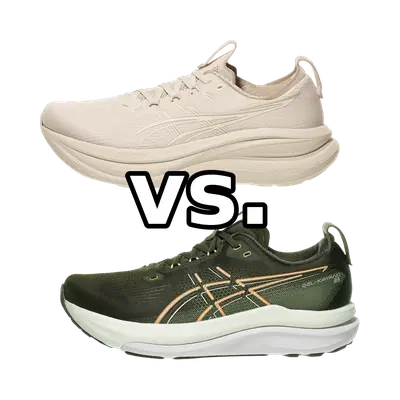
Asics Gel-Nimbus 28 vs Asics Gel-Kayano 33
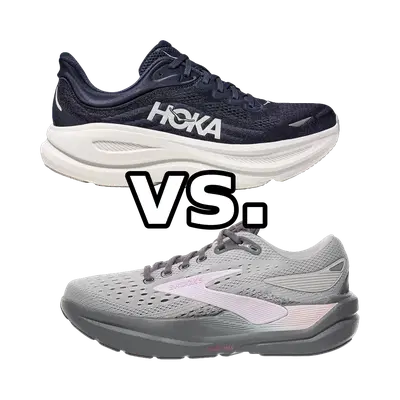
Hoka Bondi 9 vs Brooks Ghost Max 3
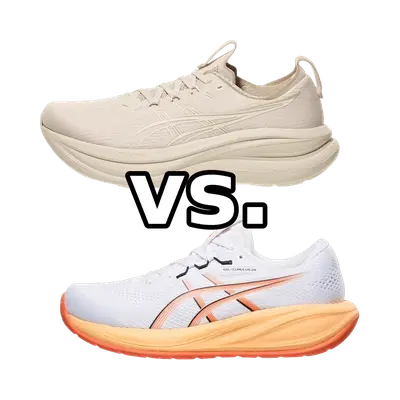
Asics Gel-Nimbus 28 vs Asics Gel-Cumulus 28
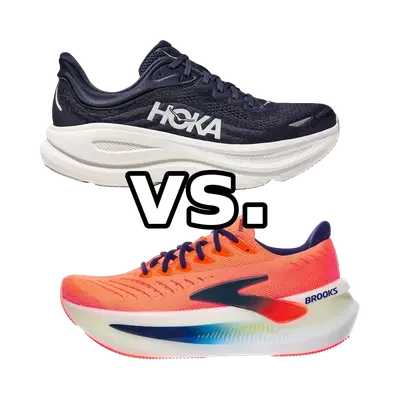
Hoka Bondi 9 vs Brooks Glycerin Max 2
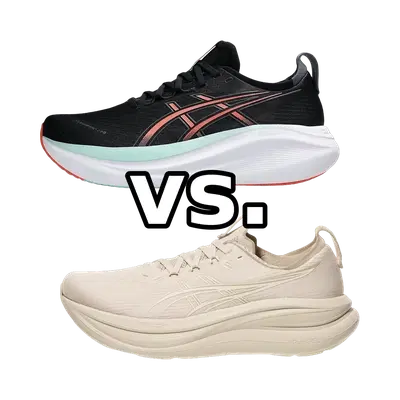
Asics Gel-Nimbus 27 vs Asics Gel-Nimbus 28
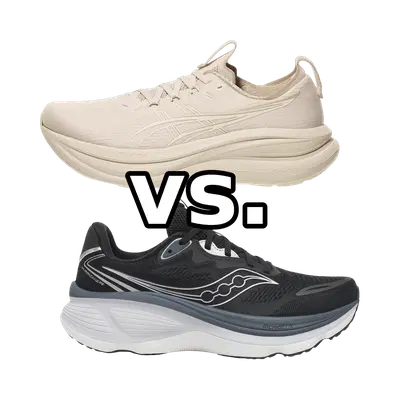
Asics Gel-Nimbus 28 vs Saucony Hurricane 26
© 2026 longrunshoes.ai | All rights reserved.
Use of materials from this site is permitted only with proper attribution and a link to longrunshoes.ai.