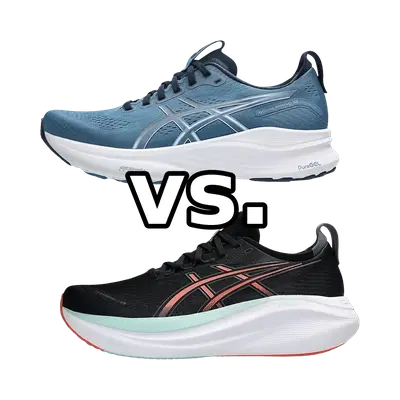
Asics Gel-Nimbus 27 vs Asics Gel-Nimbus 28:
Which to Choose
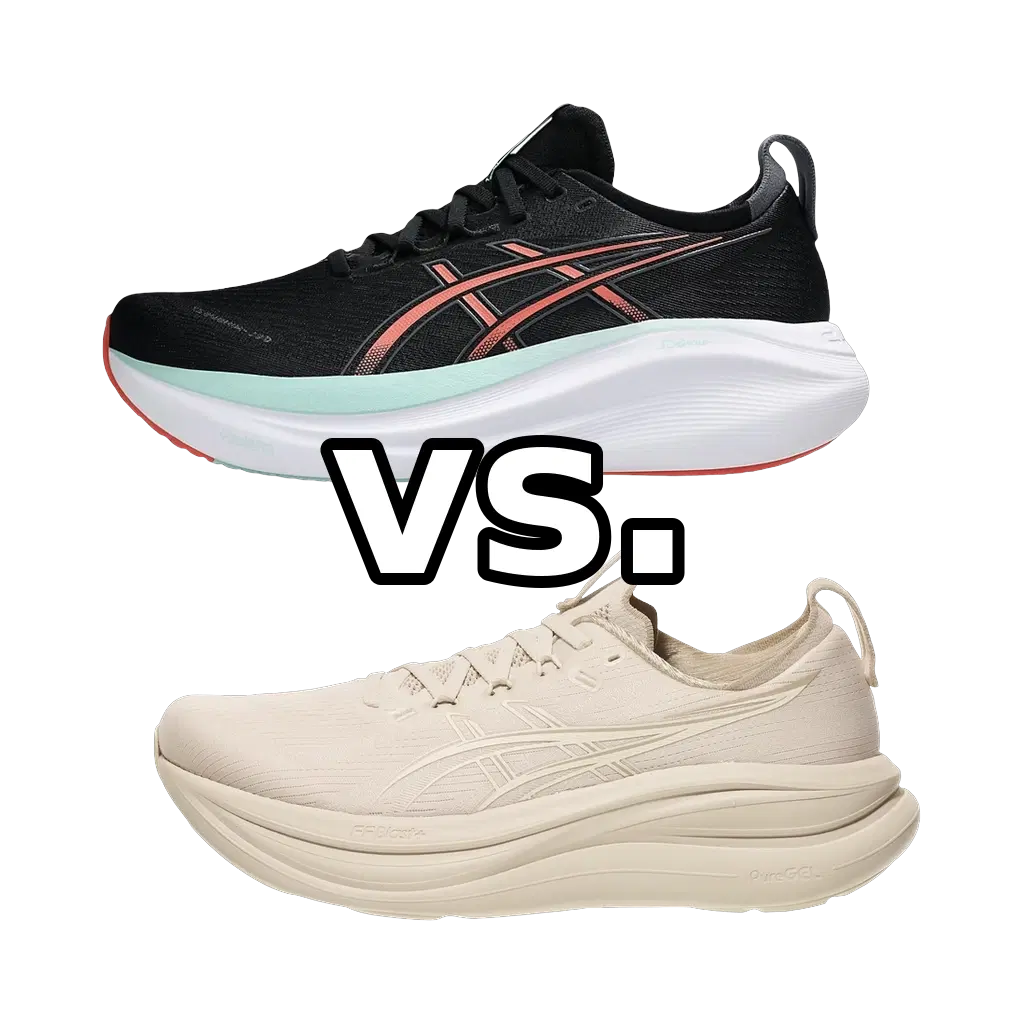
Verdict
This is a genuine incremental upgrade, not a redesign, so the answer depends on your priorities. If your Nimbus 27s are worn out or you want a lighter, more controlled, lower-drop version of a shoe you already like, the 28 is the clear step forward and the natural successor. But if you're happy with your 27s and specifically love their extra-soft, plush ride, the 8mm drop, or their comfortable marathon-distance reach, there's no urgent reason to switch — the 27 still delivers, and the 28's gains are meaningful but modest.
Pace
3 of 6
Cushioning
6 of 6
Responsiveness
4 of 6
Stability
5 of 6
Drop
8 mm
Support
Neutral
Plate
None
Distances
10KHalfMarathon
Pace
3 of 6
Cushioning
6 of 6
Responsiveness
4 of 6
Stability
5 of 6
Drop
6 mm
Support
Stable Neutral
Plate
None
Distances
10KHalf
At a Glance
Asics Gel-Nimbus 27Asics Gel-Nimbus 28
Who Should Choose Each Shoe
Choose
Asics Gel-Nimbus 27
Choose the Gel-Nimbus 27 if you're a neutral runner who prizes the softest, most cosseting landing you can get and don't mind carrying a little more weight for it — it's the plusher, more forgiving of the two. It's also the better fit if you prefer a traditional 8mm drop, if you specifically want a max-cushion trainer you'll take into comfortable marathon-distance long runs, or if you already own a pair, love them, and see no reason to change a formula that's working.
Choose
Asics Gel-Nimbus 28
Choose the Gel-Nimbus 28 if you want the same plush, protective daily-trainer experience but lighter on the foot and a bit more controlled underfoot — the nearly 20g weight savings, firmer forefoot, and more prominent rocker make transitions feel smoother without giving up the deep cushioning. It's the better pick for higher-mileage runners who want a stable-neutral platform and a slightly lower 6mm drop for a more natural stride, and it's the logical replacement when your 27s are worn out and you want the refined, current version of the same shoe.
Head-to-Head
These are close cousins, and it's worth saying plainly: the DNA is the same. Both score maximum (6/6) cushioning, above-average (4/6) responsiveness, a wide, planted 5/6 platform, and a 3/6 pace rating, with FF Blast+ foam, a gel heel, and no plate — both live in the same 5:30–6:30 min/km easy-to-steady zone and both go a bit flat if you try to push tempo. The differences are refinements rather than a reinvention. The biggest is weight: the 28 comes in at 278g (men's US 9) and is nearly 20g lighter than the 27, a roughly 7% trim achieved by streamlining the midsole and outsole. Drop drops too — the 27 runs a moderate 8mm offset, while the 28 measures a lower 6mm (below Asics' claimed 8mm), giving the newer shoe a slightly more natural, less heel-biased stride. Stack heights are close, with the 27 sitting on a roughly 41.5mm heel and the 28 on a 40mm heel / 34mm forefoot, so both remain unmistakably max-cushion. Underfoot, the character shifts subtly: the 27 is the softer, plusher, arguably more fun ride, while the 28 integrates its PureGEL directly into the heel foam for a smoother, more controlled compression, pairs it with a firmer, more sculpted forefoot and a more pronounced rocker, and reads as "stable-neutral" rather than simply neutral. The net effect is that the 28 transitions a touch more crisply and feels more planted, trading a little of the 27's pillowy softness for control. One catalog nuance: the 27 is rated out to marathon distance run at comfortable efforts, while the 28's sweet spot is pitched at 10K and the half — despite being lighter, it's positioned as a comfort-first trainer rather than a long-race cruiser.
Similar Comparisons
Hoka Bondi 9 vs Asics Gel-Nimbus 28
Asics Gel-Nimbus 27 vs Asics Gel-Cumulus 27
Nike Vomero Plus vs Asics Gel-Nimbus 28
Asics Gel-Nimbus 27 vs Nike Vomero Plus
Asics Gel-Nimbus 28 vs Asics Gel-Kayano 33
Asics Gel-Nimbus 27 vs Saucony Hurricane 26
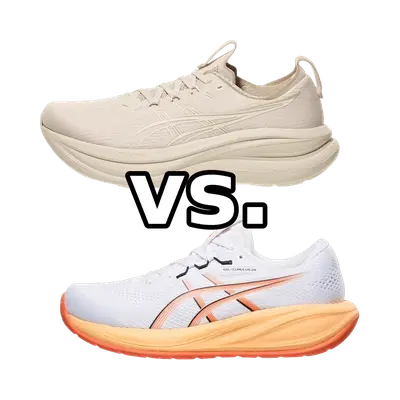
Asics Gel-Nimbus 28 vs Asics Gel-Cumulus 28
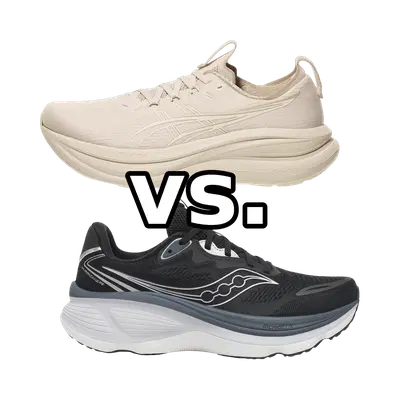
Asics Gel-Nimbus 28 vs Saucony Hurricane 26
© 2026 longrunshoes.ai | All rights reserved.
Use of materials from this site is permitted only with proper attribution and a link to longrunshoes.ai.