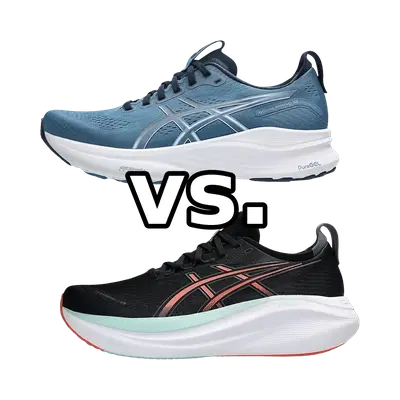
Asics Gel-Nimbus 27 vs Asics Gel-Cumulus 27:
Which to Choose
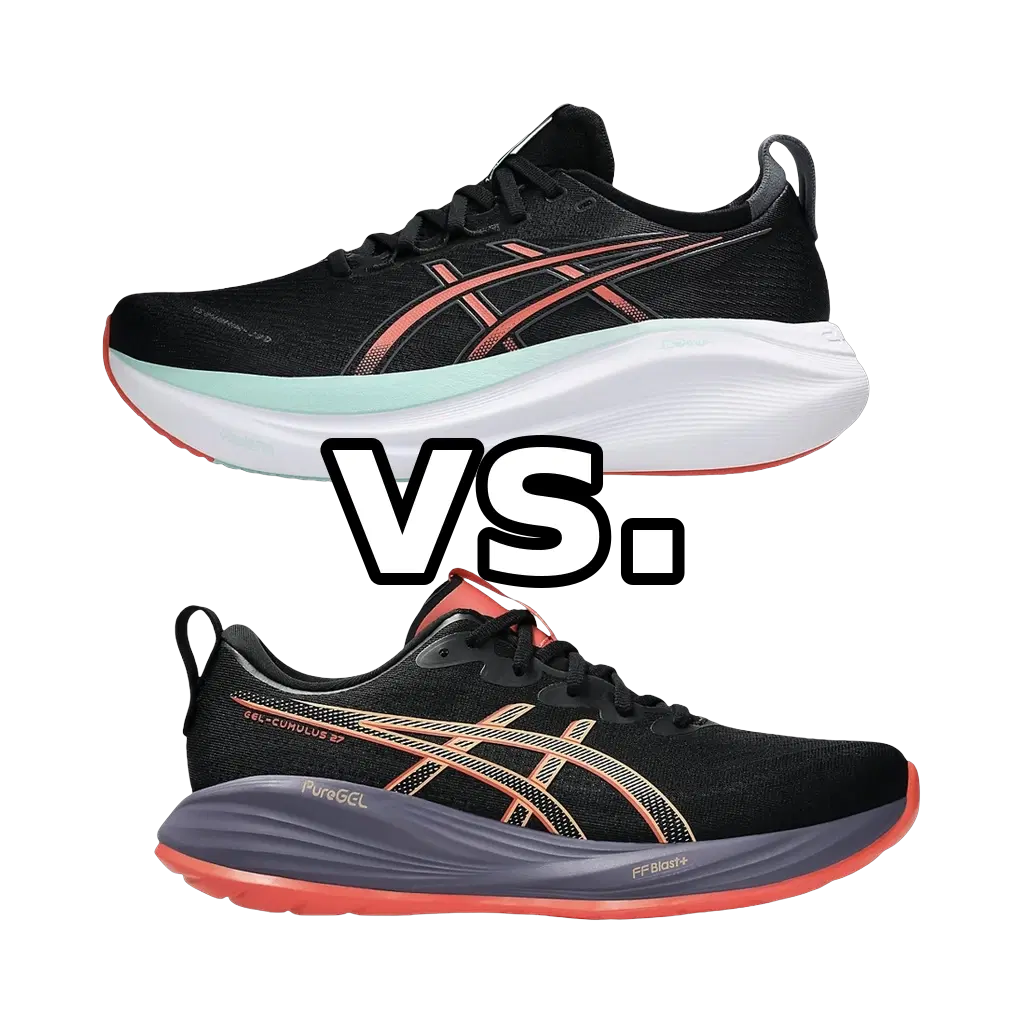
Verdict
If your easy runs are genuinely easy — conversational pace, long distances, recovery focus — and you want the most protective shoe Asics makes in this category, go with the Nimbus 27. Its deeper stack and more planted platform are purpose-built for that job. If you need a daily trainer that handles easy miles comfortably but doesn't feel dead when you push into moderate aerobic territory, the Cumulus 27's lighter weight and slightly faster pace range make it the more versatile pick. The decision hinges on how narrow or broad your daily training pace range actually is.
Pace
3 of 6
Cushioning
6 of 6
Responsiveness
4 of 6
Stability
5 of 6
Drop
8 mm
Support
Neutral
Plate
None
Distances
10KHalfMarathon
Pace
3 of 6
Cushioning
5 of 6
Responsiveness
4 of 6
Stability
4 of 6
Drop
8 mm
Support
Neutral
Plate
None
Distances
10KHalfMarathon
At a Glance
Asics Gel-Nimbus 27Asics Gel-Cumulus 27
Who Should Choose Each Shoe
Choose
Asics Gel-Nimbus 27
The Nimbus 27 is the right call for runners who prioritize protection above all else — think high-volume trainers logging 70+ km weeks, heavier runners whose joints benefit from every millimeter of cushioning, or anyone recovering from impact-related niggles who needs the softest possible landing at easy paces. Its high stability rating also makes it a strong pick for neutral runners who land heavily on the heel and want a planted, forgiving platform through the entire stride. If your training plan is built around slow, long miles and you rarely push past a comfortable aerobic effort, the Nimbus's extra cushioning will earn its weight penalty every time.
Choose
Asics Gel-Cumulus 27
The Cumulus 27 suits runners who want a true all-rounder for daily training — someone who uses the same shoe for easy recovery runs and slightly brisker aerobic efforts without wanting to feel weighed down. At 265g it is light enough that the shoe stays lively on moderate-effort days, and its slightly lower stack keeps the ride more connected and less mushy when the pace lifts. Beginner-to-intermediate runners building their first serious base will also find the Cumulus more forgiving of changing pace and effort than the Nimbus, which is more narrowly optimized for slow, steady work.
Head-to-Head
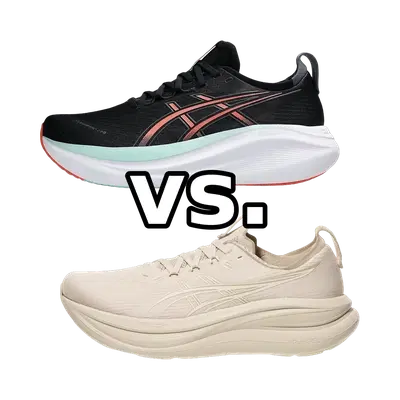
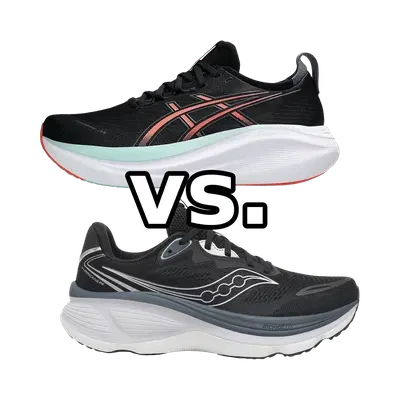
The clearest separation between these two shoes is stack height and weight. The Nimbus 27 carries a 43.5mm heel stack to the Cumulus 27's 38.5mm — a 5mm difference that is immediately perceptible underfoot. That extra foam translates directly into the Nimbus's maximum cushioning rating (6/6 vs 5/6 for the Cumulus), making it meaningfully softer and more protective on long, grinding efforts. The weight gap is equally concrete: the Nimbus 27 comes in at 305g (men's), while the Cumulus 27 is 265g — a 40g difference that is noticeable over a 30km training run. Neither shoe is fast, but the Cumulus's lighter, lower profile means its comfortable pace ceiling sits slightly higher, and it feels less inert when you briefly pick up the tempo.
Stability tells a similar story. The Nimbus's wider, well-walled midsole platform earns it a higher stability rating (5/6 vs 4/6), making it the more planted and controlled of the two — useful for runners who overpronate slightly or who simply want a secure base under a heavy training load. Both shoes are classified as neutral, so neither provides corrective support, but the Nimbus keeps you more planted.
Ride feel diverges in the same direction: the Nimbus is softer and more cosseting, with a smooth, rolling transition that works best at genuinely easy paces (optimal around 5:30–6:30 min/km). The Cumulus is still soft and forgiving, but slightly less pillowy, and its optimal pace range runs about 15 seconds per kilometer faster (5:15–6:15 min/km), which matters if you mix easy runs with moderate aerobic efforts in the same shoe. Neither has a plate, so neither is going to feel springy or propulsive — they are both trainers built around protection and consistency.
The upper materials differ too: the Nimbus uses an engineered knit construction for a sock-like, wrapped feel, while the Cumulus uses an engineered mesh that prioritizes breathability. For runners in warm climates or with wide feet who run hot, the Cumulus's mesh can be the more comfortable long-haul option. The Cumulus also covers high-wear outsole zones with AHAR rubber for durability, a practical advantage for runners with aggressive footstrike patterns.
© 2026 longrunshoes.ai | All rights reserved.
Use of materials from this site is permitted only with proper attribution and a link to longrunshoes.ai.