Saucony Triumph 24 vs Saucony Paramount Max:
Which to Choose
Verdict
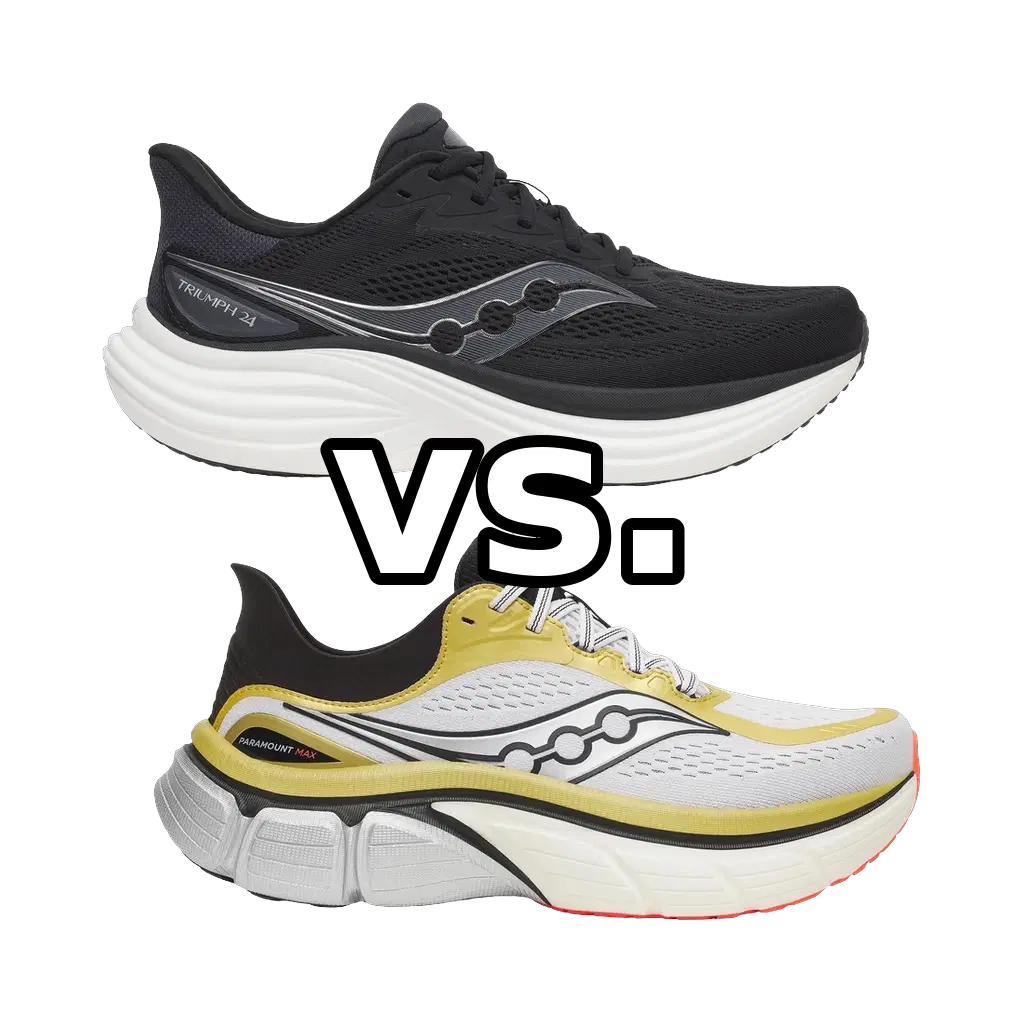
These are close cousins, so the pick hinges on feel rather than capability. Go Triumph 24 for a lighter, traditional 10 mm-drop trainer with a soft, forgiving landing and a little more pace range down to 10K; go Paramount Max for a bouncier, lower-drop (6 mm), roomier long-run shoe whose TPEE foam keeps marathon miles feeling springy. If you want versatility and lower weight, the Triumph; if you want energy return and a wider, rolling long-run ride, the Paramount Max.
Pace
3 of 6
Cushioning
6 of 6
Responsiveness
4 of 6
Stability
4 of 6
Drop
10 mm
Support
Neutral
Plate
None
Distances
10KHalfMarathon
Pace
3 of 6
Cushioning
6 of 6
Responsiveness
5 of 6
Stability
4 of 6
Drop
6 mm
Support
Neutral
Plate
None
Distances
HalfMarathon
At a Glance
Saucony Triumph 24Saucony Paramount Max
Who Should Choose Each Shoe
Choose
Saucony Triumph 24
Choose the Triumph 24 if you want the lighter, more traditional-feeling max-cushion trainer — a 10 mm drop suits heel strikers and runners whose calves appreciate the taller offset, and the lower overall mass makes it the better fit if you also want to dip down to 10K efforts or occasionally pick up the pace. It's an easy recommendation for beginners building volume and for anyone who prefers a soft, forgiving landing over a springy one.
Choose
Saucony Paramount Max
Choose the Paramount Max if you prioritize a livelier, more rebounding ride for long steady miles and marathon-effort training, and you like a lower 6 mm drop with a smoother rolling transition. Its roomier, wider fit will appeal to runners who want extra forefoot space, and the TPEE superfoam's bounce makes high-mileage long runs feel energetic — just accept that it's the heavier shoe and the more narrowly long-run/marathon-focused of the two.
Head-to-Head
Start with what they share: identical 43 mm heel stacks, neutral platforms with no medial posting (both 4/6 stability), no plate, breathable engineered-mesh uppers, and the same optimal daily/long-run pace band. The differences are in geometry, mass, and foam feel. The Triumph 24 keeps a traditional 10 mm drop (43 mm heel / 33 mm forefoot), which eases the calves and rewards heel strikers, while the Paramount Max sits at a 6 mm drop with a fuller forefoot (43 mm / 37 mm) for a smoother, slightly rolling transition that doesn't push you toward any one footstrike. Weight is a real separator: the Triumph comes in around 250 g in a men's US 9, whereas the Paramount Max is roughly 286–302 g — so the Triumph is meaningfully the lighter shoe on foot despite the Paramount carrying its weight well for the stack. Foam character differs too: the Triumph's IncrediLUX A-TPU is plush and forgiving with a cushioned, unhurried landing (4/6 responsiveness), while the Paramount Max uses Saucony's incrediRUN TPEE superfoam — the resilient compound from the Endorphin Elite race line — which pushes back with genuine bounce and earns the higher 5/6 responsiveness rating, keeping long miles feeling alive rather than dead. Fit nudges apart as well: the Paramount Max runs roomier and wider. And despite the Paramount's bouncier foam, the Triumph is actually the more versatile of the two toward pace — it holds up to about 4:45 min/km and officially covers 10K through the marathon, whereas the Paramount Max tops out nearer 5:00 min/km and is pitched squarely at the half and full marathon; both soft stacks go vague if you try to surge past those limits.
Similar Comparisons
Hoka Bondi 9 vs Saucony Paramount Max
Nike Vomero 18 vs Saucony Triumph 24
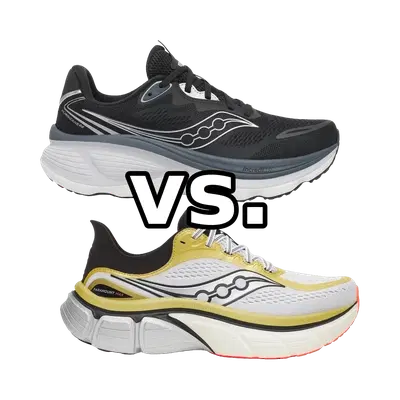
Saucony Hurricane 26 vs Saucony Paramount Max
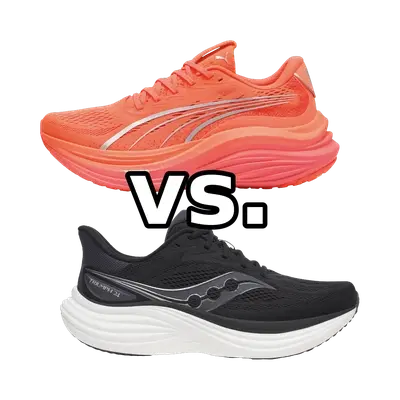
Puma MagMax Nitro vs Saucony Triumph 24
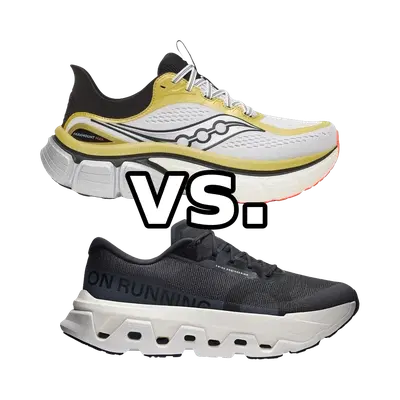
Saucony Paramount Max vs On Cloudmonster 3 Hyper
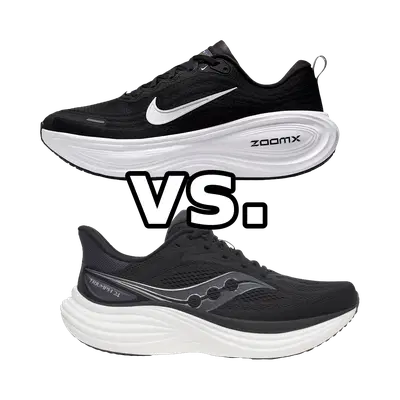
Nike Vomero Plus vs Saucony Triumph 24
Nike Vomero Plus vs Saucony Paramount Max
Puma Magnify Nitro 3 vs Saucony Triumph 24
© 2026 longrunshoes.ai | All rights reserved.
Use of materials from this site is permitted only with proper attribution and a link to longrunshoes.ai.