
Brooks Ghost 17 vs Nike Pegasus 42:
Which to Choose
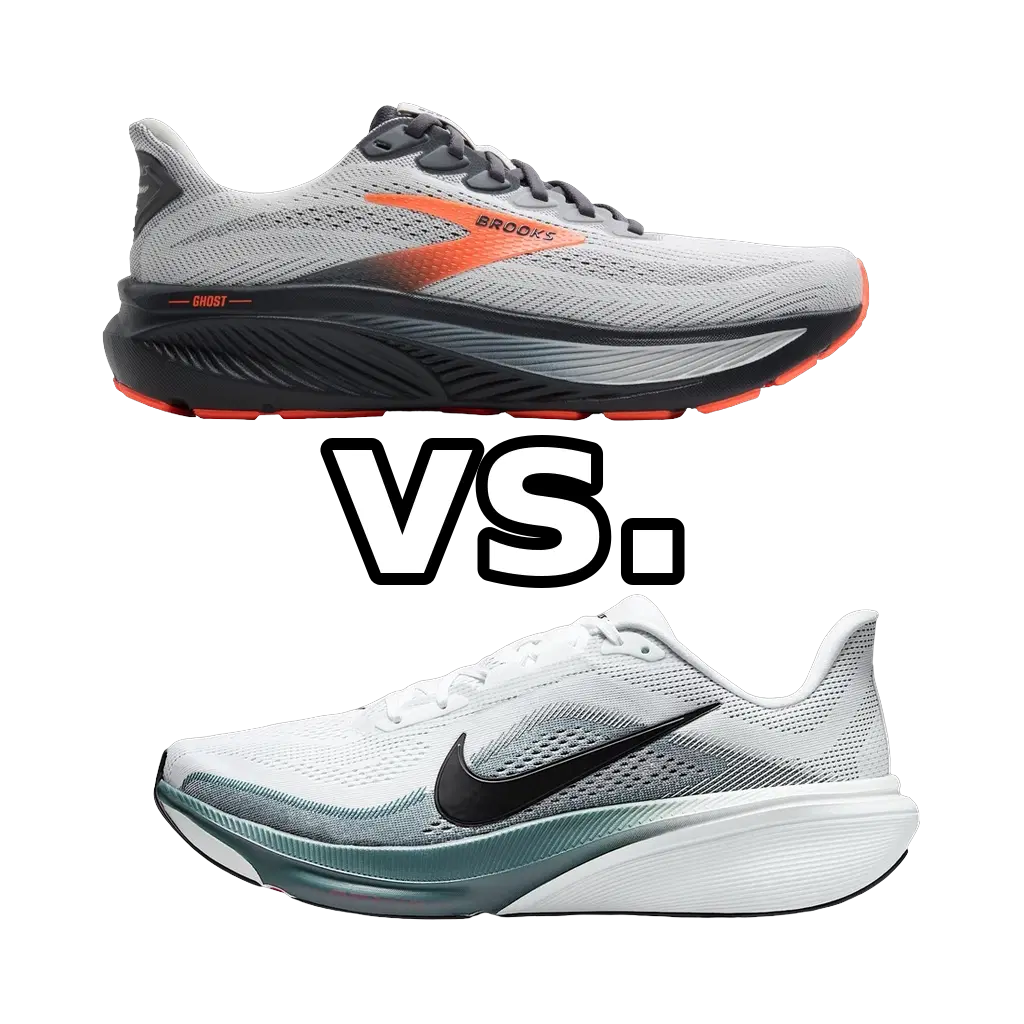
Verdict
These are close cousins, not rivals in different classes, so the decision comes down to feel rather than capability: pick the Ghost 17 if you want the plusher, smoother, more forgiving daily cruiser, and pick the Pegasus 42 if you want a firmer platform with more pop and a touch more life when you pick up the pace. Both will handle everything from 10K to the marathon at everyday training paces equally well — if you can, try both back to back, because the right answer here is whichever underfoot sensation, soft or springy, you'd rather log hundreds of miles on.
Pace
3 of 6
Cushioning
4 of 6
Responsiveness
3 of 6
Stability
4 of 6
Drop
12 mm
Support
Neutral
Plate
None
Distances
10KHalfMarathon
Pace
4 of 6
Cushioning
4 of 6
Responsiveness
4 of 6
Stability
4 of 6
Drop
14 mm
Support
Neutral
Plate
None
Distances
10KHalfMarathon
At a Glance
Brooks Ghost 17Nike Pegasus 42
Who Should Choose Each Shoe
Choose
Brooks Ghost 17
Choose the Ghost 17 if your priority is comfort and consistency over everything else — you want a soft, predictable ride for easy-to-moderate long runs and you'd rather the shoe smooth out the miles than urge you forward. It's an excellent pick for beginners building a base who value a plush, forgiving landing, and for heel-strikers who want extra cushion under the forefoot on marathon-distance days. If you've historically found firmer trainers harsh, the Ghost's softer DNA Loft foam is the safer bet.
Choose
Nike Pegasus 42
Choose the Pegasus 42 if you want the same all-day durability and long-run capability but with a firmer, more responsive character that comes alive as you settle into a rhythm. Its ReactX-and-Air-Zoom combination suits runners who mix steady long runs with the occasional moderate tempo effort and want a trainer that pops back a little rather than just cushioning. It's the better fit for those who dislike a soft, sink-in feel and prefer a stable, connected platform underfoot — just know that its 14mm drop makes it the most heel-biased of the two.
Head-to-Head
Start with how close these two actually are. They weigh essentially the same — the Ghost 17 lands at 289g and the Pegasus 42 at 286g (men's US 9), a difference you won't feel — and their heel stacks are near-identical at roughly 36mm, so both give you a tall, protective platform for long days. Both are neutral with no medial posting, both skip a propulsion plate, and both share the same 4/6 stability and cushioning ratings and the same everyday sweet spot around 5:00–6:00 min/km. The divergence is in foam and geometry. The Ghost's DNA Loft v3 is soft, quiet, and smooth — plush enough to take the edge off pavement but tuned for cushioning and durability rather than spring, so it feels a touch dead when you try to pick up the pace. The Pegasus counters with firmer ReactX foam and a full-length curved Air Zoom unit that adds a distinct pop as you speed up; it's businesslike at truly slow paces but warms into a livelier, more connected feel, which is why it rates a notch higher for responsiveness (4/6 vs 3/6) and pace (4/6 vs 3/6). Geometry differs too: the Ghost runs a 12mm drop with a fuller 25.8mm forefoot, while the Pegasus pushes an even more heel-biased 14mm drop over a lower 22mm forefoot — so the Pegasus sits more noticeably on the heel underfoot and the Ghost gives you more cushion up front. Net result: the Ghost is the smoother, more forgiving cruiser, the Pegasus the firmer, more versatile trainer that has a little more to give when you push.







© 2026 longrunshoes.ai | All rights reserved.
Use of materials from this site is permitted only with proper attribution and a link to longrunshoes.ai.