
Brooks Ghost 17 vs Mizuno Wave Rider 29:
Which to Choose
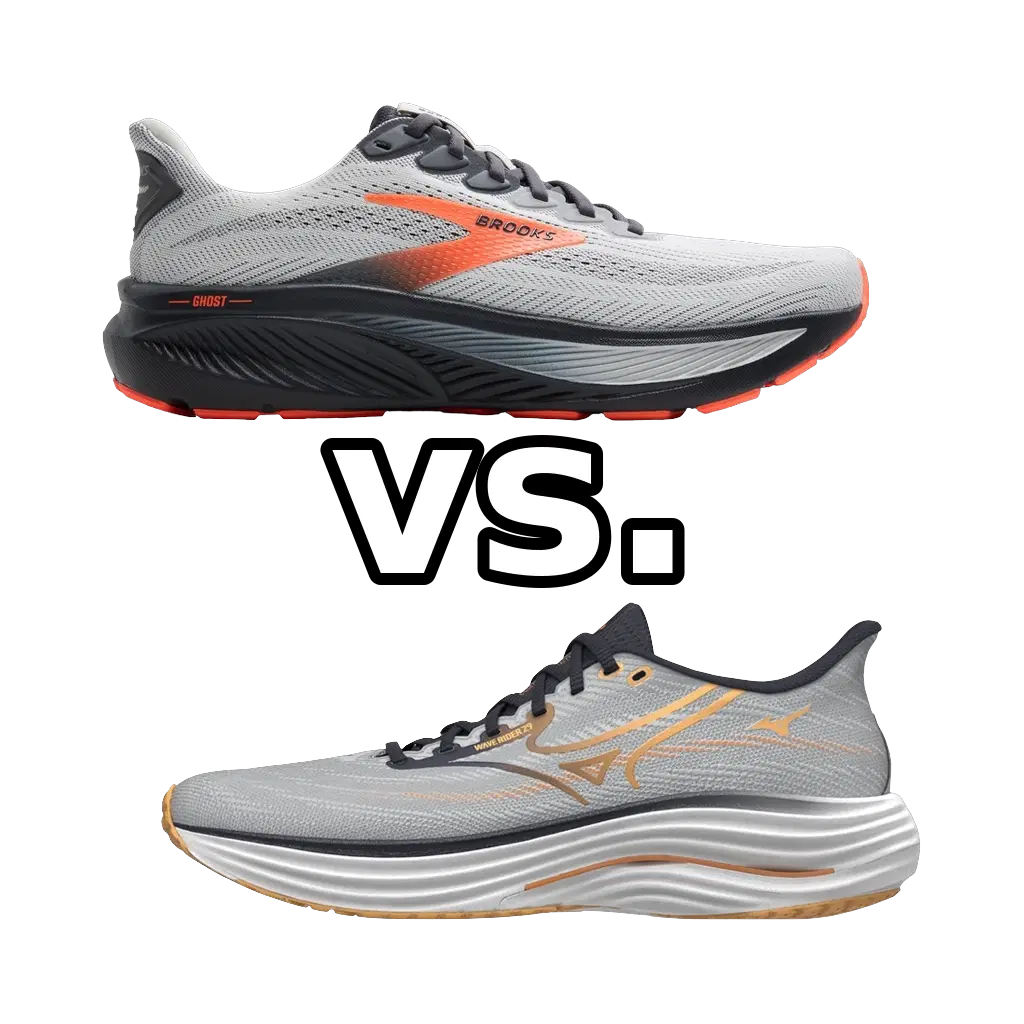
Verdict
These two are closer than almost any cross-brand pairing in this category — same purpose, same drop, same stability, same distances — so you won't go wrong either way. The decision is entirely about ride character: pick the Ghost 17 if you want softer, plusher, more protective cushioning and don't mind a slightly heavier, less lively feel, and pick the Wave Rider 29 if you want a lighter shoe with a firmer, springier, more responsive ride. Soft and cushioned versus light and lively is the whole ballgame here.
Pace
3 of 6
Cushioning
4 of 6
Responsiveness
3 of 6
Stability
4 of 6
Drop
12 mm
Support
Neutral
Plate
None
Distances
10KHalfMarathon
Pace
3 of 6
Cushioning
4 of 6
Responsiveness
3 of 6
Stability
4 of 6
Drop
12 mm
Support
Neutral
Plate
None
Distances
10KHalfMarathon
At a Glance
Brooks Ghost 17Mizuno Wave Rider 29
Who Should Choose Each Shoe
Choose
Brooks Ghost 17
Choose the Ghost 17 if your priority is comfort and a cushioned, forgiving ride above all else — it's the softer, plusher shoe and the better pick for heel-strikers, beginners building a base, and anyone who wants their easy and long runs to feel maximally cushioned and predictable. It's especially well suited to the runner whose weekly staple is the steady, comfortable long run and who happily trades a little liveliness and a little extra weight for that extra plushness and the sense of a shoe built to last.
Choose
Mizuno Wave Rider 29
Choose the Wave Rider 29 if you want a daily trainer with a bit more pep and less weight on your foot — the firmer, springier Enerzy foam feels more responsive at moderate paces, and at roughly 258g it's the lighter shoe for tempo-flavored steady efforts. It's the stronger match for a runner who dislikes a soft, sinking ride and prefers a firmer, more connected platform, and whose bread-and-butter session is a brisk half-marathon-paced run rather than a plush recovery jog.
Head-to-Head
The headline difference is the foam and what it does under load. The Ghost 17 runs on nitrogen-infused DNA Loft v3, which skews soft, plush and reassuringly smooth — it takes the edge off pavement and rolls through a quiet, even heel-to-toe transition, but it's tuned for cushioning and longevity rather than spring, so it feels a touch flat when you ask it to accelerate. The Wave Rider 29's Enerzy foam goes the other way: firmer and less pillowy, but noticeably more lively and bouncy, rewarding a steady rhythm with a willing (if not explosive) rebound. Mizuno has also dropped the old plastic Wave plate entirely, so like the Ghost it's now pure foam doing the work. Weight is the other real separator — the Wave Rider is the lighter shoe at roughly 258g versus about 286g for the Ghost, a gap of nearly an ounce that you feel over long miles and when picking up the pace. Interestingly, the lighter Mizuno also carries a touch more stack (about 38/28mm versus the Ghost's 36.5/26.5mm), so it isn't trading protection for its lower weight; it simply uses a firmer, springier foam to get there. Everywhere else they converge almost exactly: both are genuinely neutral with no medial posting, both ride a wide, planted, stable platform, both pair a breathable engineered-mesh upper with a durable rubber outsole built to soak up daily mileage, and both start to feel dead rather than fast once you push past roughly 4:45 min/km. The practical choice, then, is soft-and-protective versus firm-light-and-springy.
Similar Comparisons

Mizuno Wave Rider 29 vs Mizuno Wave Rider 30
Brooks Ghost 17 vs Brooks Ghost 18

Mizuno Wave Rider 29 vs Brooks Ghost 18

Brooks Ghost 17 vs Brooks Ghost AMP

Adidas Ultraboost 5X vs Mizuno Wave Rider 29

Brooks Ghost 17 vs Brooks Hyperion Elite 5

Adidas Ultraboost 5X vs Brooks Ghost 17
Brooks Ghost 17 vs Asics Gel-Pulse 17
© 2026 longrunshoes.ai | All rights reserved.
Use of materials from this site is permitted only with proper attribution and a link to longrunshoes.ai.