
Saucony Ride 18 vs Mizuno Wave Rider 29:
Which to Choose

Verdict
These are genuinely close rivals serving the same job equally well, so the decision hinges on fit and feel rather than capability. Go Mizuno Wave Rider 29 if you want the taller 12mm heel-forward geometry and a springier Enerzy ride; go Saucony Ride 18 if you prefer a lower 8mm drop and a firmer, more grounded PWRRUN feel. Try both if you can — the foam character and drop are what you'll actually notice day to day.
Pace
3 of 6
Cushioning
4 of 6
Responsiveness
3 of 6
Stability
4 of 6
Drop
8 mm
Support
Neutral
Plate
None
Distances
10KHalfMarathon
Pace
3 of 6
Cushioning
4 of 6
Responsiveness
3 of 6
Stability
4 of 6
Drop
10 mm
Support
Neutral
Plate
None
Distances
10KHalfMarathon
At a Glance
Saucony Ride 18Mizuno Wave Rider 29
Who Should Choose Each Shoe
Choose
Saucony Ride 18
Pick the Ride 18 if you want a lower, more level 8mm platform and a firmer, no-nonsense ride that feels planted and predictable across the full easy-to-steady range. It's the better call for midfoot and mild heel strikers who find 12mm shoes too heel-heavy, and for runners who value a protective, durable trainer that stays honest on long marathon-build miles over one chasing bounce.
Choose
Mizuno Wave Rider 29
Choose the Wave Rider 29 if you're a heel striker — or simply prefer the calf-sparing feel of a traditional 12mm drop — and want a daily foam that's a bit springier and livelier underfoot. It's an ideal base-building shoe for beginners and a smooth, composed option for experienced runners logging steady half-marathon-paced miles, which is where it feels most at home.
Head-to-Head
On paper these two are near-twins: identical scores for cushioning (4/6), responsiveness (3/6), stability (4/6) and pace (3/6), both neutral, both plate-free, both with a wide, planted platform that stays composed as you slow down, and both happiest in the roughly 5:00–6:00 min/km everyday zone while still working down to around 4:45 min/km. The decisive difference is drop and the footstrike it encourages: the Ride 18 runs an 8mm heel-to-toe offset, while the Wave Rider 29 keeps Mizuno's traditional 12mm, heel-forward geometry. That makes the Mizuno the more natural fit for committed heel strikers and anyone who likes a pronounced heel bias to take load off the calves, while the lower-slung Ride 18 feels a touch more level underfoot and leans slightly more midfoot-friendly. The foams also have distinct personalities: Saucony's single-density PWRRUN is protective and honestly firm — it never wallows but returns energy competently rather than excitingly — whereas Mizuno's Enerzy reads as a little springier and livelier underfoot without tipping into pillowy softness. Cushioning depth is comparable, both sitting in the high-30s-millimeter range at the heel, so neither is meaningfully more protective than the other on long runs; weight is close too, with both landing around the 9-ounce mark for a men's shoe. Notably, the Wave Rider 29 has fully dropped Mizuno's old plastic Wave plate, so like the Ride it now lets the foam do all the work — which is why both feel capable but flat, rather than propulsive, when you try to open up the pace.
Similar Comparisons
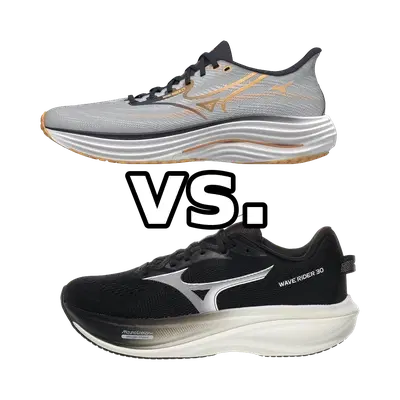
Mizuno Wave Rider 29 vs Mizuno Wave Rider 30
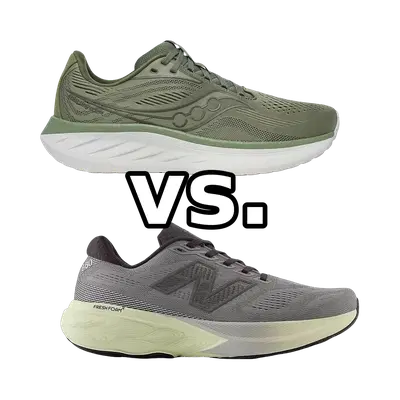
Saucony Ride 18 vs New Balance Fresh Foam X 880v15
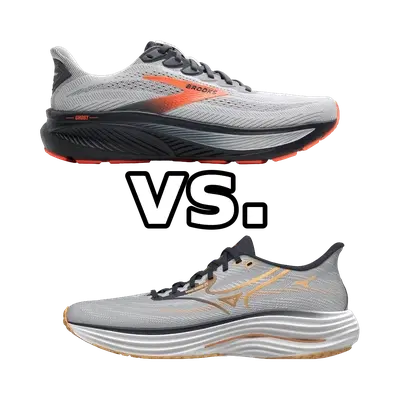
Brooks Ghost 17 vs Mizuno Wave Rider 29

Saucony Ride 18 vs Adidas Ultraboost 5X
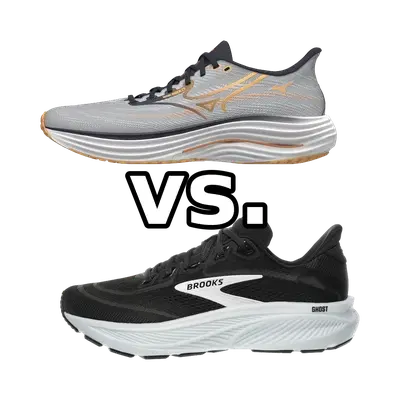
Mizuno Wave Rider 29 vs Brooks Ghost 18
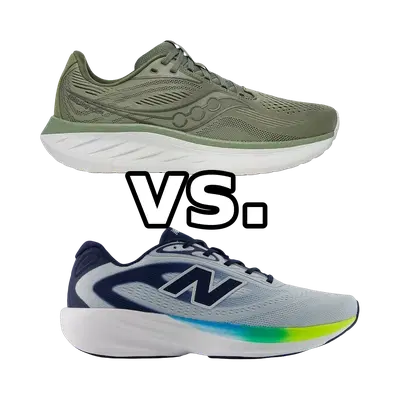
Saucony Ride 18 vs New Balance Fresh Foam 680v9

Adidas Ultraboost 5X vs Mizuno Wave Rider 29

Saucony Ride 18 vs Brooks Ghost 17
© 2026 longrunshoes.ai | All rights reserved.
Use of materials from this site is permitted only with proper attribution and a link to longrunshoes.ai.