
Saucony Ride 18 vs New Balance Fresh Foam X 880v15:
Which to Choose
Verdict
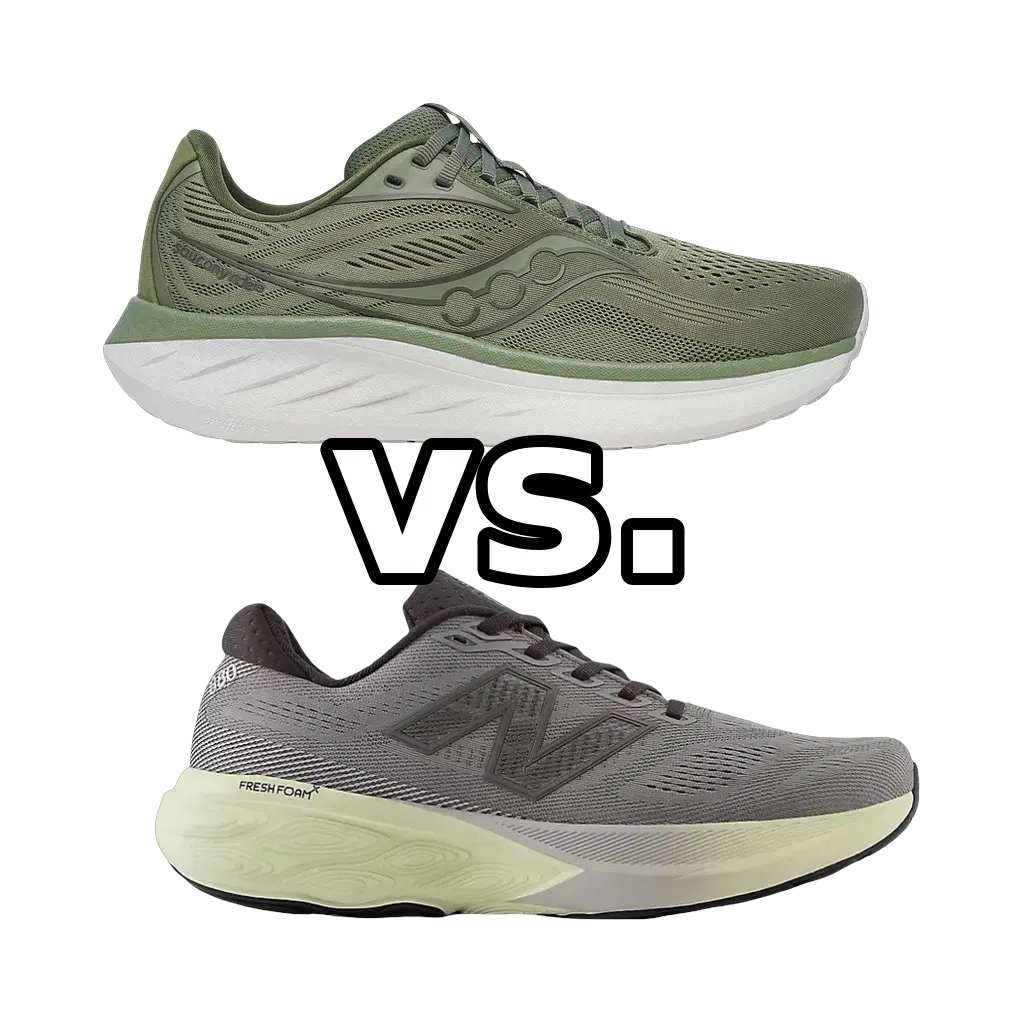
These are two versions of the same good idea, so it comes down to how much shoe you want for the job. Want lighter, lower, and a bit more agile with a higher 8mm drop? The Ride 18. Want more cushion, a taller and more protective platform, a lower 6mm drop, and the widest range of fit options — and don't mind the extra ~40g? The 880v15. Neither is faster or "better"; they're tuned for different amounts of foam under the same neutral, everyday-mileage mission.
Pace
3 of 6
Cushioning
4 of 6
Responsiveness
3 of 6
Stability
4 of 6
Drop
8 mm
Support
Neutral
Plate
None
Distances
10KHalfMarathon
Pace
3 of 6
Cushioning
4 of 6
Responsiveness
3 of 6
Stability
4 of 6
Drop
8 mm
Support
Neutral
Plate
None
Distances
10KHalfMarathon
At a Glance
Saucony Ride 18New Balance Fresh Foam X 880v15
Who Should Choose Each Shoe
Choose
Saucony Ride 18
Pick the Ride 18 if you want the lighter, lower-to-the-ground option and value a nimbler feel for daily miles that occasionally include a steady pickup. Its 8mm drop and ~258g weight suit runners who like a natural rearfoot-to-toe roll and don't need a huge slab of foam to feel comfortable on long runs. It's the better call for anyone marathon-training on a single trainer who'd rather not carry extra shoe weight over the miles.
Choose
New Balance Fresh Foam X 880v15
Choose the Fresh Foam X 880v15 if maximum protection underfoot is the priority — its taller ~40mm stack takes more of the edge off pavement on long, slow miles, making it a strong pick for heavier runners or anyone logging high mileage who wants to feel cushioned late in a run. The lower 6mm drop suits runners who prefer a flatter, less pronounced heel-to-toe transition. And if you need a specific width, this is the easy answer, since it comes in more fit options than most rivals — just size up slightly given the snug toebox.
Head-to-Head
Start with what they share, because it's a lot: both are neutral, plate-free trainers running single-density foam (Saucony's PWRRUN, New Balance's Fresh Foam X) tuned for durable everyday comfort rather than rebound. Neither is bouncy — both give an honest, controlled return and roll through the stride smoothly without an aggressive rocker, and both top out around 5:00 min/km before the ride starts to feel flat. Interestingly, both foams here land on the firmer side of "cushioned," so the underfoot character is more alike than the brand badges suggest. The real separation is in geometry and weight. The 880v15 is the bigger shoe: it stacks roughly 40mm at the heel and about 35mm at the forefoot on a 6mm drop, and weighs around 300g (10.6 oz). The Ride 18 sits lower and lighter — about 35mm heel / 27mm forefoot on a steeper 8mm drop, at roughly 258g (9.1 oz). That ~40g gap and taller platform mean the New Balance feels more protective and planted on long grinds but a touch more of a handful when you pick up the pace, while the lighter, lower Saucony feels more natural and a little quicker underfoot, with the higher 8mm drop easing the calves and encouraging a rearfoot roll. Both ride on a wide, stable base and offer above-average stability for neutral shoes with no medial posting. On fit, New Balance's edge is width availability — the 880 line is a longtime favorite for runners needing multiple widths — though the v15's toebox runs slightly narrow and the shoe fits a touch small, so size accordingly; the Ride 18's engineered mesh is a more standard, secure everyday fit.


© 2026 longrunshoes.ai | All rights reserved.
Use of materials from this site is permitted only with proper attribution and a link to longrunshoes.ai.