
Mizuno Wave Rider 29 vs Brooks Ghost 18:
Which to Choose
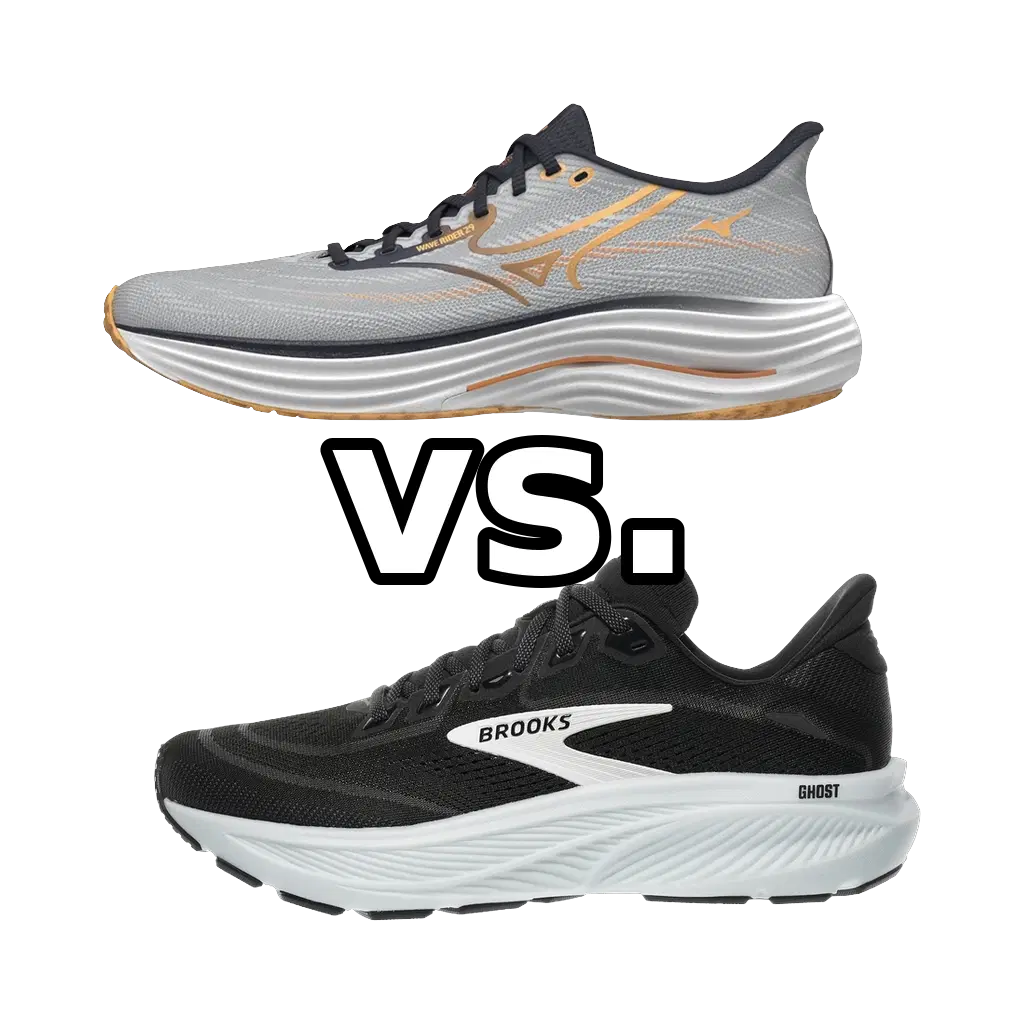
Verdict
These shoes serve the same purpose at the same level, so it genuinely comes down to ride preference, not quality. Choose the Wave Rider 29 if you want lighter and livelier with a little more speed range; choose the Ghost 18 if you want calmer, more planted, and maximally durable for steady easy miles. If you tend to vary your paces, lean Mizuno; if you want one dependable cruiser for the bulk of your base, lean Brooks.
Pace
3 of 6
Cushioning
4 of 6
Responsiveness
3 of 6
Stability
4 of 6
Drop
12 mm
Support
Neutral
Plate
None
Distances
10KHalfMarathon
Pace
3 of 6
Cushioning
4 of 6
Responsiveness
3 of 6
Stability
4 of 6
Drop
12 mm
Support
Neutral
Plate
None
Distances
10KHalfMarathon
At a Glance
Mizuno Wave Rider 29Brooks Ghost 18
Who Should Choose Each Shoe
Choose
Mizuno Wave Rider 29
Pick the Wave Rider 29 if you want one trainer that handles daily mileage but still feels willing when you lift the pace for a tempo day or a faster long run. It's the better choice for runners who value a lighter, springier ride and a bit more versatility across paces, and for anyone who finds many daily trainers too dead or sluggish underfoot. Its slightly softer, taller forefoot also makes it a comfortable long-run option without feeling mushy.
Choose
Brooks Ghost 18
Pick the Ghost 18 if your priority is a smooth, planted, utterly predictable ride for easy and long steady runs, and you care more about stability and durability than about pop or speed. It's an ideal fit for newer runners, heavier runners, and heel strikers who want a reassuring, no-surprises platform that disappears underfoot and holds up to heavy weekly mileage. If you never plan to chase pace in this shoe and just want dependable cushioning mile after mile, the extra weight is a worthwhile trade.
Head-to-Head
Start with what they share, because it's most of the package: both are neutral trainers with a wide, posting-free platform that stays balanced and predictable, both run a traditional high heel-to-toe drop that eases the calves and suits heel strikers, and neither has a plate, so the midsole foam does all the work. The first real split is weight — the Wave Rider 29 comes in at roughly 258 g in a men's US 9 versus the Ghost 18's 289 g, a 30-gram gap that you feel over long miles and especially when you try to pick up the pace. The second split is the foam's personality. Mizuno's nitrogen-infused Enerzy is springy and lively — bouncy enough to feel willing when you push, though still firmer than a dedicated superfoam racer — whereas Brooks' DNA Loft v3 is cushioned but firm and controlled, delivering a smooth, planted roll rather than any rebound; it's a calm, no-drama ride that never feels eager to spring back. Stack heights are close, with the Ghost measured near 37 mm heel / 25 mm forefoot and the Wave Rider sitting slightly taller, particularly under the forefoot, which contributes to its softer, more cushioned toe-off. That lighter build and peppier foam also give the Wave Rider a touch more range at speed: it's comfortable around 5:00–6:00 min/km and can stretch toward 4:45 min/km before it runs out of life, while the Ghost is happiest at a more relaxed 5:30–6:30 min/km and starts to feel held back by its weight past about 5:00 min/km. The trade-off runs the other way on durability and ground feel: the Ghost's heft comes with a reassuringly solid, stable, long-wearing ride that's hard to beat for piling on easy and long steady miles. Uppers are a wash — both use a secure, breathable engineered mesh with a predictable fit.
Similar Comparisons

Brooks Ghost 18 vs Brooks Ghost AMP

Brooks Ghost 17 vs Mizuno Wave Rider 29

Saucony Ride 19 vs Brooks Ghost 18

Adidas Ultraboost 5X vs Mizuno Wave Rider 29

Brooks Ghost 17 vs Brooks Ghost 18

Nike Pegasus 42 vs Brooks Ghost 18

Brooks Ghost 18 vs Brooks Ghost Max 4

Brooks Ghost 18 vs Brooks Glycerin 23
© 2026 longrunshoes.ai | All rights reserved.
Use of materials from this site is permitted only with proper attribution and a link to longrunshoes.ai.