
Mizuno Wave Rider 29 vs Mizuno Wave Rider 30:
Which to Choose
Verdict
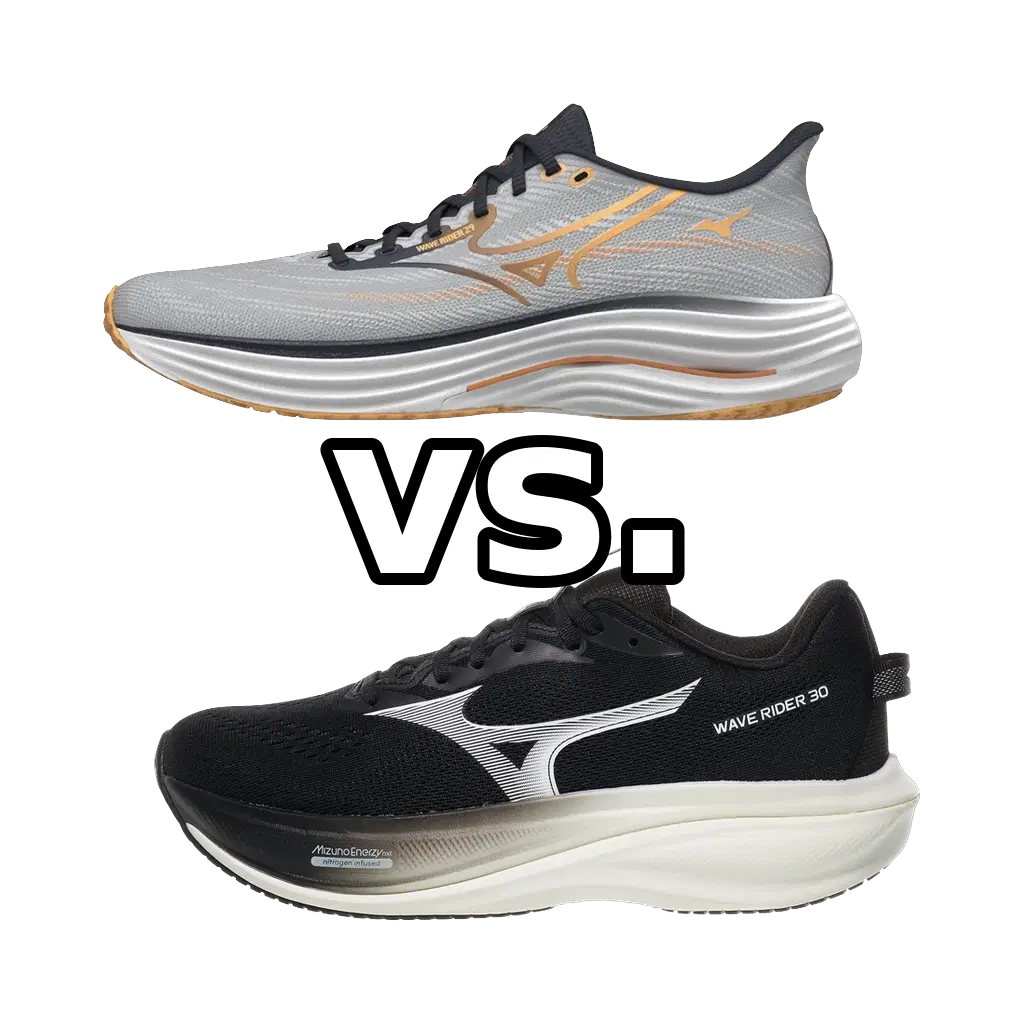
It depends on what you want to change about the 29, because the ride personality — neutral, stable, steady, with modest rebound — carries straight over. Upgrade to the 30 if you want more cushioning and structure for longer efforts and are fine with the lower 9mm drop; stick with the 29 if you value its firmer feel and traditional 12mm offset. This is a genuine plush-and-structured evolution, not a reinvention, so a happy 29 owner isn't missing a fundamentally different shoe.
Pace
3 of 6
Cushioning
4 of 6
Responsiveness
3 of 6
Stability
4 of 6
Drop
12 mm
Support
Neutral
Plate
None
Distances
10KHalfMarathon
Pace
3 of 6
Cushioning
6 of 6
Responsiveness
3 of 6
Stability
4 of 6
Drop
9 mm
Support
Neutral
Plate
Composite
Distances
10KHalfMarathon
At a Glance
Mizuno Wave Rider 29Mizuno Wave Rider 30
Who Should Choose Each Shoe
Choose
Mizuno Wave Rider 29
Choose the Wave Rider 29 if you specifically like a firmer, lower-to-the-ground daily trainer and the traditional 12mm drop — it's the friendlier option for committed heel strikers or anyone whose calves and Achilles appreciate the higher offset. It's also the pick for runners who don't want or need max cushioning and prefer the more direct, foam-only feel without a plate underfoot. If you already own and are happy with the 29 for steady 10K-to-half mileage, there's no urgent reason to move.
Choose
Mizuno Wave Rider 30
Choose the Wave Rider 30 if you want more underfoot protection for long runs and marathon buildups — the deeper ENERZY NXT foam and taller platform make it the better shoe for extended time on feet. It also suits runners who are comfortable dropping to a 9mm offset and who like the structured, held-together feel a full-length plate brings to the transition. It's the natural upgrade for a 29 owner who found their shoe a touch firm or wanted a plusher landing without giving up the neutral, everyday-trainer personality.
Head-to-Head
The clearest split is cushioning and geometry. The 29 runs on Mizuno's Enerzy foam with no plate at all — recent Riders had stripped out the old plastic Wave insert, so the foam does all the work — giving a moderate, springy-but-firm platform on a traditional 12mm heel-to-toe drop. The 30 reverses course on both fronts: it stacks up max-cushion, nitrogen-infused ENERZY NXT foam over a full-length composite (plastic, not carbon) Wave Plate, on a 43mm heel / 34mm forefoot platform and a lower 9mm drop. In practice that means the 30 lands noticeably plusher and more protected for long time on feet, with the full-length plate firming and organizing the transition, while the 29 sits lower and feels firmer and more directly connected to the ground, with its steeper 12mm drop shifting load off the calves toward the heel. What doesn't change is the character: both score the same on responsiveness, and both are honest about it — rebound is willing but modest, and neither gives back as much as its stack suggests when you try to open up the pace. Stability is a wash too (both neutral, both riding a broad, planted base), weight barely moves between the two generations, and the best-distance profile is identical. So the 30 is the more cushioned, more structured, lower-drop evolution of the same fundamentally steady, non-explosive daily trainer — not a new ride, but a plusher one.



© 2026 longrunshoes.ai | All rights reserved.
Use of materials from this site is permitted only with proper attribution and a link to longrunshoes.ai.