
Brooks Ghost 18 vs Mizuno Wave Rider 30:
Which to Choose
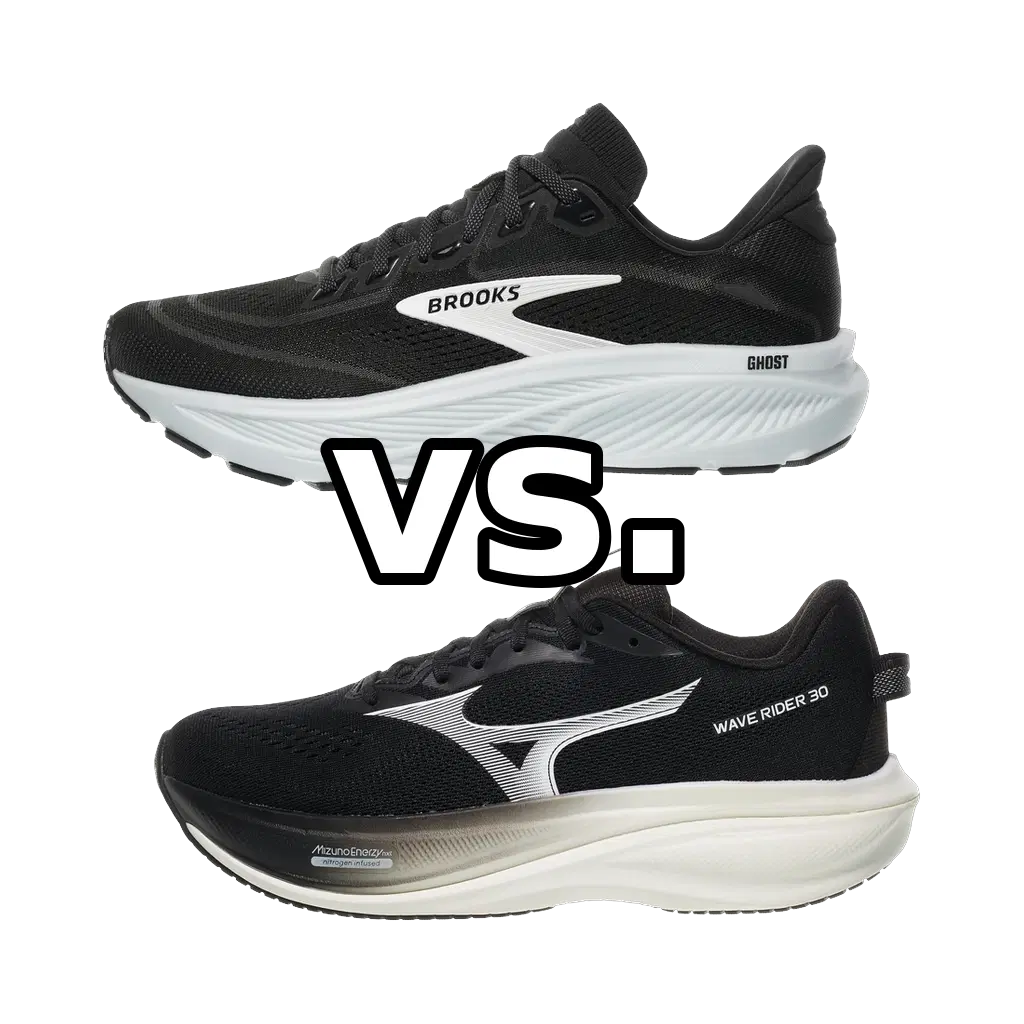
Verdict
These are close cousins doing the same job — neutral, non-racing daily trainers with equally honest, muted rebound — so the decision comes down to feel, not performance. Go Ghost 18 for a firmer, planted, high-drop (12mm) ride with more ground control and proven durability; go Wave Rider 30 for a taller, plusher, more protective platform that's lower to the ground at the heel (9mm drop) yet lighter on the scale. If you love deep cushioning and a moderate drop, the Mizuno wins; if you want firm predictability and a higher heel, the Brooks is your shoe.
Pace
3 of 6
Cushioning
4 of 6
Responsiveness
3 of 6
Stability
4 of 6
Drop
12 mm
Support
Neutral
Plate
None
Distances
10KHalfMarathon
Pace
3 of 6
Cushioning
6 of 6
Responsiveness
3 of 6
Stability
4 of 6
Drop
9 mm
Support
Neutral
Plate
Composite
Distances
10KHalfMarathon
At a Glance
Brooks Ghost 18Mizuno Wave Rider 30
Who Should Choose Each Shoe
Choose
Brooks Ghost 18
Choose the Ghost 18 if you're a heel striker or a newer runner who wants a predictable, durable everyday workhorse and prefers a firmer, more controlled ride you can feel the ground through. Its 12mm drop eases the calves and rewards a heel-first gait, and its lower stack gives a planted, connected feel that runners who dislike sitting on a tall pile of foam will appreciate. It's the pick if consistency, ground stability, and long-term durability matter more to you than plushness or low weight.
Choose
Mizuno Wave Rider 30
Choose the Wave Rider 30 if your priority is maximum underfoot protection for long, easy miles and time on feet, and you'd rather float over the road than feel it. The tall 43mm stack of ENERZY NXT plus the full-length Wave Plate gives a deep, cushioned-but-stable landing, and at 265g you get all that foam in a lighter package with a more moderate 9mm drop that suits midfoot as well as heel strikers. It's the better fit for runners who want plush marathon-training cushioning without stepping up to a firmer, higher-drop trainer.
Head-to-Head
Start with the numbers, because they tell the story cleanly. The Wave Rider 30 rides on a much taller platform — 43mm heel / 34mm forefoot versus the Ghost 18's more modest 37mm / 25mm — and its ENERZY NXT foam is genuinely max-cushioned (6/6) where the Ghost's DNA Loft v3 sits a step firmer and more controlled (4/6). Yet the taller, softer Mizuno is actually the lighter shoe: 265g in a men's US 9 against the Ghost's 289g, so Brooks pays for its durability and planted feel with about 24 extra grams. Geometry splits them too: the Ghost keeps a traditional 12mm drop that sits the heel high and takes load off the calves — friendly to heel strikers and newer runners — while the Wave Rider's 9mm drop is a touch more moderate and midfoot-friendly. Structurally, the Mizuno runs a full-length plastic Wave Plate (composite, not carbon) that firms up its deep foam and keeps that tall stack from feeling wobbly, whereas the Ghost has no plate and relies on a wide, low-slung platform for its stability. Both land at the same 4/6 stability score and both are honestly rated for modest rebound (3/6 responsiveness) — this is the key agreement between them: neither is springy, and pushing either past roughly 4:45–5:00 min/km reveals the same muted energy return. The felt difference is texture, not speed: the Ghost gives a firm, no-drama, roll-forward ride with more ground control, while the Wave Rider delivers a plusher, deeper, more protective landing for long time on feet.
Similar Comparisons

Mizuno Wave Rider 29 vs Mizuno Wave Rider 30

Saucony Ride 19 vs Brooks Ghost 18

Nike Pegasus 42 vs Mizuno Wave Rider 30
Brooks Ghost 17 vs Brooks Ghost 18

Nike Pegasus 42 vs Brooks Ghost 18

Brooks Ghost 18 vs Brooks Ghost Max 4
Brooks Ghost 18 vs Brooks Glycerin 23
Brooks Ghost 18 vs Brooks Adrenaline GTS 25
© 2026 longrunshoes.ai | All rights reserved.
Use of materials from this site is permitted only with proper attribution and a link to longrunshoes.ai.