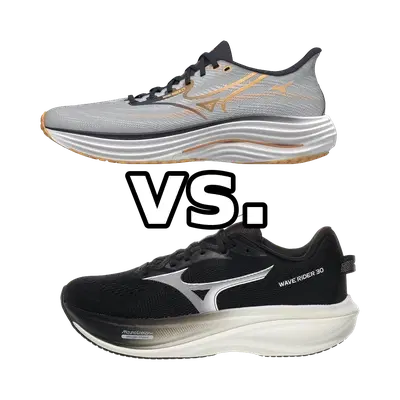
Mizuno Wave Rider 30 vs Mizuno Neo Zen 2:
Which to Choose
Verdict
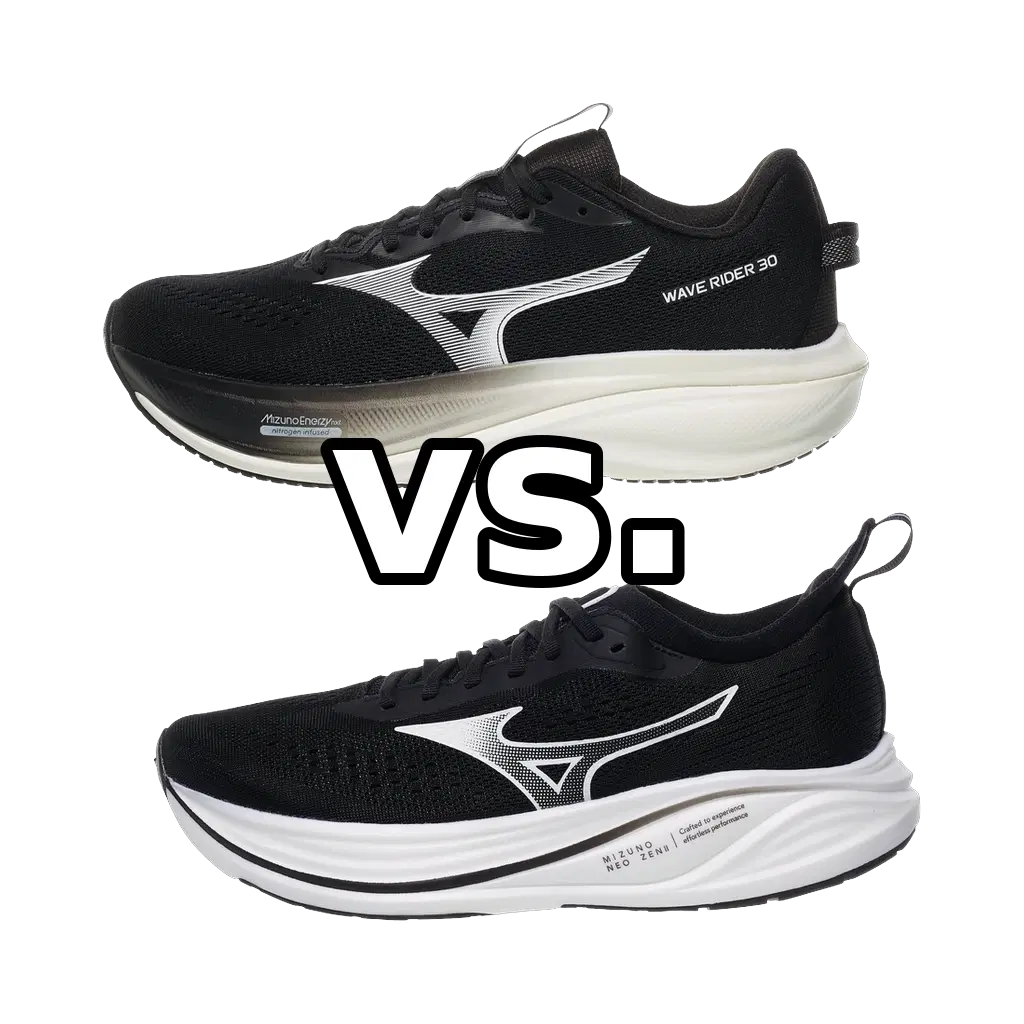
Both are honest, well-cushioned daily trainers for the same 10K-to-marathon mileage, so it comes down to geometry and feel rather than capability. Go with the Wave Rider 30 if you want the taller, more protective, higher-drop ride with the most cushioning for long slow miles; go with the Neo Zen 2 if you want the lighter, lower, more versatile shoe that stays connected to the ground and feels a touch livelier when the pace picks up. Neither is a racer — pick based on how high off the ground and how plush you want to sit.
Pace
3 of 6
Cushioning
6 of 6
Responsiveness
3 of 6
Stability
4 of 6
Drop
9 mm
Support
Neutral
Plate
Composite
Distances
10KHalfMarathon
Pace
3 of 6
Cushioning
5 of 6
Responsiveness
4 of 6
Stability
4 of 6
Drop
5 mm
Support
Stable Neutral
Plate
None
Distances
10KHalfMarathon
At a Glance
Mizuno Wave Rider 30Mizuno Neo Zen 2
Who Should Choose Each Shoe
Choose
Mizuno Wave Rider 30
Choose the Wave Rider 30 if your priority is maximum underfoot protection for easy and long slow miles, and you like a taller, more cushioned platform with a traditional 9 mm drop — it's the natural pick for heel and midfoot strikers who want the landing softened and don't care about ground feel. It suits runners building a marathon base who want one dependable, plush cruiser for steady rhythm running, and anyone coming from a conventional high-drop daily trainer who'd find a low-drop shoe a jarring change.
Choose
Mizuno Neo Zen 2
Choose the Neo Zen 2 if you want a lighter, lower, more versatile everyday trainer that stays closer to the ground and handles a wider spread of paces — at 241 g with a 5 mm drop and a hair more willing rebound, it's the better fit for runners who want their daily shoe to feel nimble rather than cushy. It's also the smarter pick for neutral-to-mildly-unstable footstrikers who value the planted, secure lockdown of its gusseted heel bootie, or for anyone who prefers a lower-drop, flatter ride that works across different landing styles.
Head-to-Head
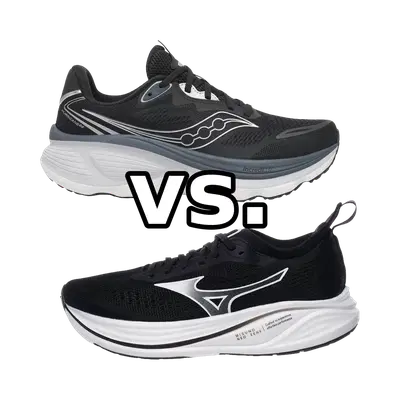
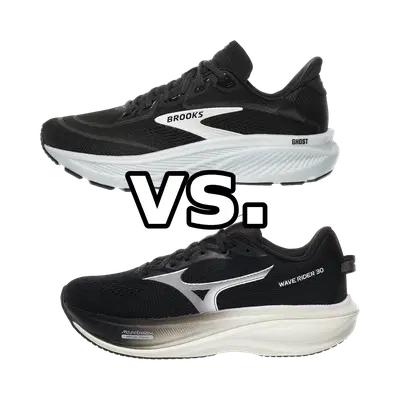
Start with the platform. The Wave Rider 30 is the taller, more protective shoe, with a 43 mm heel / 34 mm forefoot stack and a 9 mm drop, while the Neo Zen 2 sits lower and flatter at 40 mm heel / 35 mm forefoot and just a 5 mm drop. That difference is the whole character of the comparison: the Rider's bigger 9 mm ramp and deeper heel cushion are built to ease heel and midfoot landings and pile on protection for long time on feet (hence its max-cushion 6/6 rating), whereas the Neo Zen's 5 mm drop and near-even stack keep you closer to the ground and work a wider range of footstrikes, trading a little plushness for a tidier, more connected feel (a notch lower at 5/6 cushioning). Construction reinforces this. The Rider runs a full-length composite Wave Plate through the midsole, which firms up and structures the platform but doesn't add spring — rebound stays moderate (3/6) and energy return is honestly modest for the stack. The Neo Zen 2 is a single plateless slab of supercritical EVA-based ENERZY NXT; with no plate it won't pop either, but it reads as slightly more willing and responsive (4/6), giving cooperative bounce rather than a dead landing. Weight tips toward the Neo Zen as well: 241 g versus 265 g in a men's US 9, a real 24 g gap you feel when the pace lifts, and part of why the lighter shoe feels the more versatile of the two across tempos. Stability lands in a near-tie — both rate 4/6 and both lean on a broad platform — but they get there differently: the Rider uses its wide base plus the Wave Plate to stay planted as a true neutral shoe, while the Neo Zen pairs its wide platform with a gusseted, sock-like heel bootie for a stable-neutral hold aimed at runners who get a touch unstable when tired. Both share the same best distances (10K, half, marathon) and the same honest caveat: neither is a PR tool, and neither will reward hard surges the way a plated racer does.
© 2026 longrunshoes.ai | All rights reserved.
Use of materials from this site is permitted only with proper attribution and a link to longrunshoes.ai.