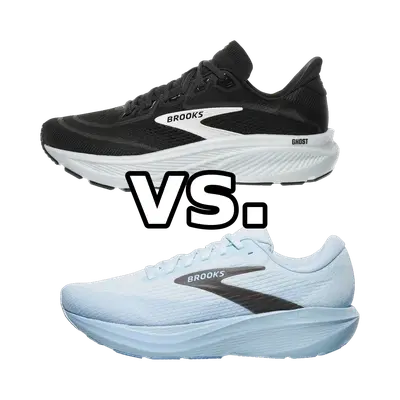
Brooks Ghost 18 vs Hoka Clifton 11:
Which to Choose
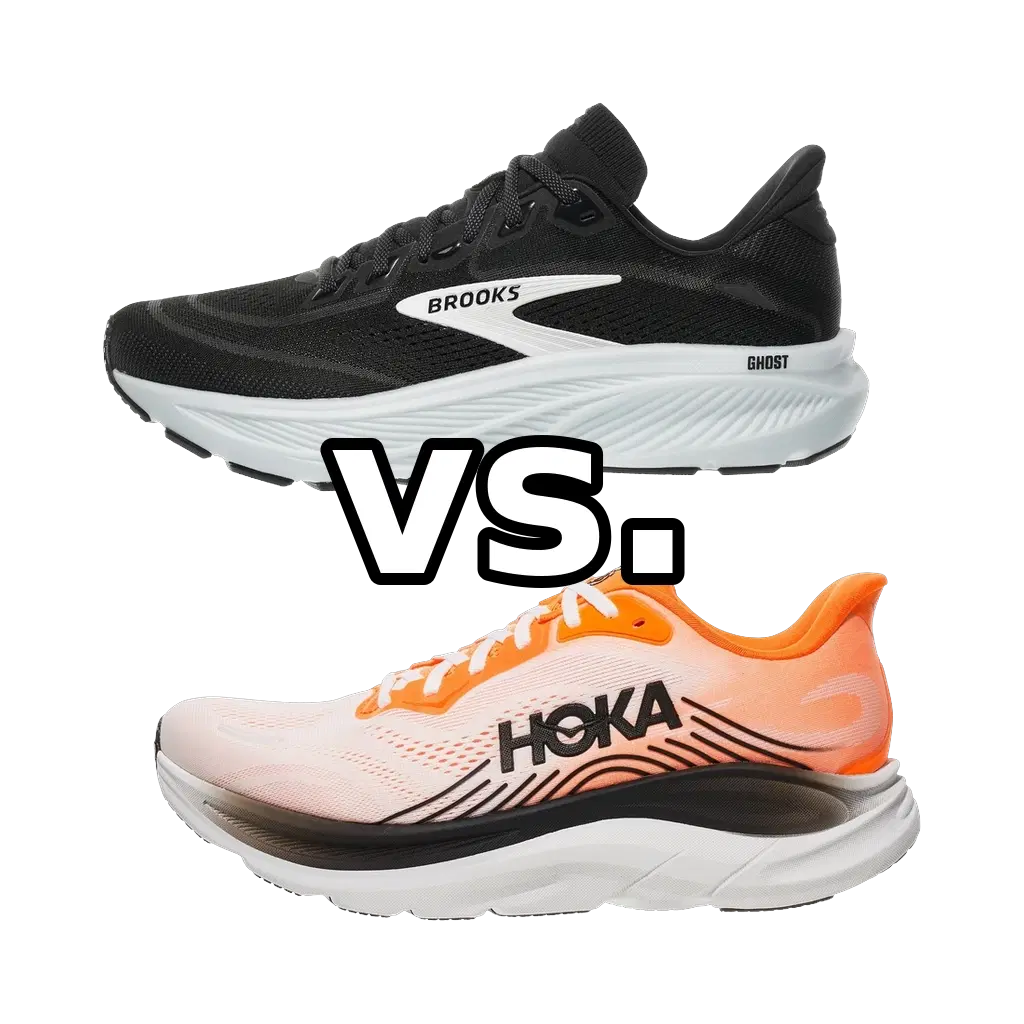
Verdict
These are close cousins built for the same job, so the decision hinges on fit and feel, not quality. Go Clifton 11 if you want more cushioning underfoot, less weight, and a lower, more rockered ride for long miles; go Ghost 18 if you're a heel striker who wants the higher 12 mm drop, a more planted lower-to-the-ground feel, and a reputation for durability. Neither is a speed shoe, so pick the geometry your legs prefer.
Pace
3 of 6
Cushioning
4 of 6
Responsiveness
3 of 6
Stability
4 of 6
Drop
12 mm
Support
Neutral
Plate
None
Distances
10KHalfMarathon
Pace
3 of 6
Cushioning
5 of 6
Responsiveness
3 of 6
Stability
4 of 6
Drop
8 mm
Support
Neutral
Plate
None
Distances
10KHalfMarathon
At a Glance
Brooks Ghost 18Hoka Clifton 11
Who Should Choose Each Shoe
Choose
Brooks Ghost 18
Choose the Ghost 18 if you're a heel striker or a newer runner who wants maximum predictability and a shoe that lasts — the 12 mm drop takes strain off the calves, and the firmer, lower DNA Loft v3 platform gives that reassuring planted, no-drama feel through every transition. It's the pick for steady daily and long training miles where durability and a controlled roll matter more than a low weight or a tall, soft stack. Runners who like feeling closer to the ground and want a calm, dependable everyday workhorse will be happiest here.
Choose
Hoka Clifton 11
Choose the Clifton 11 if you want more cushioning and a lighter shoe for long efforts, and you don't need the higher heel of the Ghost — the taller 41/30 mm stack adds joint protection over big miles while the ~258 g weight keeps it nimble for its size. Its lower marketed drop and pronounced rocker suit midfoot-leaning runners and anyone who wants generous protection without the bulk. If your weekly routine centers on longer aerobic runs and the half-to-marathon range, and you prize a light, tall, protective ride, this is the better fit.
Head-to-Head
On paper these two overlap heavily: both are neutral, both run a wide and predictable platform with above-average stability for their category, both skip a plate, and both settle into the same optimal daily-training pace zone of roughly 5:30–6:30 min/km with a fastest effective ceiling around 5:15–5:30. Where they diverge is geometry and mass. The Clifton 11 is the taller, softer-riding shoe — lab stack sits near 41 mm heel / 30 mm forefoot against the Ghost 18's 37 mm / 25 mm — and it carries more cushioning (rated 5/6 versus the Ghost's 4/6), so it offers more underfoot protection for very long efforts. Despite that extra stack, the Clifton is the lighter shoe, measured around 258 g in a men's US 9 versus 289 g for the Ghost, a meaningful 31 g gap that the Clifton owes to its lightweight CMEVA build. Drop is the other real difference: the Ghost runs a tall 12 mm heel-to-toe offset that clearly favors heel strikers and eases the calves, while the Clifton is marketed at 8 mm (though it measures closer to 11 mm in practice), meaning the actual ramp gap between the two is smaller than the spec sheets suggest. Ride feel is more alike than different — both foams are on the firm, controlled side rather than pillowy, both deliver smooth, rockered heel-to-toe transitions, and both offer honest-but-muted rebound that rewards a relaxed cruising rhythm and gets held back if you try to surge. The Ghost feels the more planted, lower-to-the-ground of the pair; the Clifton feels taller and more rockered while staying composed.
Similar Comparisons

Hoka Clifton 10 vs Hoka Clifton 11

Saucony Ride 19 vs Brooks Ghost 18
Asics Novablast 6 vs Hoka Clifton 11
Brooks Ghost 17 vs Brooks Ghost 18
Brooks Glycerin 23 vs Hoka Clifton 11

Nike Pegasus 42 vs Brooks Ghost 18

Mizuno Wave Serene vs Hoka Clifton 11
Brooks Ghost 18 vs Brooks Ghost Max 4
© 2026 longrunshoes.ai | All rights reserved.
Use of materials from this site is permitted only with proper attribution and a link to longrunshoes.ai.