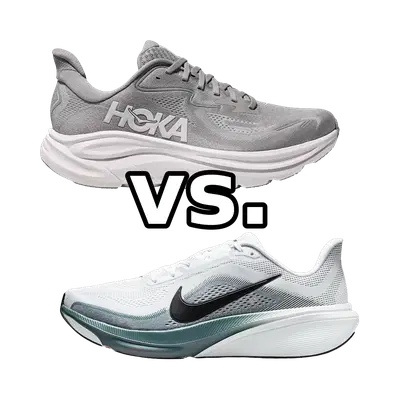
Hoka Clifton 10 vs Hoka Rincon 4:
Which to Choose
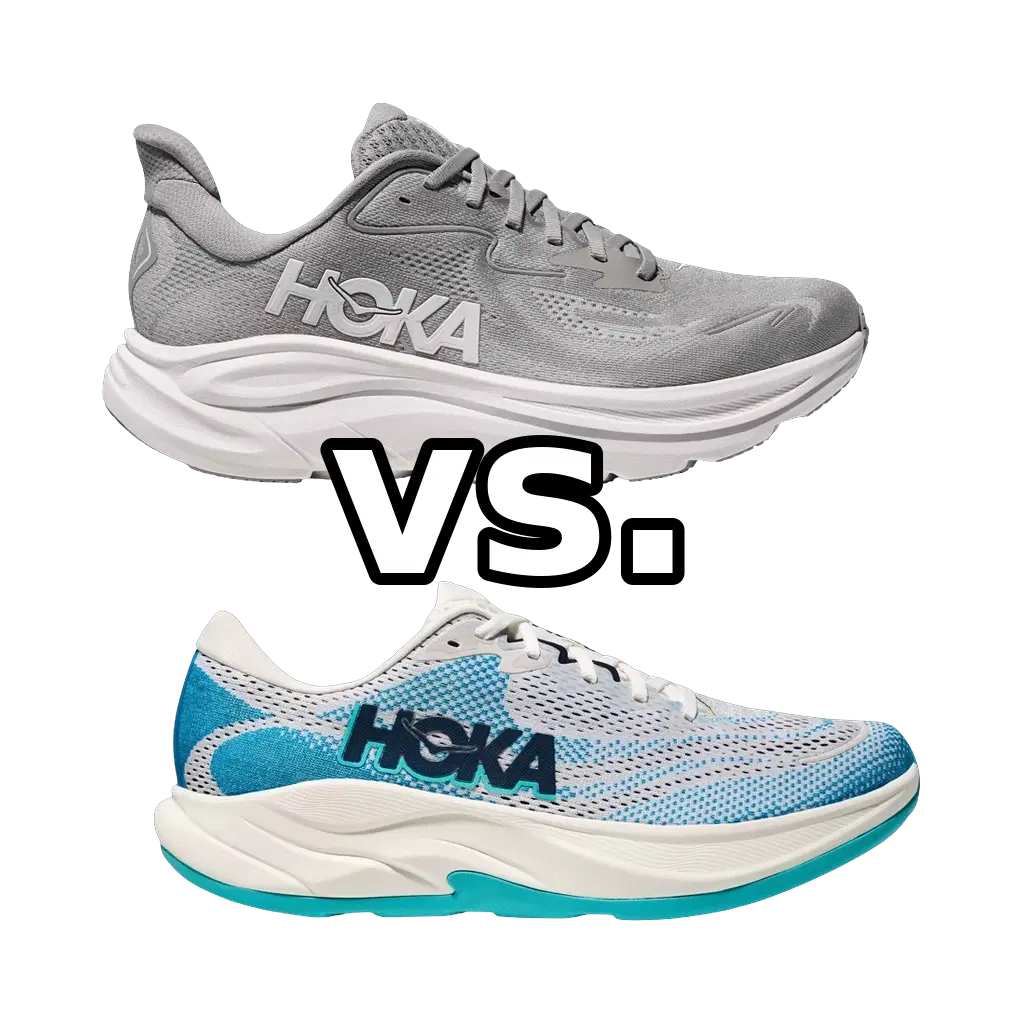
Verdict
It genuinely depends on what you want from the miles. Go Clifton 10 if you value plush, protective cushioning and long-run comfort and don't mind the extra weight; go Rincon 4 if you want a lighter, firmer, more responsive shoe that doubles as an uptempo trainer and shorter-distance option. Simplest rule: the longer and easier your typical run, lean Clifton; the faster and shorter, lean Rincon.
Pace
3 of 6
Cushioning
5 of 6
Responsiveness
3 of 6
Stability
4 of 6
Drop
8 mm
Support
Neutral
Plate
None
Distances
10KHalfMarathon
Pace
4 of 6
Cushioning
4 of 6
Responsiveness
3 of 6
Stability
3 of 6
Drop
5 mm
Support
Neutral
Plate
None
Distances
5K10KHalf
At a Glance
Hoka Clifton 10Hoka Rincon 4
Who Should Choose Each Shoe
Choose
Hoka Clifton 10
Choose the Clifton 10 if your priority is comfort and protection over distance — beginners and recreational runners logging steady aerobic kilometers, long runs, and recovery days who want a forgiving shoe that can still carry them through a half or full marathon. It's the better pick if you like a softer, deeper, more cushioned ride with a familiar 8mm drop and a planted, stable platform, and you're not chasing tempo work or sharp turnover.
Choose
Hoka Rincon 4
Choose the Rincon 4 if you want one light shoe that handles easy miles but can also pick up the pace, with a quick, springy, connected feel and a low 5mm drop that rewards a fast midfoot turnover. It suits runners racing or training from 5K through the half who value low weight and responsiveness over plush softness, and who are comfortable on a slightly tippier, firmer platform. It's the wrong call if you mainly want a cushy, protective recovery cruiser.
Head-to-Head
The clearest split is cushioning versus weight. The Clifton 10 is the taller, softer shoe — a 42mm heel stack, an 8mm drop, and deep, forgiving compression-molded EVA that soaks up impact and stays quiet and smooth underfoot. That protection comes at a cost in mass: it lands around 278g in a men's US 9. The Rincon 4 is the featherweight of the pair at roughly 220g, riding on a lower stack with a 5mm drop that encourages a midfoot strike and a natural, quick feel. Where the Clifton feels plush and protective but flattens out and gives little back when you press the pace, the Rincon feels firmish, connected, and springy — it wakes up as you speed up rather than coddling you when you slow down. Their intended pace zones tell the same story: the Clifton is happiest at a comfortable 5:00–6:00 min/km cruise and tops out usefully near 4:45, while the Rincon lives in a 4:30–5:15 uptempo zone and stays effective down to about 4:15. Best distances overlap at the 10K, but diverge from there — the Clifton stretches up to the half and marathon as a long-run and easy-day workhorse, while the Rincon shines from 5K through the half with the 10K as its sweet spot. Stability also tilts toward the Clifton: its broad, cushioned rocker platform (4/6) feels calm and planted, whereas the Rincon's taller, slightly narrower base (3/6) can feel a touch tippy at very easy jogging paces until you settle in. Neither has a plate and both use EVA that trades some longevity for comfort — the Clifton's soft foam tends to compress and lose its plush feel before the outsole wears out, while the Rincon's thin, lightweight build gives up a bit of outsole durability for that low weight.
Similar Comparisons
New Balance FuelCell Propel v5 vs Hoka Rincon 4
Hoka Clifton 10 vs Saucony Endorphin Azura
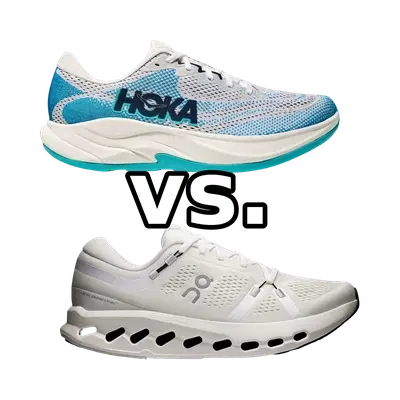
Hoka Rincon 4 vs On Cloudsurfer 2
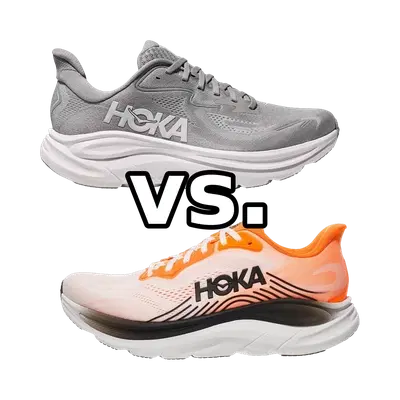
Hoka Clifton 10 vs Hoka Clifton 11
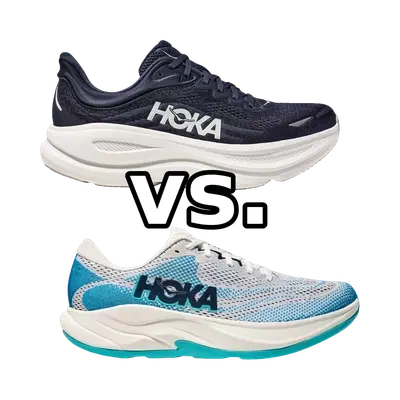
Hoka Bondi 9 vs Hoka Rincon 4
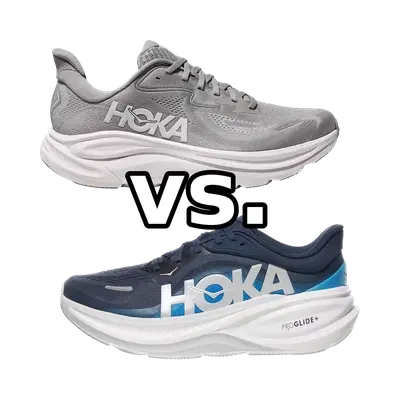
Hoka Clifton 10 vs Hoka Clifton Pro
Hoka Rincon 4 vs Hoka Rincon 5
Hoka Clifton 10 vs Hoka Arahi 8
© 2026 longrunshoes.ai | All rights reserved.
Use of materials from this site is permitted only with proper attribution and a link to longrunshoes.ai.