Hoka Bondi 9 vs Hoka Gaviota 5:
Which to Choose
Verdict
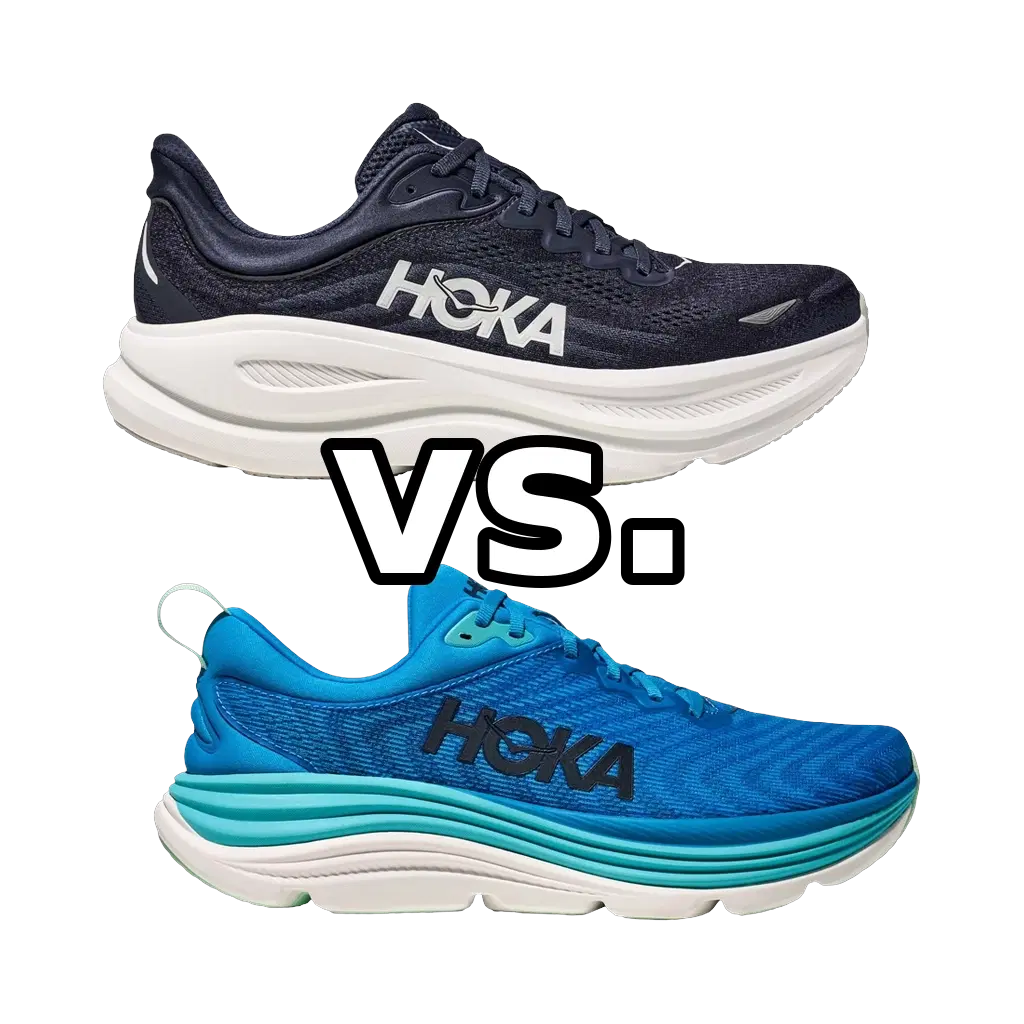
It genuinely comes down to one thing: support. If you overpronate or want a more structured, locked-in ride — especially for marathon-length long runs — the Gaviota 5 is the clear call. If you're a neutral runner and just want the softest, tallest, lightest max-cushion landing for easy and recovery miles, the Bondi 9 wins. For everyone whose stride is neutral, the Bondi is the default; reach for the Gaviota only when you need the guidance it adds.
Pace
2 of 6
Cushioning
6 of 6
Responsiveness
3 of 6
Stability
5 of 6
Drop
5 mm
Support
Stable Neutral
Plate
None
Distances
10KHalf
Pace
3 of 6
Cushioning
6 of 6
Responsiveness
3 of 6
Stability
6 of 6
Drop
6 mm
Support
Stability
Plate
None
Distances
10KHalfMarathon
At a Glance
Hoka Bondi 9Hoka Gaviota 5
Who Should Choose Each Shoe
Choose
Hoka Bondi 9
Choose the Bondi 9 if you're a neutral runner who wants the deepest, most protective landing available for easy days, recovery runs, and base-building mileage, and you don't need any pronation control. It's the pick for beginners adding volume, heavier runners, and anyone who prioritizes a plush, forgiving feel underfoot — and at 297g on a 43mm stack, it delivers maximum cushioning without the extra weight of a support frame. Its sweet spot is relaxed 10K and half-marathon-distance aerobic miles.
Choose
Hoka Gaviota 5
Choose the Gaviota 5 if your foot rolls inward on landing and you want that stride kept in line, or if you simply like a more grounded, structured feel for long steady efforts. Its H-Frame support gives maximum stability without a rigid medial post, making it ideal for overpronators and heavier runners who want protection and guidance in one shoe. It's also the better choice if your long runs reach marathon distance, since it's rated and happy up to the full 26.2.
Head-to-Head
These two are far more alike than different, so the comparison is about a few decisive distinctions rather than a long list. On cushioning, both are max-stack and plush, but they get there differently. The Bondi 9 is genuinely the taller shoe — 43mm heel / 38mm forefoot with a 5mm drop — on a supercritical-EVA midsole, and despite that height it's the lighter of the two at 297g (men's 9). The Gaviota 5 is lower underfoot at 36mm heel / 30mm forefoot with a 6mm drop, built on CMEVA foam, yet it weighs slightly more at 309g because of its added structure. That structure is the headline difference: the Gaviota wraps an H-Frame guidance system into its sidewalls for overpronators and earns a maximum 6/6 stability rating, where the Bondi relies on a wide, planted base and sidewalls for a 5/6 stable-neutral feel with no corrective intent. Ride feel is similar in character — plush, controlled, and muted rather than bouncy, with both going soft and heavy-feeling if you try to accelerate — but the Bondi's extra stack gives a slightly more pillowy, floaty landing, while the Gaviota feels a touch more grounded and locked-in. The drop difference (5mm vs 6mm) is negligible in practice. Use case nudges them apart too: the Bondi is happiest on easy 10Ks and half-distance long runs, topping out around 5:30 min/km, whereas the Gaviota is comfortable stretching all the way to the full marathon and holds its effective zone a little faster, around 5:15 min/km.
Similar Comparisons
Hoka Gaviota 5 vs Hoka Gaviota 6
Hoka Bondi 9 vs Asics Gel-Nimbus 28
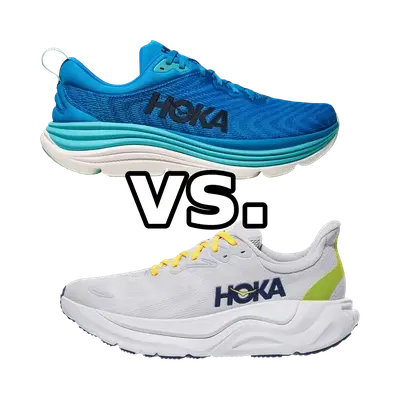
Hoka Gaviota 5 vs Hoka Arahi 8
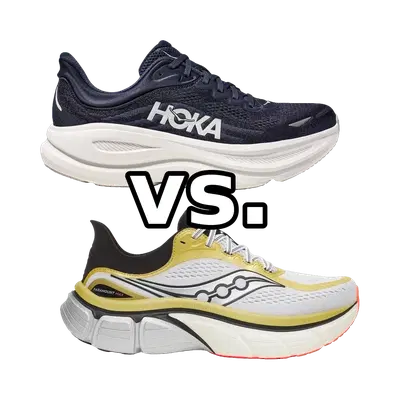
Hoka Bondi 9 vs Saucony Paramount Max
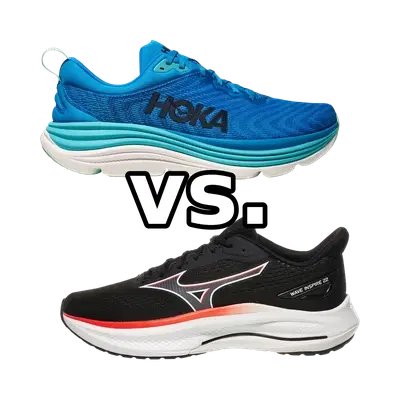
Hoka Gaviota 5 vs Mizuno Wave Inspire 22
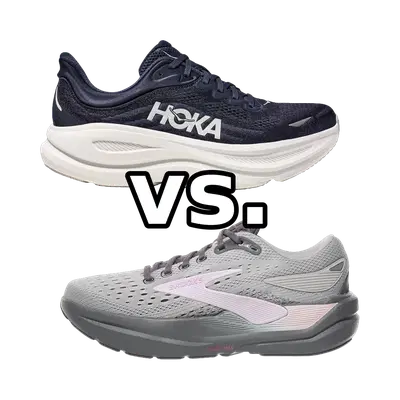
Hoka Bondi 9 vs Brooks Ghost Max 3
Hoka Bondi 9 vs Brooks Glycerin Max 2
Hoka Bondi 9 vs Hoka Clifton 11
© 2026 longrunshoes.ai | All rights reserved.
Use of materials from this site is permitted only with proper attribution and a link to longrunshoes.ai.