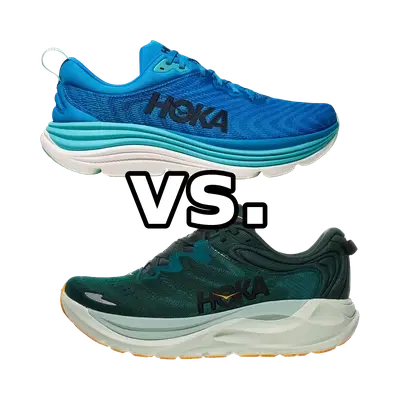
Hoka Gaviota 5 vs Mizuno Wave Inspire 22:
Which to Choose
Verdict
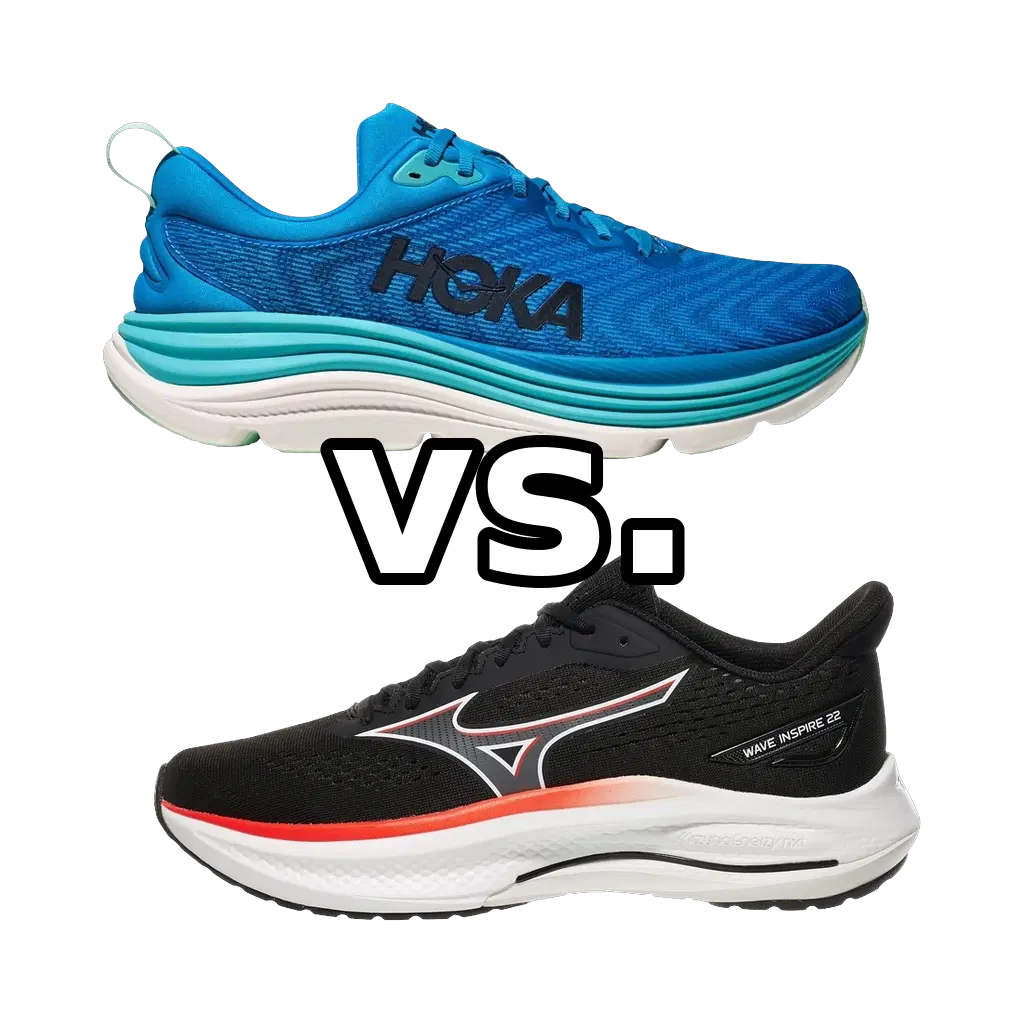
Both are excellent, plate-or-frame-guided stability trainers for the same distances, so the decision comes down to cushioning feel, not capability: go Gaviota 5 if you want maximum plush protection and an effortless rockered roll for easy and long miles, and Wave Inspire 22 if you want a firmer, lower, more road-connected ride with a bit more pace-day flexibility. They weigh about the same, so let underfoot softness — soft-and-planted versus firm-and-grounded — and your preferred drop (6mm vs 8mm) be the tiebreaker.
Pace
3 of 6
Cushioning
6 of 6
Responsiveness
3 of 6
Stability
6 of 6
Drop
6 mm
Support
Stability
Plate
None
Distances
10KHalfMarathon
Pace
3 of 6
Cushioning
4 of 6
Responsiveness
3 of 6
Stability
5 of 6
Drop
8 mm
Support
Stability
Plate
Composite
Distances
10KHalfMarathon
At a Glance
Hoka Gaviota 5Mizuno Wave Inspire 22
Who Should Choose Each Shoe
Choose
Hoka Gaviota 5
Pick the Gaviota 5 if protection and a plush, cosseting landing are your top priorities — it's the better choice for heavier runners, strong overpronators who want the most structured support available without a medial post, and anyone who values legs-fresh recovery and long, unhurried miles over pace. If your ideal supportive shoe feels soft and planted and rolls you forward on its own, and you're happy staying in a relaxed cadence, this is the one.
Choose
Mizuno Wave Inspire 22
Choose the Wave Inspire 22 if you prefer a firmer, more connected ride and don't want to sit up on a soft, maximal platform. It suits overpronators — from beginners to experienced runners — who want a dependable, lower-to-the-ground daily trainer that stays composed at conversational paces but is a touch more willing than the Gaviota to stretch into comfortable tempo. Its higher 8mm drop and grounded Enerzy NXT foam reward runners who like to feel the road and press the pace on some days.
Head-to-Head
The single biggest difference is the feel of the cushioning, not the amount of it. The Gaviota 5 rates a maximum 6/6 on cushioning against the Inspire's 4/6, and its CMEVA foam is genuinely plush and forgiving, soaking up impact with a soft, planted landing. The Inspire's nitrogen-infused Enerzy NXT is firm and grounded — protective enough for long runs but deliberately connected to the road rather than pillowy. Interestingly, that difference is more about foam character than raw stack: measured heights are close, with the Gaviota carrying a thicker forefoot (roughly 33mm) at a 6mm drop and the Inspire sitting on a taller heel (about 37mm) and thinner 29mm forefoot at a measured 8mm drop, so the Mizuno tips you forward a touch more while the Hoka spreads cushion more evenly front-to-back. Weight, despite the Gaviota's reputation as the more substantial shoe, is nearly a wash — both land right around 295–300g in a men's US 9. On stability, both are among the most supportive non-posted trainers you can buy, but they get there differently: the Gaviota's H-Frame builds sidewall structure around a max 6/6 rating, while the Inspire uses a wide platform plus a plastic Wave plate for a slightly less aggressive 5/6 hold. That Wave plate is for guidance, not propulsion — neither shoe is springy or snappy, and both post modest energy return (3/6 responsiveness each). Ride-wise, the Gaviota rolls you through the stride on its early-stage Meta-Rocker and rewards a relaxed, unhurried cadence, topping out usefully around 5:15/km before the cushion feels like dead weight; the Inspire's transitions are smooth and predictable and it's marginally more willing to pick up the pace, with a comfortable-tempo ceiling around 5:00–5:30/km. Both cover the same 10K/half/marathon range and shine on steady long runs.
© 2026 longrunshoes.ai | All rights reserved.
Use of materials from this site is permitted only with proper attribution and a link to longrunshoes.ai.