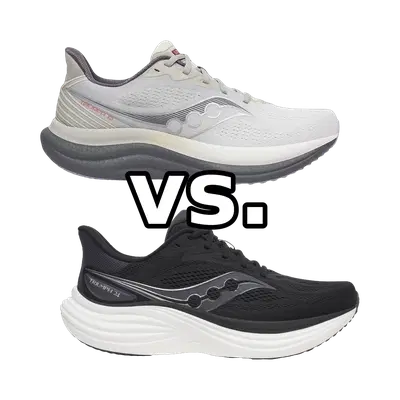
Saucony Triumph 23 vs Adidas Adizero Evo SL:
Which to Choose
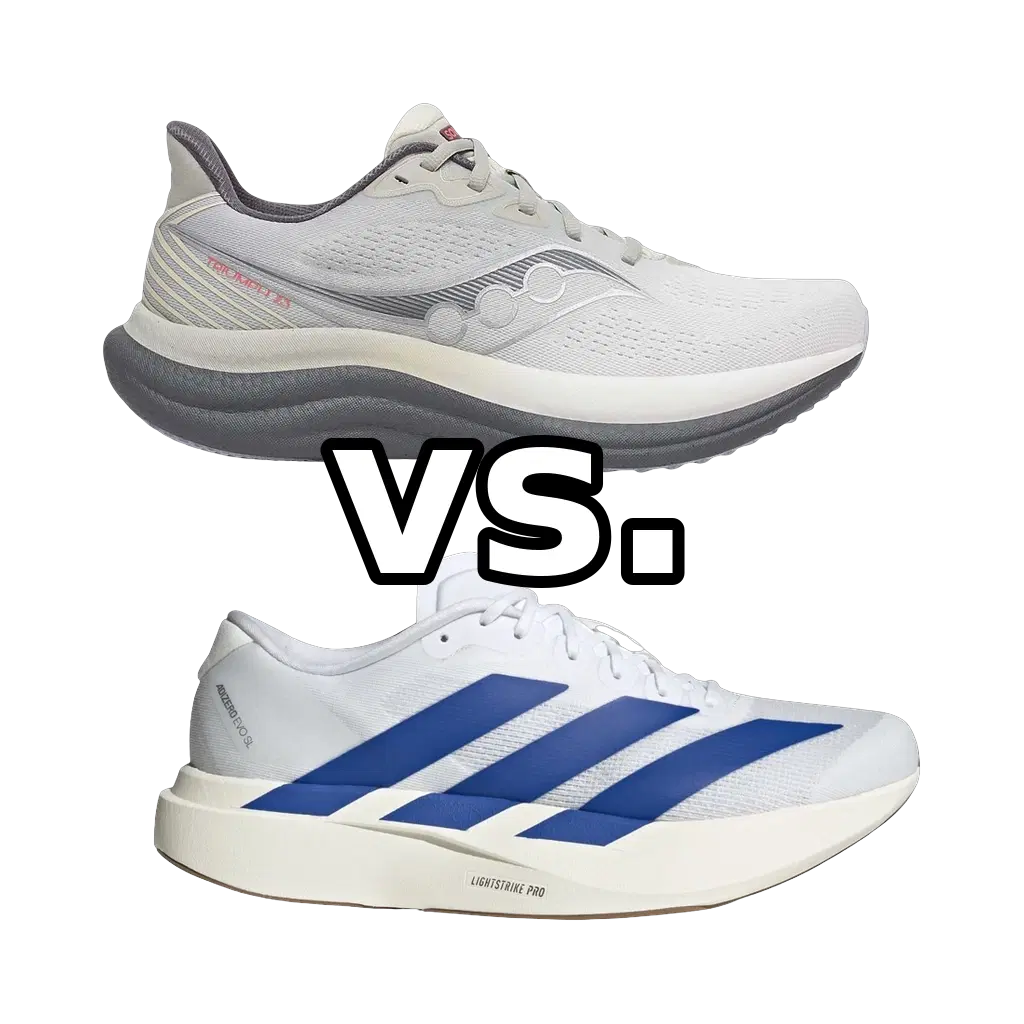
Verdict
These aren't really competitors so much as complements, so the choice comes down to what role you need filled. If your weeks are built on easy and long miles and you want cushioned, stable comfort, the Triumph 23 is the pick; if your training is built around tempo, intervals, and shorter-distance racing and you want a light, fast-rolling ride, the Evo SL wins. Pace intent and drop preference — relaxed 10mm mileage versus eager 6mm speed — decide it.
Pace
3 of 6
Cushioning
5 of 6
Responsiveness
5 of 6
Stability
4 of 6
Drop
10 mm
Support
Neutral
Plate
None
Distances
10KHalfMarathon
Pace
5 of 6
Cushioning
5 of 6
Responsiveness
5 of 6
Stability
3 of 6
Drop
6 mm
Support
Neutral
Plate
None
Distances
5K10KHalf
At a Glance
Saucony Triumph 23Adidas Adizero Evo SL
Who Should Choose Each Shoe
Choose
Saucony Triumph 23
Choose the Triumph 23 if you're logging real volume — a recreational marathoner, a half-marathon builder, or anyone who wants one plush shoe for easy days and long runs. The 10mm drop eases the calves over distance, the sidewalled platform keeps the soft ride steady, and the extra cushioning rewards time on feet rather than speed. It's the better pick for runners who value all-day comfort and a forgiving ride over snappy turnover.
Choose
Adidas Adizero Evo SL
Choose the Evo SL if you're the runner chasing speed — tempo runs, intervals, and racing 5K to the half without committing to a rigid carbon racer. Its lighter weight and 6mm drop encourage a quick midfoot strike, and the Lightstrike Pro foam comes alive when you push the pace. It's ideal for experienced or improving runners who want one lively trainer that doubles as a workout-and-race shoe, not a recovery-day cruiser.
Head-to-Head
Start with the foams, because that's where they're most alike: both use a nitrogen/PEBA-class superfoam (PWRRUN PB in the Saucony, Lightstrike Pro in the Adidas) that's soft but springy, and both rely on foam and geometry alone — neither has a plate — so the rebound is forgiving rather than aggressive. The decisive differences are weight, drop, and intended pace. The Evo SL is noticeably lighter, around 224g versus roughly 263g for the Triumph in a men's sample, and it runs a lower 6mm drop against the Triumph's traditional 10mm. That combination makes the Adidas feel quicker and more eager to roll forward: its happy zone is genuinely fast, roughly 3:45–4:30 min/km, and it's happiest over 5K to the half with the 10K as its sweet spot. The Triumph's taller 10mm heel and heavier, more cushioned build point the other way — it's dialed for 4:45–6:00 min/km everyday and long-run pace, shining from the 10K up through the full marathon. Stability also splits them: the Triumph scores higher (4/6) thanks to a wide, sidewalled platform that steadies its soft stack, while the Evo SL (3/6) rides a softer, less planted platform that can feel unsettled at slow jogging speeds and only calms down once you pick it up. Both share the same honest caveat of exposed-foam, fast-trainer outsoles — durability is a weak point relative to fully rubbered daily shoes — but the Triumph is built with more of a high-mileage, comfort-and-durability mandate, whereas the Evo SL accepts typical fast-foam wear as the cost of being light and lively.
Similar Comparisons
Adidas Adizero Evo SL vs Asics Magic Speed 4
Saucony Triumph 23 vs Brooks Glycerin 22
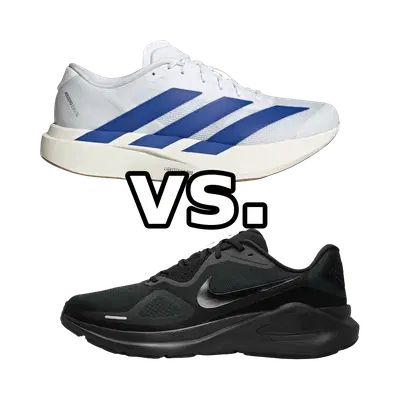
Adidas Adizero Evo SL vs Nike Structure 26
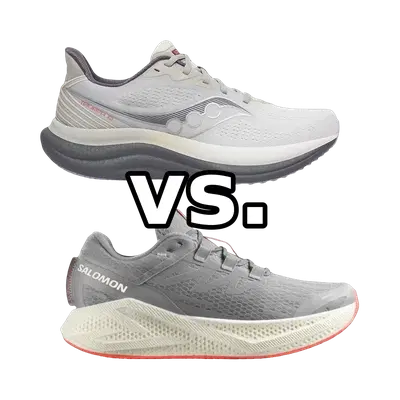
Saucony Triumph 23 vs Salomon Aero Glide 3
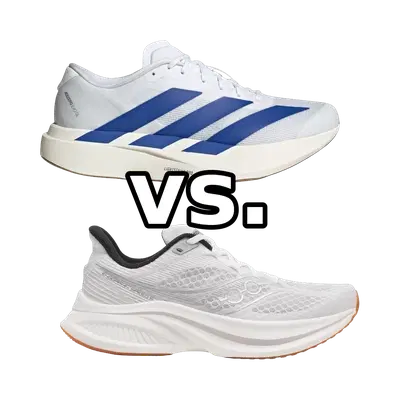
Adidas Adizero Evo SL vs Saucony Endorphin Speed 5
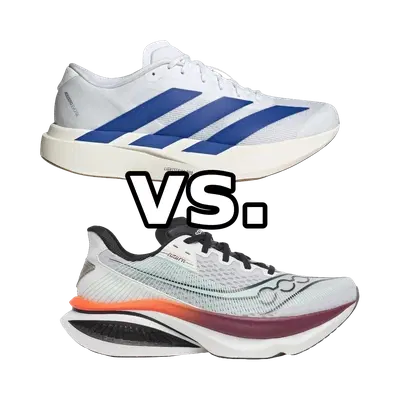
Adidas Adizero Evo SL vs Saucony Endorphin Azura
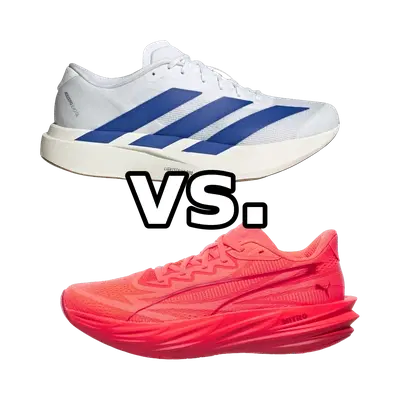
Adidas Adizero Evo SL vs Puma Deviate Pure Nitro
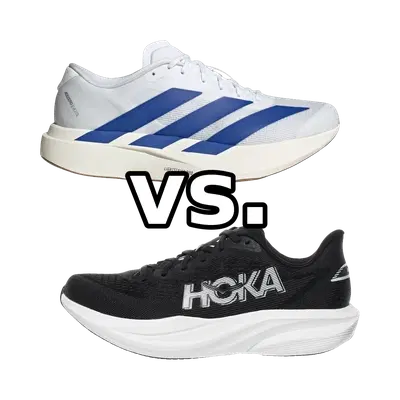
Adidas Adizero Evo SL vs Hoka Mach 7
© 2026 longrunshoes.ai | All rights reserved.
Use of materials from this site is permitted only with proper attribution and a link to longrunshoes.ai.