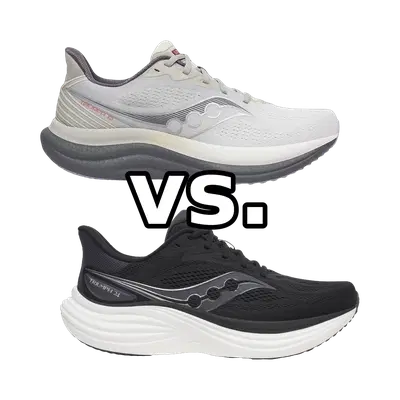
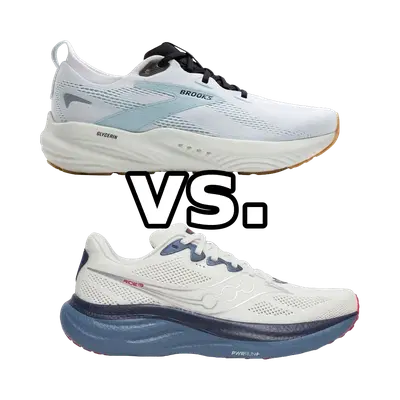
Saucony Triumph 23 vs Brooks Glycerin 22:
Which to Choose
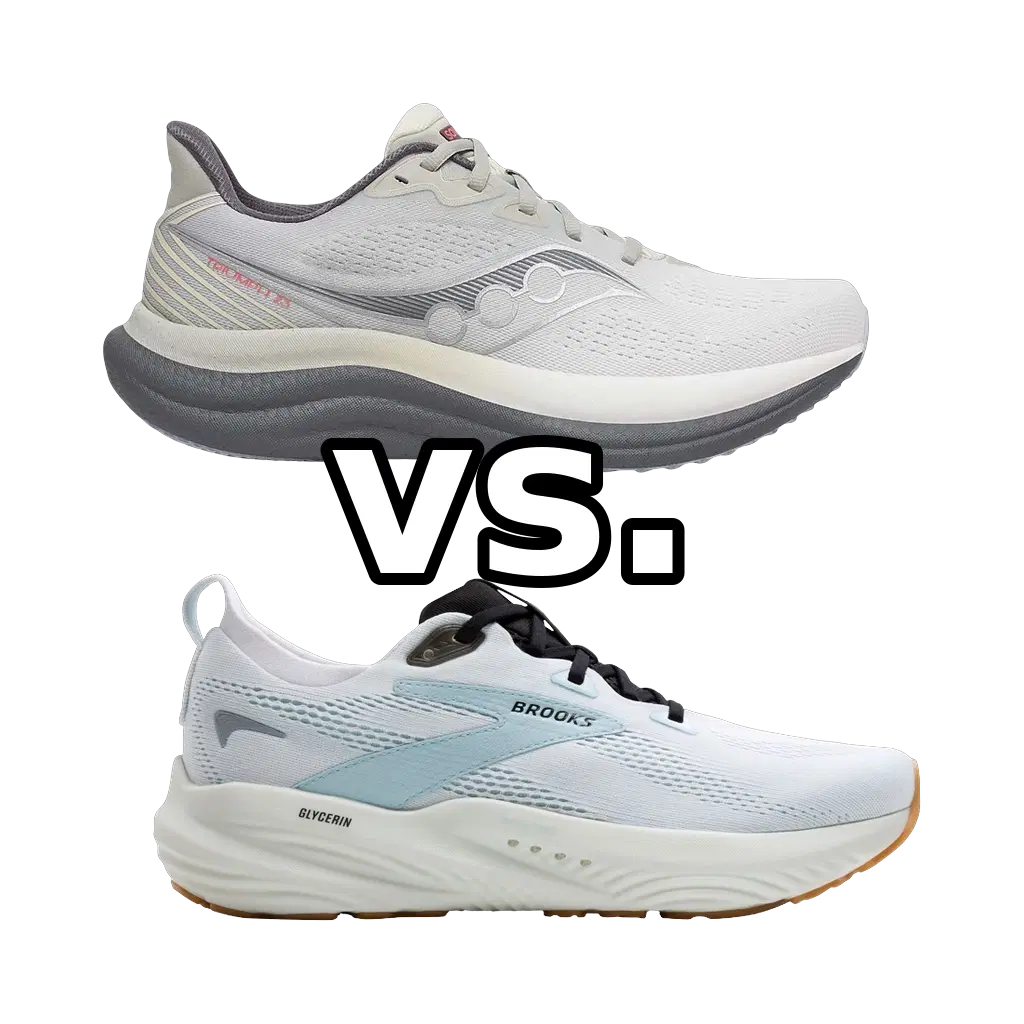
Verdict
It genuinely depends — but on ride feel and pace range, not on which is "better." Both are excellent plush neutral trainers for the 10K-to-marathon range, so pick the Triumph 23 if you want the lighter, springier, more versatile shoe that can stretch into tempo, and pick the Glycerin 22 if you want the softer, more protective cruiser built purely for comfortable steady miles. Runners who sometimes push the pace should lean Triumph; those who want to simply settle in and let the cushioning do the work should lean Glycerin.
Pace
3 of 6
Cushioning
5 of 6
Responsiveness
5 of 6
Stability
4 of 6
Drop
10 mm
Support
Neutral
Plate
None
Distances
10KHalfMarathon
Pace
3 of 6
Cushioning
5 of 6
Responsiveness
4 of 6
Stability
4 of 6
Drop
10 mm
Support
Neutral
Plate
None
Distances
10KHalfMarathon
At a Glance
Saucony Triumph 23Brooks Glycerin 22
Who Should Choose Each Shoe
Choose
Saucony Triumph 23
Choose the Triumph 23 if you want one plush trainer that can still do a little of everything — easy days, long cushioned efforts, and the occasional steady or moderate-tempo session. It's the pick for recreational marathoners and half-marathon builders who value a lighter, livelier PEBA ride and want some pop on toe-off rather than pure softness. If you tend to drift toward quicker paces on your good days and don't want the shoe fighting you, the ~263g weight and more responsive foam make it the more adaptable choice.
Choose
Brooks Glycerin 22
Choose the Glycerin 22 if comfort and joint protection are the priority and most of your running lives at a relaxed, steady pace. It's an ideal fit for beginners, high-mileage recreational runners, and anyone who wants a soft, predictable, forgiving platform for logging easy miles day after day, with a slightly taller stack and a durable everyday build. If you're not chasing turnover and would rather have maximum cushion under a calm, composed ride than an extra gear of speed, this is the better match.
Head-to-Head
On the specs that define the category, they're close but not identical. Both run a 10mm drop and both skip a plate, so all the rebound comes from foam and geometry. The clearest hard difference is weight and foam: the Triumph 23 comes in around 263g (9.2 oz) in a men's 9, while the Glycerin 22 is noticeably heavier at about 289g (10.2 oz) — roughly a shoe-and-a-half's worth of extra mass per foot that you feel when the pace lifts. The Glycerin also sits a touch taller, at 39mm/29mm versus the Triumph's 37mm/27mm, so it feels slightly more removed from the ground while the Triumph stays marginally more connected. The bigger separator is the foam character. The Triumph's PWRRUN PB is a nitrogen-infused PEBA superfoam that reads as soft but genuinely springy, giving a gentle pop on toe-off and holding together when you press to a moderate tempo — its effective ceiling runs down around 4:30–5:00 min/km. The Glycerin's DNA Tuned foam is tuned for cushioned protection first: soft and composed with a moderate, non-propulsive spring that rewards a relaxed, steady rhythm, with its optimal zone sitting slower (5:30–6:30 min/km) and crispness fading once you push past roughly 5:00 min/km. In short, same mission — plush neutral mileage-eater — but the Triumph is the lighter, bouncier, more versatile ride that can stretch into tempo, while the Glycerin is the softer, more purely cushioned cruiser. One trade-off worth flagging on the Triumph: its largely exposed-foam outsole aids that soft, light feel but can wear faster than a more fully rubbered sole for very high-mileage users, where the Glycerin's more conventional build leans durable.
Similar Comparisons
Brooks Glycerin 22 vs Brooks Glycerin 23
Saucony Triumph 23 vs Salomon Aero Glide 3
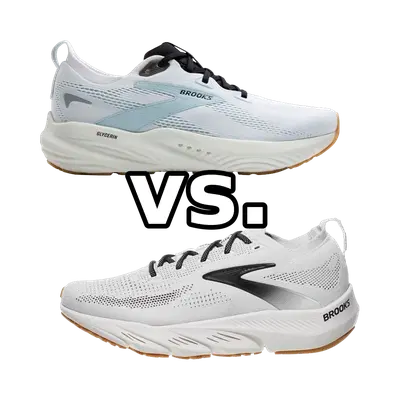
Brooks Glycerin 22 vs Brooks Glycerin Flex

Saucony Triumph 23 vs Adidas Adizero Evo SL
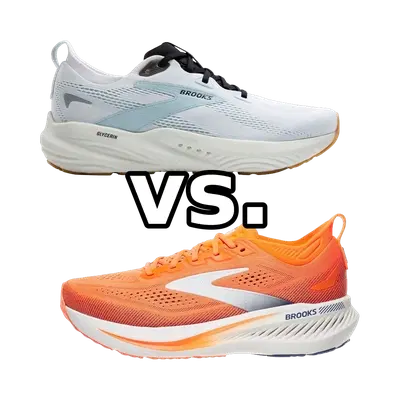
Brooks Glycerin 22 vs Brooks Glycerin GTS 23
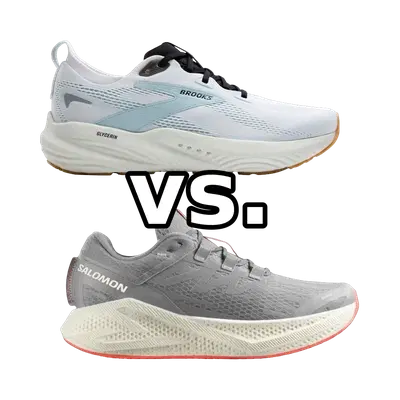
Brooks Glycerin 22 vs Salomon Aero Glide 3
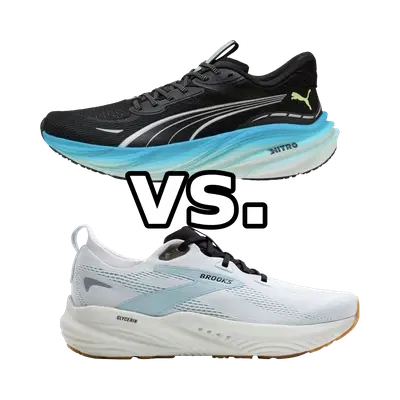
Puma Magnify Nitro 3 vs Brooks Glycerin 22
Brooks Glycerin 22 vs Saucony Ride 19
© 2026 longrunshoes.ai | All rights reserved.
Use of materials from this site is permitted only with proper attribution and a link to longrunshoes.ai.