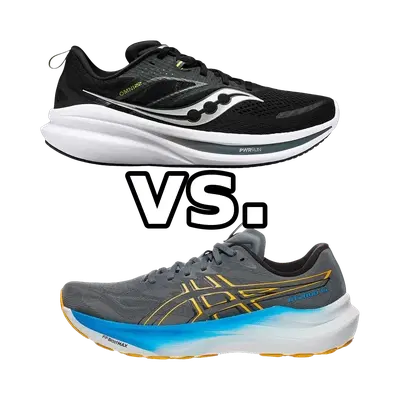
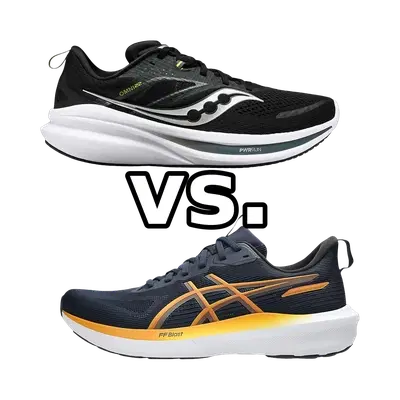
Saucony Omni 22 vs Asics GT-2000 15:
Which to Choose
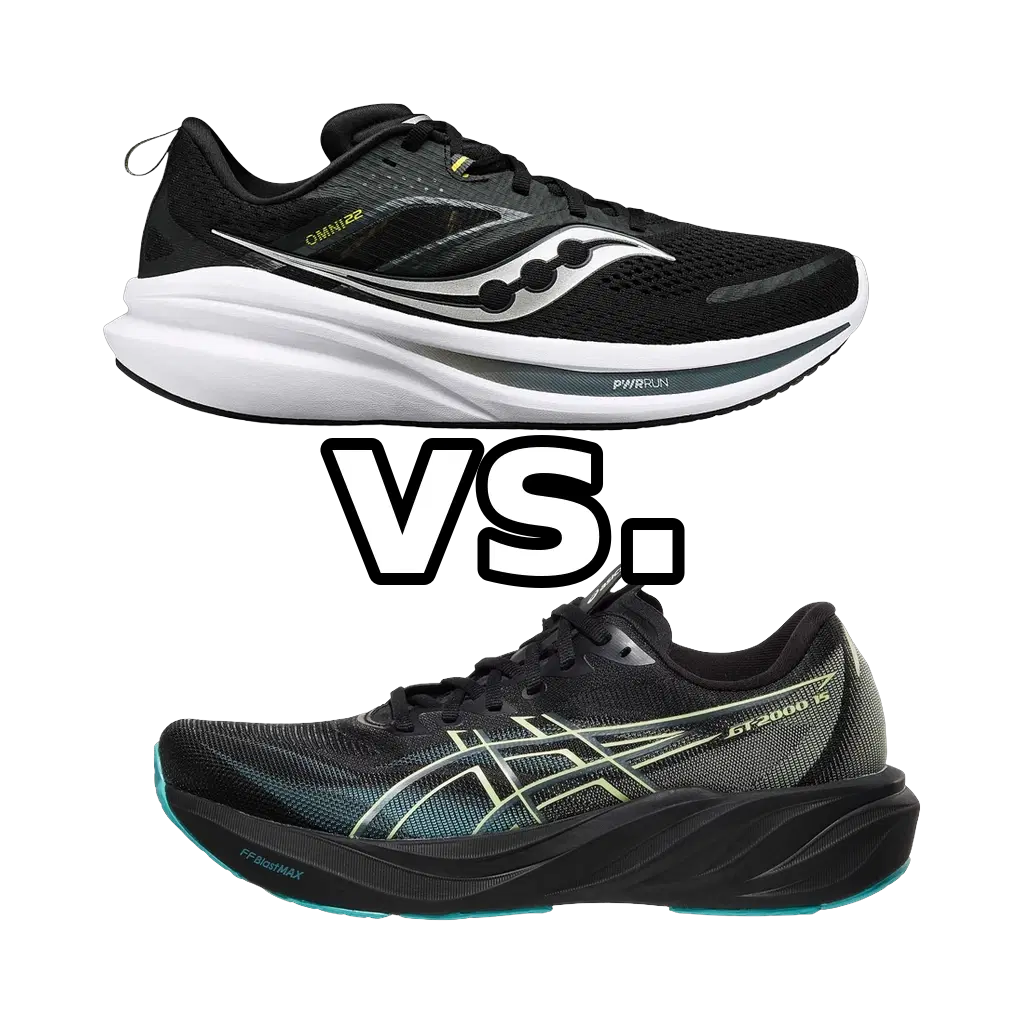
Verdict
These two are genuinely close, so it comes down to how much support you need and how lively you want it to feel. Pick the Omni 22 for firmer, more aggressive pronation control and a planted, lower ride; pick the GT-2000 15 if you want lighter weight, a taller and more cushioned stack, and a bit more responsiveness for occasional faster running. If you're not sure, the GT-2000 15 is the more versatile default, and the Omni 22 is the answer when corrective structure is the priority.
Pace
3 of 6
Cushioning
4 of 6
Responsiveness
3 of 6
Stability
5 of 6
Drop
8 mm
Support
Stability
Plate
None
Distances
10KHalfMarathon
Pace
3 of 6
Cushioning
4 of 6
Responsiveness
4 of 6
Stability
5 of 6
Drop
8 mm
Support
Stability
Plate
None
Distances
10KHalfMarathon
At a Glance
Saucony Omni 22Asics GT-2000 15
Who Should Choose Each Shoe
Choose
Saucony Omni 22
Choose the Omni 22 if you're a moderate-to-severe overpronator, a heavier runner, or a beginner who wants the most structure you can get and trusts a firm medial post to keep everything in line over long, steady efforts. Its lower stack and planted PWRRUN ride suit runners who like a closer-to-the-ground feel and value calm security over any hint of bounce. It's the pick when maximum, no-nonsense support matters more than weight or liveliness.
Choose
Asics GT-2000 15
Choose the GT-2000 15 if you mildly overpronate or simply like a stable platform but don't want to feel locked into a corrective shoe. Its lighter weight, taller FF BLAST MAX stack, and extra pop make it the better all-rounder — happy soaking up long runs yet willing to lift into a tempo stretch — which suits intermediate runners building volume who want one shoe for the bulk of their week. Go here if you want stability that stays in the background rather than announcing itself.
Head-to-Head
Start with how the support is engineered, because that's the clearest split. The Omni 22 uses a classic structured setup — PWRRUN foam over a TPU guidance frame with a medial post — so it corrects overpronation firmly and feels resolutely planted, almost immovable, through the full footstrike. The GT-2000 15 instead leans on a 3D guidance system and a wide platform for support that's more integrated and adaptive than overtly corrective; it holds you steady without the hard "wall" of a traditional medial post. That shows up in the ride: the Omni's PWRRUN is balanced and controlled but firm and foam-driven, rewarding a consistent cadence over surges, while the GT-2000's full-length FF BLAST MAX adds genuine cushion and a touch of bounce, with enough life to stretch into a tempo effort — reflected in its edge on responsiveness (4/6 vs the Omni's 3/6). Geometry separates them too. The GT-2000 15 sits taller, around a 40mm heel / 32mm forefoot stack, versus the Omni 22's lower-profile 35/27mm, so the Asics gives more underfoot protection for long days while the Saucony delivers more ground feel and a closer-to-the-road platform. Weight is the other decider: in men's sizing the GT-2000 15 comes in around 258g against the Omni 22's roughly 287g, a meaningful ~30g gap that makes the Asics the quicker-feeling, more versatile shoe and the Omni the more grounded, support-first option. Both share the same honest limit — push past about 5:00 min/km and the structured, firm builds start to feel like dead weight; neither is a racer, and neither is a soft recovery slipper.
Similar Comparisons
Asics GT-2000 13 vs Asics GT-2000 15
Saucony Omni 22 vs Asics GT-2000 13
Asics GT-2000 14 vs Asics GT-2000 15
Saucony Omni 22 vs New Balance Fresh Foam X Vongo v6
Asics Gel-Kayano 33 vs Asics GT-2000 15

Saucony Omni 22 vs New Balance Fresh Foam X 860v14
Puma ForeverRun Nitro 2 vs Asics GT-2000 15
Saucony Omni 22 vs Asics GT-1000 14
© 2026 longrunshoes.ai | All rights reserved.
Use of materials from this site is permitted only with proper attribution and a link to longrunshoes.ai.