
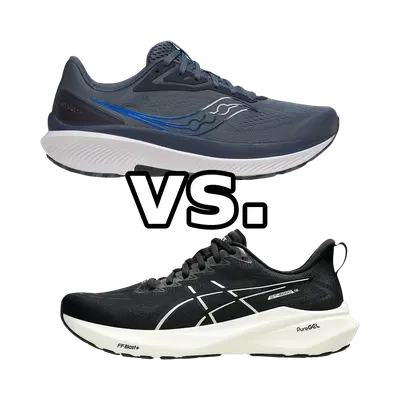
Saucony Omni 22 vs Asics GT-2000 13:
Which to Choose
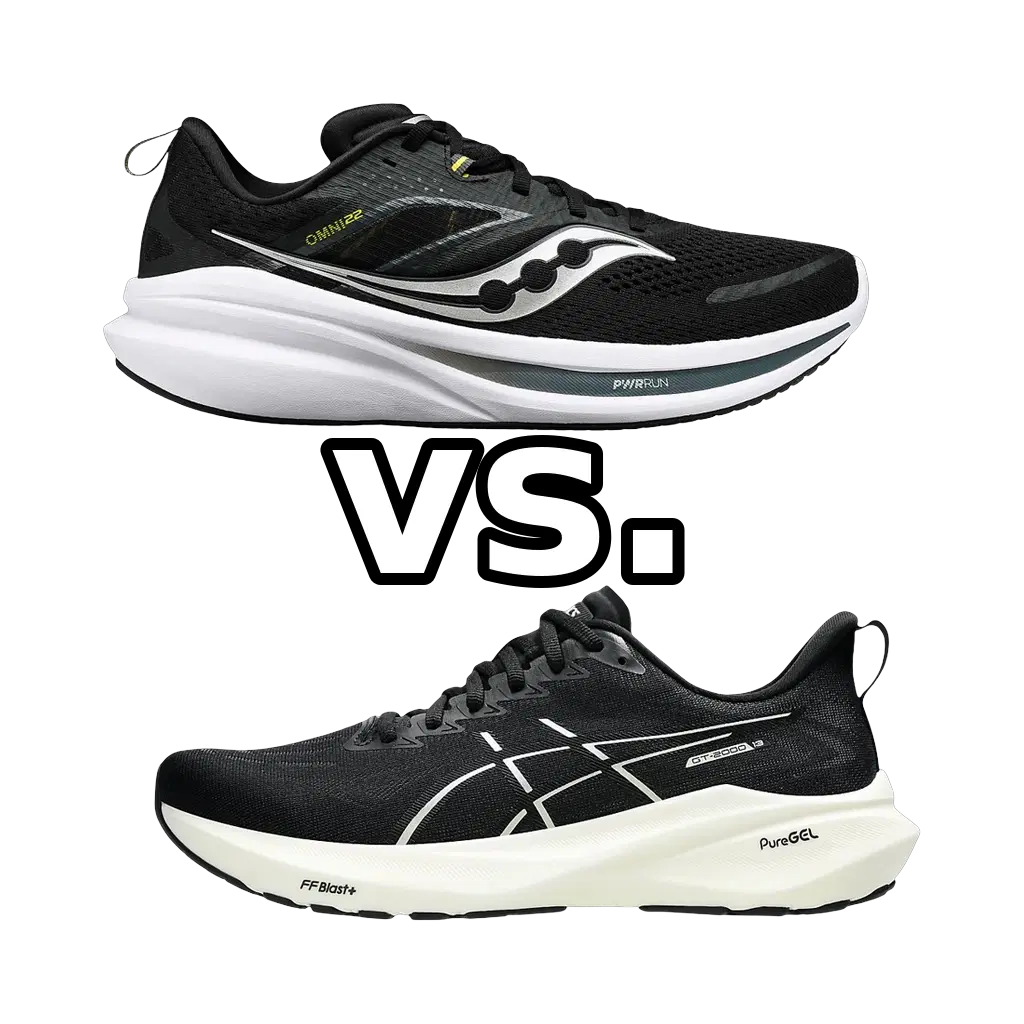
Verdict
It genuinely depends — on how much correction you need. Go with the Omni 22 if you want firm, assertive stability and maximum structure for heavier or stronger-overpronating miles; go with the GT-2000 13 if you want the lighter, softer, gentler-guided ride for mild overpronation and long steady runs. Neither is faster or more capable than the other at their shared distances; they just hold you two different ways.
Pace
3 of 6
Cushioning
4 of 6
Responsiveness
3 of 6
Stability
5 of 6
Drop
8 mm
Support
Stability
Plate
None
Distances
10KHalfMarathon
Pace
3 of 6
Cushioning
4 of 6
Responsiveness
3 of 6
Stability
5 of 6
Drop
8 mm
Support
Stability
Plate
None
Distances
10KHalfMarathon
At a Glance
Saucony Omni 22Asics GT-2000 13
Who Should Choose Each Shoe
Choose
Saucony Omni 22
Choose the Omni 22 if you're a moderate-to-strong overpronator, a heavier runner, or a beginner who wants the most structure and the most obvious correction underfoot — the TPU frame and medial post make this the shoe that keeps your form composed late in long, steady efforts. It's the better pick if you value a firm, planted, security-first ride over softness, and if you're logging easy-to-moderate daily miles where control matters more than lightness or snap.
Choose
Asics GT-2000 13
Choose the GT-2000 13 if you have milder overpronation and want guidance that's there when you need it without feeling corrective on every stride — the softer FF Blast+ Eco foam and lighter build give you a smoother, more forgiving daily ride. It's the stronger option for beginner-to-intermediate runners doing patient base-building and comfortable long runs, and it's especially well suited to steady half-marathon efforts, where its cushioned, settled feel is at its best.
Head-to-Head
These two are more alike than different, so the distinctions that exist actually matter. Both ride at an 8mm drop with no plate, both lean on a wide, guided platform, and neither wants to sprint — push the Omni past roughly 5:00/km or the GT-2000 past roughly 4:45/km and the structured midsole starts to feel like ballast. The clearest split is the support mechanism and the foam. The Omni 22 uses PWRRUN foam over a TPU guidance frame plus a genuine medial post, which produces a firm, planted, overtly corrective ride — it physically resists the foot rolling inward and is the more aggressive of the two for a true overpronator or a heavier runner who wants to feel held. The GT-2000 13 uses the softer FF Blast+ Eco foam with the LITETRUSS medial system, which delivers gentler, less intrusive guidance: the cushioning is more pillowy and settled, the correction more suggestion than enforcement. Weight tips toward the Asics — the men's GT-2000 13 comes in around 9.7 oz versus roughly 10.1 oz for the men's Omni 22 — and the GT-2000 also carries a touch more stack (about 36.5mm heel / 28.5mm forefoot against the Omni's 35mm / 27mm), so it feels marginally lighter and softer despite serving the same role. In short: the Omni is the firmer, more structured, more supportive-feeling trainer; the GT-2000 is the lighter, softer, smoother-riding one with a particular affinity for the half marathon.
Similar Comparisons
Asics GT-1000 14 vs Asics GT-2000 13

Saucony Omni 22 vs New Balance Fresh Foam X Vongo v6
Asics GT-2000 13 vs Asics GT-2000 15

Saucony Omni 22 vs New Balance Fresh Foam X 860v14
Asics GT-2000 13 vs Asics GT-2000 14
Saucony Echelon 10 vs Asics GT-2000 13

Saucony Guide 18 vs Asics GT-2000 13

Nike Structure 25 vs Asics GT-2000 13
© 2026 longrunshoes.ai | All rights reserved.
Use of materials from this site is permitted only with proper attribution and a link to longrunshoes.ai.