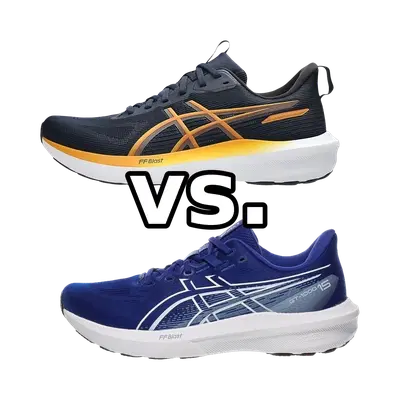
Asics GT-1000 14 vs Asics GT-2000 13:
Which to Choose
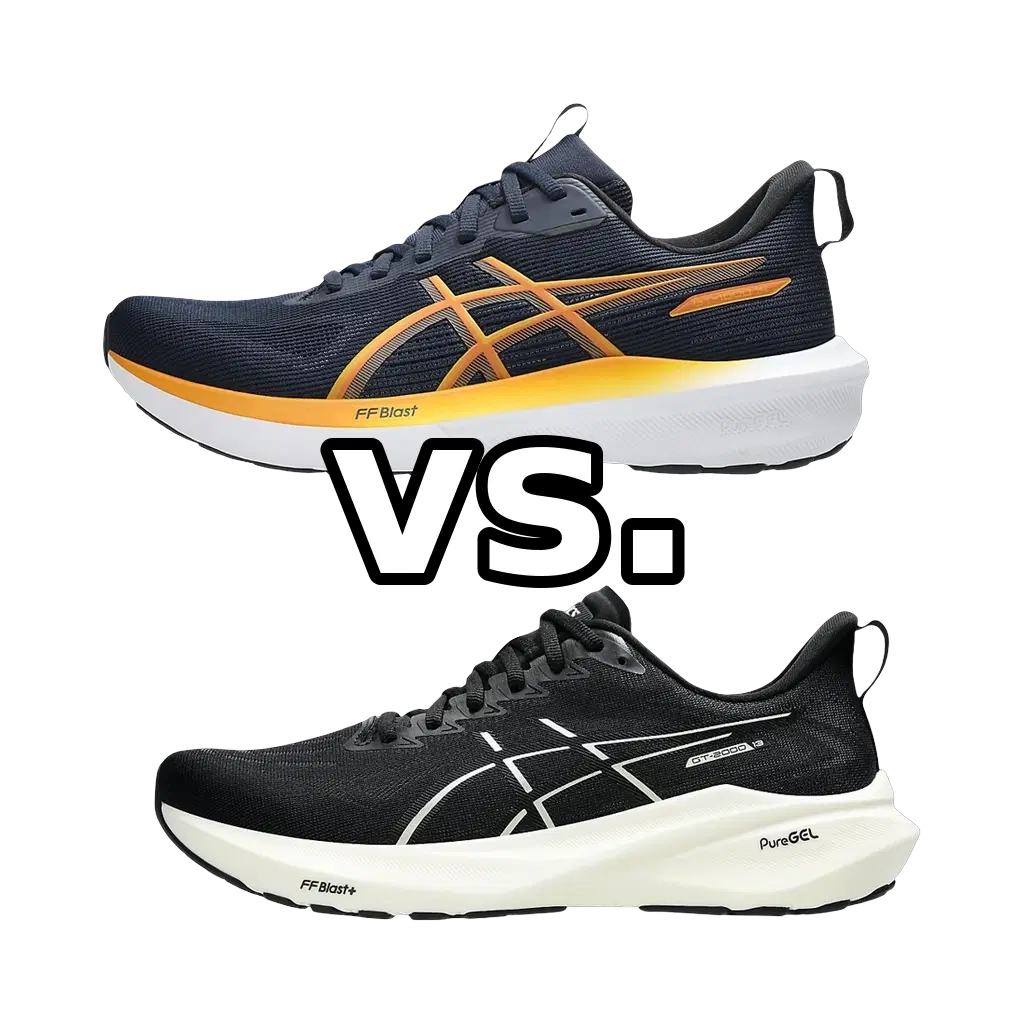
Verdict
This decision comes down to cushioning preference and target distance. Training for a half-marathon and wanting a firm, grounded ride? The GT-1000 14 is purpose-built for that. Building a marathon base or simply wanting more foam protection on longer days? The GT-2000 13 is the clearer choice. The stability and drop are identical — only the softness underfoot and the distance ceiling separate them.
Pace
3 of 6
Cushioning
3 of 6
Responsiveness
3 of 6
Stability
5 of 6
Drop
8 mm
Support
Stability
Plate
None
Distances
10KHalf
Pace
3 of 6
Cushioning
4 of 6
Responsiveness
3 of 6
Stability
5 of 6
Drop
8 mm
Support
Stability
Plate
None
Distances
10KHalfMarathon
At a Glance
Asics GT-1000 14Asics GT-2000 13
Who Should Choose Each Shoe
Choose
Asics GT-1000 14
The GT-1000 14 suits runners who want a firm, no-fuss stability shoe for 10K and half-marathon training and aren't chasing maximum cushioning. If you prefer feeling the road underfoot and find overly soft midsoles destabilizing or slow-feeling, the GT-1000 14's grounded ride will suit you better. It's also the right call for shorter-distance runners whose weekly mileage doesn't demand extra foam protection on recovery days.
Choose
Asics GT-2000 13
The GT-2000 13 is the better fit for runners building up to or regularly logging marathon-length efforts, where the additional cushioning from FF Blast+ Eco pays dividends over the back half of long runs. It's also the stronger pick for runners whose form degrades with fatigue — the softer, more protective platform holds things steady when legs get heavy. If you find firmer daily trainers leave you sore after big mileage weeks, the GT-2000 13's extra foam depth is the upgrade worth making.
Head-to-Head
Where these two shoes agree is notable: both deliver a stability rating of 5/6, both run an 8mm heel-to-toe drop, both use LITETRUSS medial support for pronation control, and neither has a plate — so neither will feel explosive or race-ready. Runners moving between the two won't encounter a fundamentally different shoe architecture.
The dividing line is cushioning. The GT-1000 14 rates at 3/6 — moderate — using FF Blast+ foam tuned for a firm, grounded feel that keeps you connected to the road. The GT-2000 13 steps up to 4/6 — above-average — with FF Blast+ Eco, a formulation that delivers noticeably more impact absorption and a softer, more settled sensation underfoot. The GT-1000 14 feels businesslike and stable; the GT-2000 13 feels planted and protective, especially as fatigue sets in on longer efforts.
That cushioning difference shapes the distance ceiling. The GT-1000 14 is rated for 10K and half-marathon running, where its moderate foam holds up well and the firmer ride keeps transitions crisp. The GT-2000 13 adds marathon to its best-distance list — the extra foam depth earns it a longer leash on high-mileage weeks and sustained long runs. Neither shoe is a speed tool: both top out around the same effective pace ceiling, and both will feel slow and flat if you push the tempo.
Stability is effectively a wash. Both shoes use the same LITETRUSS medial system and broad guided platform, so runners choosing between them for overpronation control won't find one meaningfully more corrective than the other — the guidance architecture is the same.
© 2026 longrunshoes.ai | All rights reserved.
Use of materials from this site is permitted only with proper attribution and a link to longrunshoes.ai.