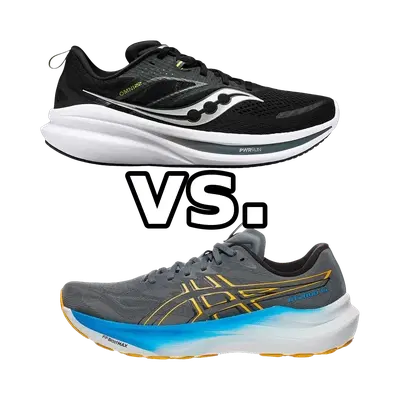
Saucony Omni 22 vs Asics GT-1000 14:
Which to Choose
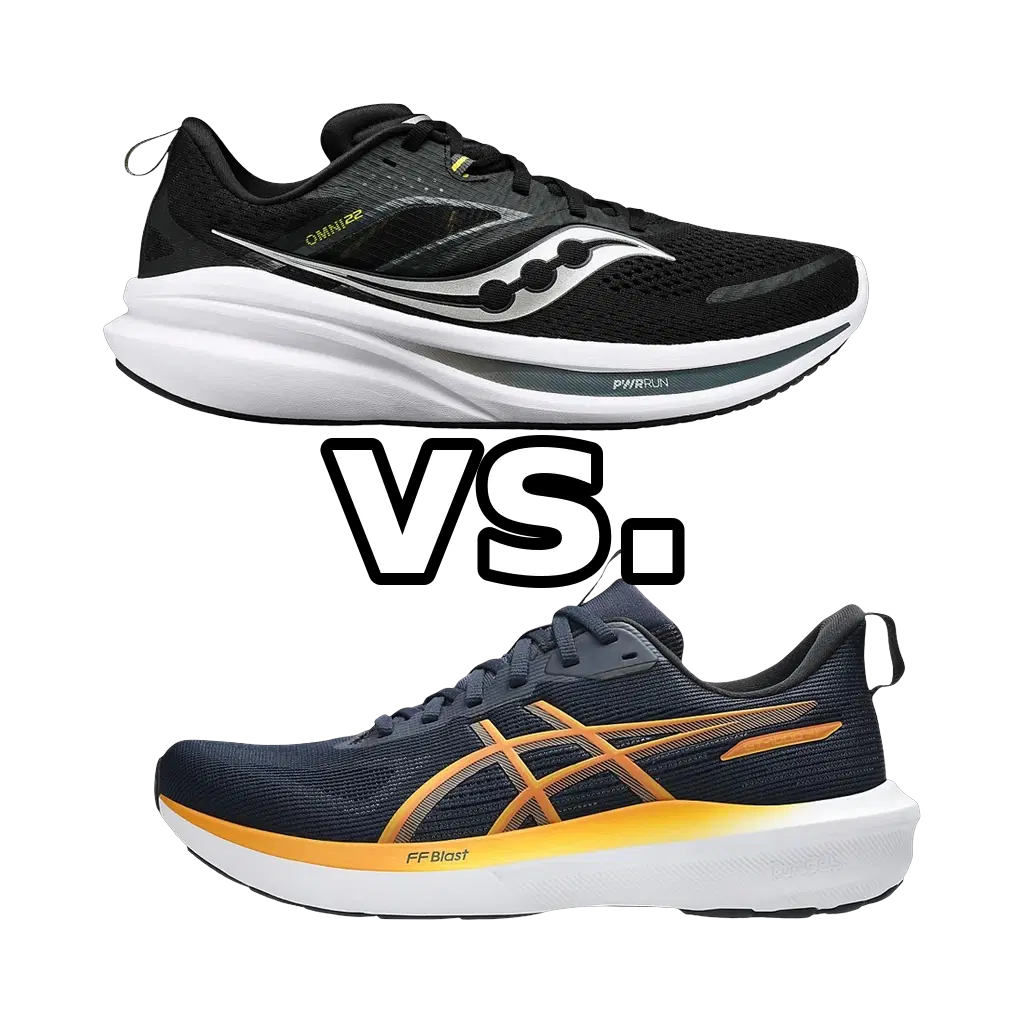
Verdict
These are genuinely close relatives, so it comes down to distance and ride preference rather than one being better. Go Omni 22 if you want more cushioning, stronger corrective support, and marathon range, and accept a little extra weight for it; go GT-1000 14 if you want a lighter, firmer, more flexible shoe for 10K-to-half mileage and prefer guidance that doesn't feel bulky. Softer and longer-legged points to the Saucony; nimbler and firmer points to the Asics.
Pace
3 of 6
Cushioning
4 of 6
Responsiveness
3 of 6
Stability
5 of 6
Drop
8 mm
Support
Stability
Plate
None
Distances
10KHalfMarathon
Pace
3 of 6
Cushioning
3 of 6
Responsiveness
3 of 6
Stability
5 of 6
Drop
8 mm
Support
Stability
Plate
None
Distances
10KHalf
At a Glance
Saucony Omni 22Asics GT-1000 14
Who Should Choose Each Shoe
Choose
Saucony Omni 22
Choose the Omni 22 if you're a heavier or higher-mileage overpronator who wants maximum structure and a softer, more protective ride, and who actually plans to take this shoe up to the marathon. It's the better pick for runners who value a planted, corrective feel from a firm medial post and TPU frame, and who don't mind carrying a bit more weight to get that security on long steady days. If your previous stability shoe felt too firm or too short-legged for your longest runs, the Omni is the upgrade in cushioning and range.
Choose
Asics GT-1000 14
Choose the GT-1000 14 if you're a beginner-to-intermediate overpronator who runs mostly 10K-to-half distances and wants a lighter, firmer, more flexible trainer that stays connected to the road. It suits runners who find full medial-post shoes heavy or overbearing and prefer guidance that comes from platform geometry, and who value a nimble, honest daily ride over plush softness. If most of your weekly miles are easy and steady and you rarely venture past the half, the lighter Asics is the more natural fit.
Head-to-Head
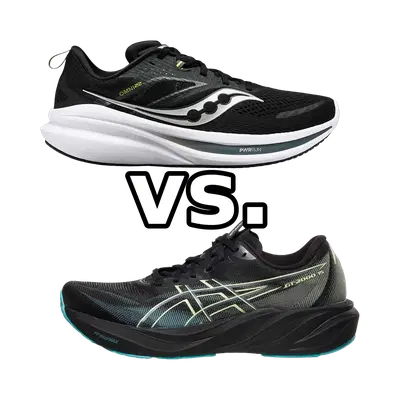
Start with the common ground, because there's a lot of it: both are foam-driven stability trainers with no plate, both lean on medial support to resist inward roll, both target the same easy/steady pace band, and both top out well short of a true tempo shoe. The differences are real but a matter of degree. The Omni 22 is the more cushioned and more protective of the two — its PWRRUN midsole measures softer underfoot (around 25 HA versus the GT-1000's firmer ~34), and Saucony backs its guidance with a TPU frame plus a dedicated medial post, a more traditional, corrective approach to pronation control. That structure costs weight: the Omni lands around 285g versus roughly 272g for the GT-1000 (both men's size 9), and you feel that extra heft as planted security rather than spring. Its payoff is range — the Omni is genuinely marathon-capable, holding up over long steady efforts where its softness and support earn their keep. The GT-1000 14 goes the other way: firmer FF Blast+ foam, a LITETRUSS guidance system that leans on geometry more than a hard post, a flexible forefoot, and a lighter, more connected-to-the-road feel. Interestingly its heel stack is actually a touch taller (about 35mm versus the Omni's ~33mm) while the forefoot heights are nearly identical, so the difference you notice isn't raw cushioning height but foam feel — the Asics is firmer and more businesslike, the Saucony softer and more forgiving. The GT-1000's comfortable ceiling is the half marathon; push the distance further and the firmer foam gives less back. Both have durable, high-mileage outsoles, so neither is a durability compromise.
Similar Comparisons
Asics GT-1000 14 vs Asics GT-2000 13
Saucony Omni 22 vs Asics GT-2000 13
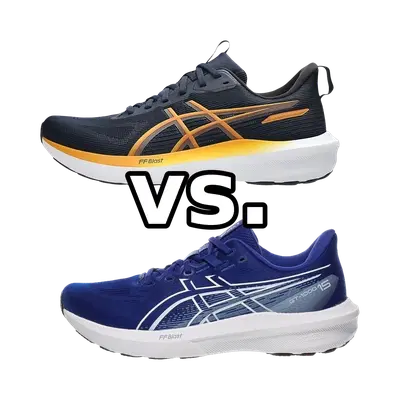
Asics GT-1000 14 vs Asics GT-1000 15
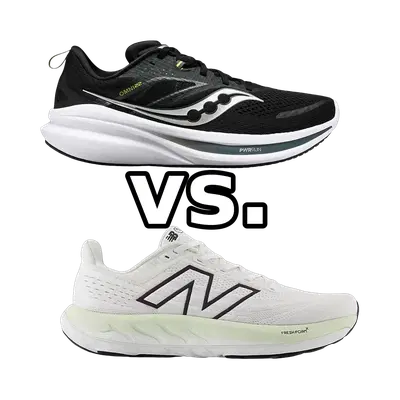
Saucony Omni 22 vs New Balance Fresh Foam X Vongo v6
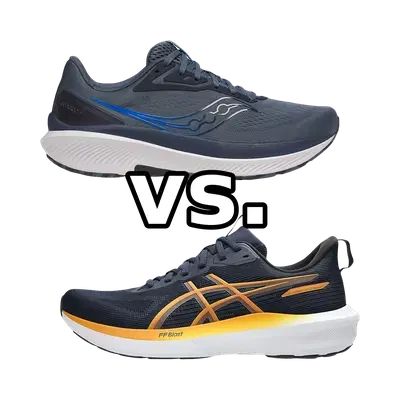
Saucony Echelon 10 vs Asics GT-1000 14
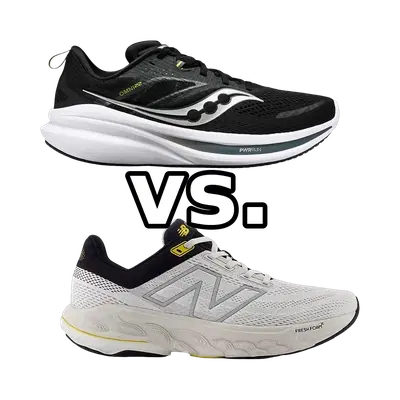
Saucony Omni 22 vs New Balance Fresh Foam X 860v14
Saucony Omni 22 vs Asics GT-2000 15
© 2026 longrunshoes.ai | All rights reserved.
Use of materials from this site is permitted only with proper attribution and a link to longrunshoes.ai.