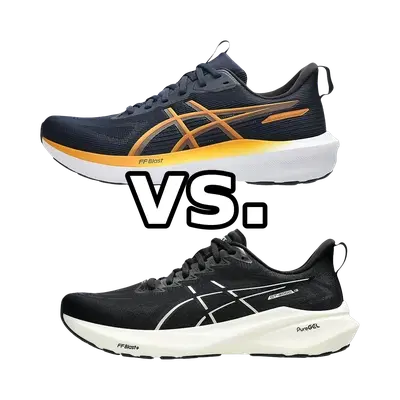
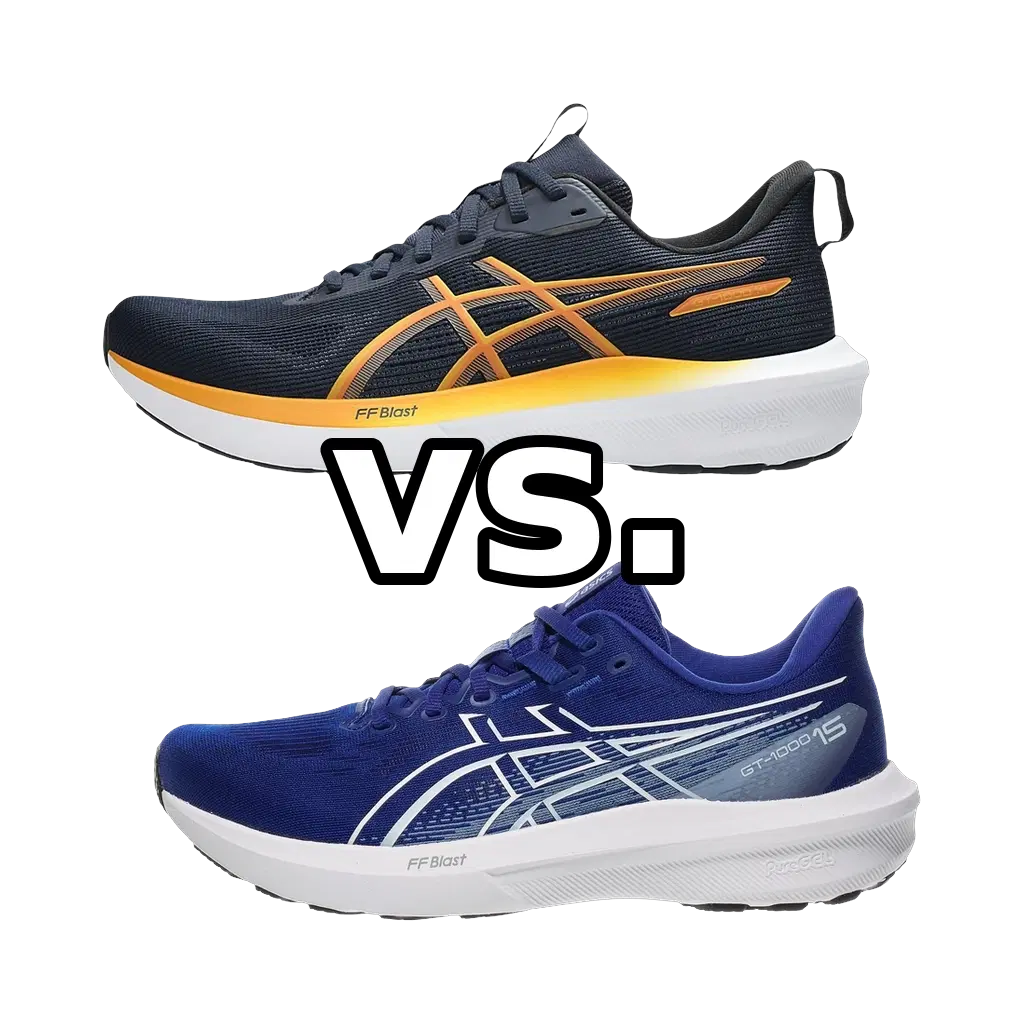
Asics GT-1000 14 vs Asics GT-1000 15:
Which to Choose
Verdict
This is a like-for-like refresh, not a reinvention. If your GT-1000 14 is still going strong, keep running it — the 15 doesn't change the foam, cushioning, weight, drop, or ride in any way you'll notice. When it's time for a new pair, the 15 is the smart default thanks to its more durable outsole, updated breathable upper, and slightly broader platform. In short: the decision comes down to tread life and availability, not how the two shoes run.
Pace
3 of 6
Cushioning
3 of 6
Responsiveness
3 of 6
Stability
5 of 6
Drop
8 mm
Support
Stability
Plate
None
Distances
10KHalf
Pace
3 of 6
Cushioning
3 of 6
Responsiveness
3 of 6
Stability
5 of 6
Drop
10 mm
Support
Stability
Plate
None
Distances
10KHalf
At a Glance
Asics GT-1000 14Asics GT-1000 15
Who Should Choose Each Shoe
Choose
Asics GT-1000 14
If you already own and like the GT-1000 14, there's no performance reason to replace it before it wears out — the ride, cushioning, stability, and geometry you're used to are all still here. It remains a solid pick for an overpronating beginner-to-intermediate runner who wants dependable, no-frills guidance for easy-to-steady 10K and half-marathon training and a slightly firmer, marginally lighter feel.
Choose
Asics GT-1000 15
Choose the GT-1000 15 if you're buying fresh rather than replacing a shoe you love, since you get the same proven stability ride plus the meaningful upgrades: a more durable AHARPLUS outsole that should log more miles before wearing through, a more breathable updated upper, and a slightly wider, more supportive base. It's the natural pick for a heel-striking runner with mild-to-moderate overpronation who wants a long-lasting, structured daily trainer for steady 10Ks and long supported miles.
Head-to-Head
These two are about as close as a predecessor and successor get. Both run a low-profile, firm platform — roughly 35mm at the heel and 25mm at the forefoot (the 14 measures about 35.4/25.8mm, the 15 about 35/25mm) — so cushioning depth is effectively identical, and neither is a plush recovery shoe. Weight is a wash too: the 14 comes in around 272g and the 15 around 278g, a difference you won't feel underfoot. Drop is another non-event; both are advertised at 8mm and both actually measure closer to 9.6–10mm, giving the same traditional, heel-biased geometry that rewards heel strikers. Stability is rated identically high on both, with the same medial guidance resisting inward roll, and both carry the same PureGEL rearfoot unit to soften heel landings. Where the 15 genuinely moves the needle is durability and fit: it swaps the 14's AHAR outsole for a tougher AHARPLUS compound that should extend tread life, its engineered mesh upper has been redesigned for breathability, and its platform is marginally broader for a touch more structure. Ride feel, foam, cushioning, and pace range — optimal around 5:30–6:30 min/km, topping out near 5:15–5:30 — carry over essentially unchanged.
© 2026 longrunshoes.ai | All rights reserved.
Use of materials from this site is permitted only with proper attribution and a link to longrunshoes.ai.