
Nike Structure 25 vs Asics GT-1000 15:
Which to Choose
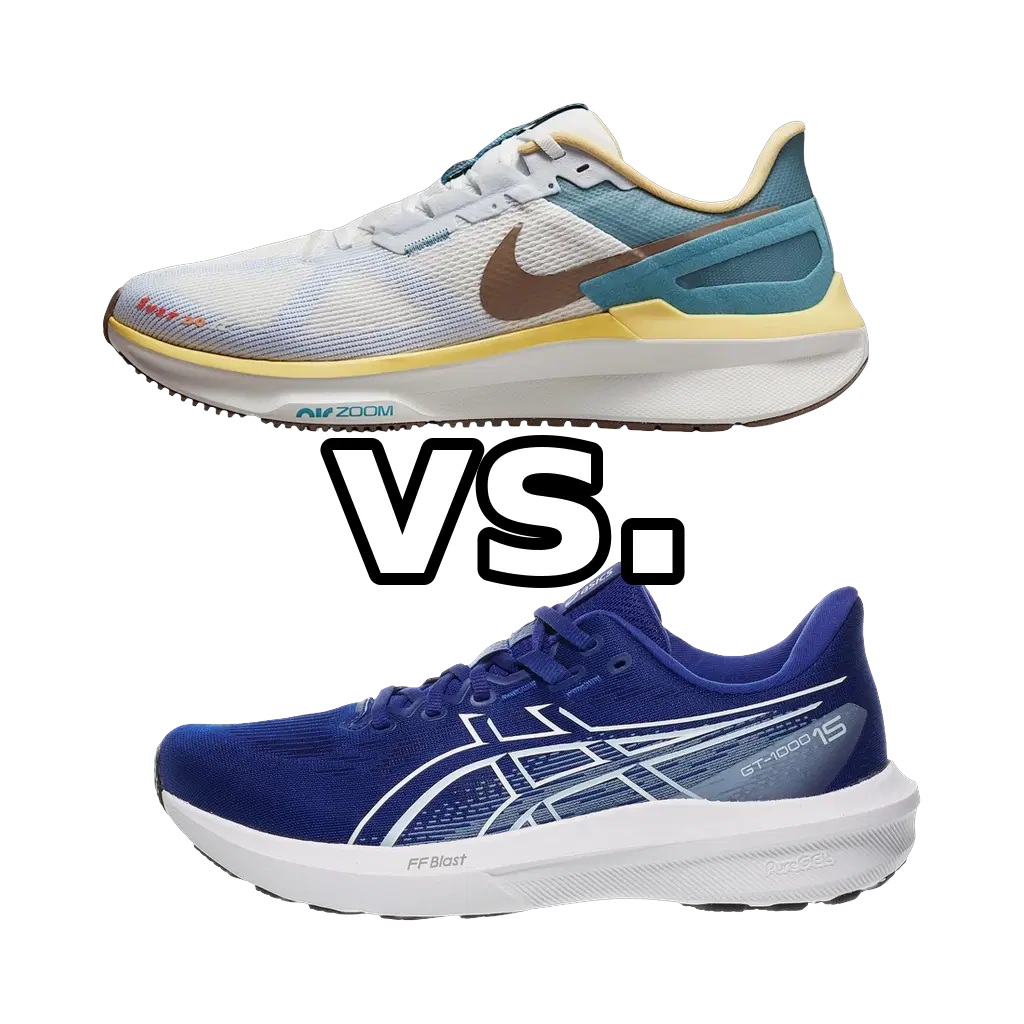
Verdict
It genuinely depends — but on concrete things, not toss-ups. Go with the Structure 25 if you want more cushioning and a trainer that can handle marathon-distance long runs, and you'll accept the roughly 24g weight penalty for it. Go with the GT-1000 15 if you top out at the half, strike with your heel, and want the lighter, lower, more agile of the two. Both deliver the same high stability and firm, honest ride, so no overpronator will be poorly served by either; the choice is cushioning-and-range versus light-and-low.
Pace
3 of 6
Cushioning
4 of 6
Responsiveness
3 of 6
Stability
5 of 6
Drop
10 mm
Support
Stability
Plate
None
Distances
10KHalfMarathon
Pace
3 of 6
Cushioning
3 of 6
Responsiveness
3 of 6
Stability
5 of 6
Drop
10 mm
Support
Stability
Plate
None
Distances
10KHalf
At a Glance
Nike Structure 25Asics GT-1000 15
Who Should Choose Each Shoe
Choose
Nike Structure 25
Choose the Structure 25 if you want the more protective, longer-range option: overpronators logging halves and the occasional marathon at steady effort who value a planted, secure, guide-railed ride and don't mind carrying a little more weight for extra foam. It also suits runners who like a slightly more cushioned heel and a trainer that stays composed deep into long steady miles, and beginners who want one dependable workhorse that can grow with their distance.
Choose
Asics GT-1000 15
Choose the GT-1000 15 if you're a beginner-to-intermediate heel striker with mild-to-moderate overpronation who wants a lighter, lower-profile, more connected feel for 10K and half-marathon training. Its rearfoot PureGEL makes it especially friendly to heel landers, and the trimmer 278g build feels quicker and more agile for runners who prioritize a nimble daily trainer over maximum cushioning or marathon-distance range.
Head-to-Head
On paper these two are close cousins — both are firm stability trainers with a 10mm drop, no plate, a broad supportive platform, and a deliberately grounded, feedback-heavy ride rather than a bouncy one. The meaningful separators are cushioning, weight, and intended range. The Structure 25 carries a bit more foam, with a 36.7mm heel and 24.6mm forefoot versus the GT-1000's 35mm heel and 25mm forefoot, and its Cushlon 3.0 midsole is tuned moderate-to-high for protection on longer efforts; the GT-1000's FF BLAST foam is a notch firmer and lower-profile, with a rearfoot PureGEL insert specifically softening heel landings for heel strikers. That extra material shows on the scale: the Structure 25 weighs about 302g (men's US 9) against the GT-1000 15's 278g, so the Asics feels noticeably lighter and more nimble underfoot while the Nike feels more planted and substantial. Use case follows from that — the Structure 25 is comfortable from a daily 5:00–6:00 min/km and stretches up to marathon distance at controlled efforts, whereas the GT-1000 15 is happiest at 5:30–6:30 min/km and tops out as a strong 10K-and-half trainer rather than a marathon shoe. Neither is a speed tool or a soft recovery shoe; push either past roughly 5:00 min/km and the firm, unplated ride goes flat.
Similar Comparisons
Asics GT-1000 14 vs Asics GT-1000 15

Nike Structure 25 vs Nike Structure Plus
New Balance Fresh Foam X 860v14 vs Asics GT-1000 15
Nike Structure 25 vs New Balance Fresh Foam X 860v14
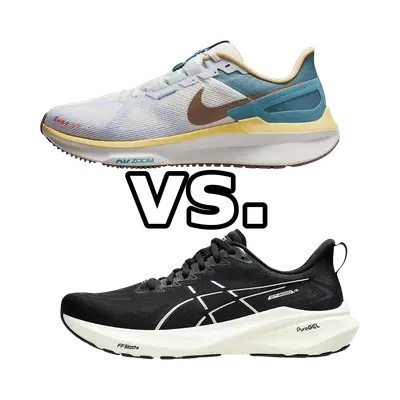
Nike Structure 25 vs Asics GT-2000 13
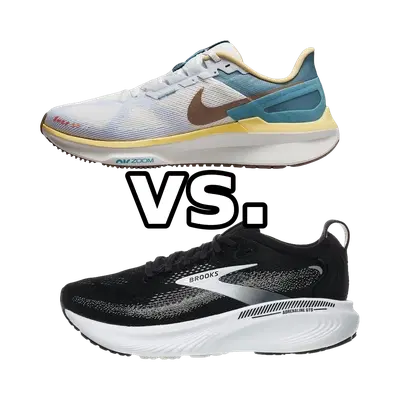
Nike Structure 25 vs Brooks Adrenaline GTS 25
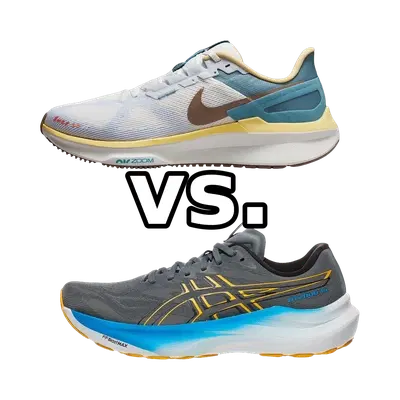
Nike Structure 25 vs Asics GT-2000 14

Nike Vomero 18 vs Nike Structure 25
© 2026 longrunshoes.ai | All rights reserved.
Use of materials from this site is permitted only with proper attribution and a link to longrunshoes.ai.