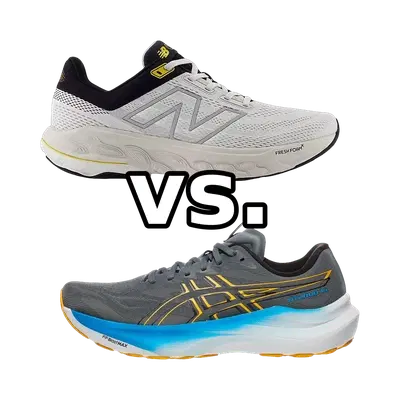
New Balance Fresh Foam X 860v14 vs Asics GT-1000 15:
Which to Choose
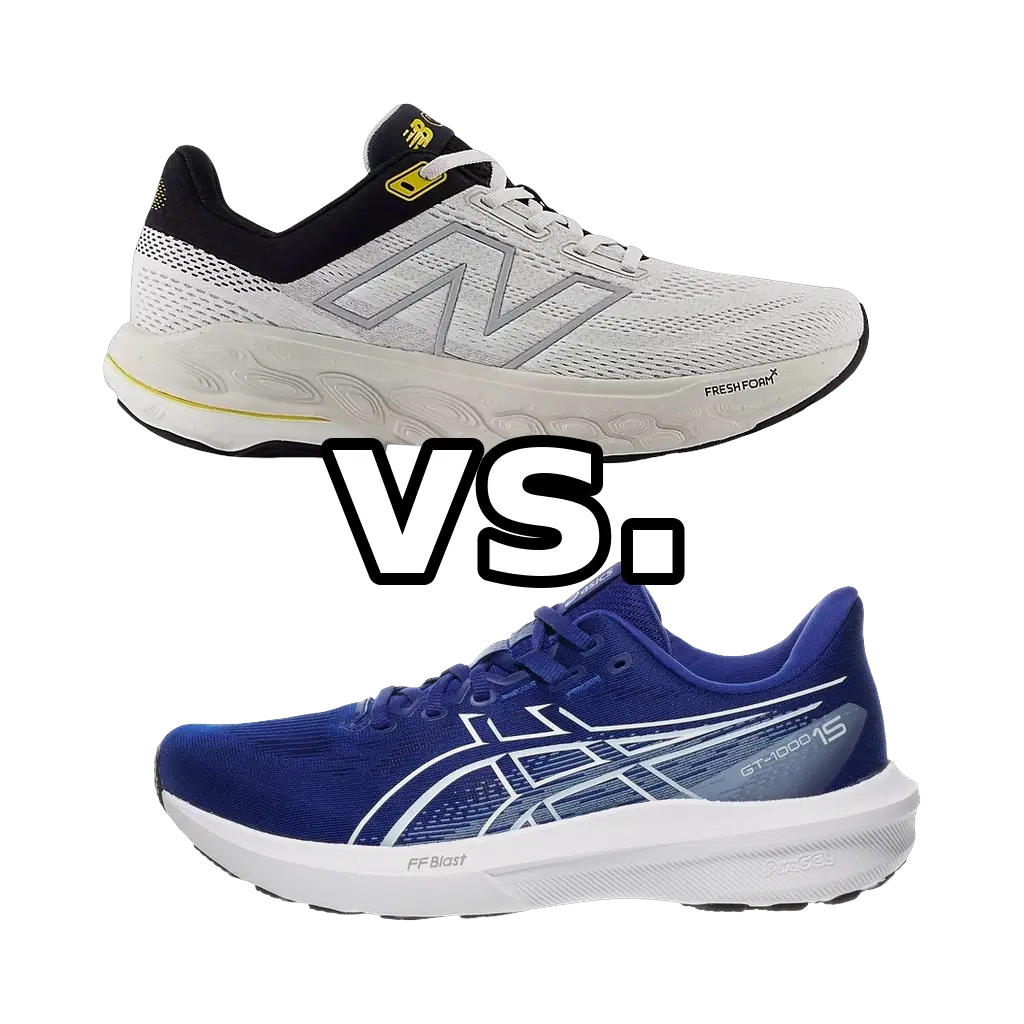
Verdict
It genuinely comes down to range and ride height, not quality — both are excellent, firm, no-nonsense stability trainers that do the same core job. Go with the 860v14 if you want more cushioning, more distance capability (up to the marathon), and a more substantial platform; go with the GT-1000 15 if you want something lighter, lower, and firmer focused on 10K-to-half training. If your weekly mileage and longest runs are growing, the 860 is the safer long-term buy; if you want a nimble, grounded everyday support shoe, the GT-1000 wins.
Pace
3 of 6
Cushioning
4 of 6
Responsiveness
3 of 6
Stability
5 of 6
Drop
8 mm
Support
Stability
Plate
None
Distances
10KHalfMarathon
Pace
3 of 6
Cushioning
3 of 6
Responsiveness
3 of 6
Stability
5 of 6
Drop
10 mm
Support
Stability
Plate
None
Distances
10KHalf
At a Glance
New Balance Fresh Foam X 860v14Asics GT-1000 15
Who Should Choose Each Shoe
Choose
New Balance Fresh Foam X 860v14
Choose the Fresh Foam X 860v14 if you want one stability trainer that covers the widest span — daily base miles, steady runs, and the occasional half or full marathon — and you don't mind carrying a bit more shoe to get that protection. It's the better pick for overpronators logging higher weekly volume or stepping up to longer efforts, and for heel strikers who want a planted, composed ride with enough foam to stay comfortable deep into a long run.
Choose
Asics GT-1000 15
Choose the GT-1000 15 if you're a beginner-to-intermediate heel striker who wants dependable guidance for 10K-focused training and steady half-marathon miles, and you prefer a lighter, lower-to-the-ground, firmly connected ride over a taller cushioned one. It's the leaner, more agile of the two and the natural fit if most of your running is everyday structured mileage rather than marathon-distance long runs, and if you like the firm heel landings that PureGEL quietly softens.
Head-to-Head
On paper these two are close relatives — both rate 5/6 for stability, both run a traditional heel-biased geometry (each brand advertises 8mm, with the real-world offset landing closer to 10mm), both lean firm rather than bouncy, and neither uses a plate, so all the spring comes from the foam. The clearest separation is cushioning and mass. The 860v14 carries more foam underfoot (about 36.8mm heel / 27.5mm forefoot) and weighs roughly 295g in a men's US 9, versus the GT-1000 15's lower-profile 35mm heel / 25mm forefoot and lighter 278g. That extra stack and New Balance's single Fresh Foam X slab give the 860 a more protective, do-it-all feel that genuinely stretches to the marathon, which is why it rates 4/6 for cushioning and lists 10K through marathon as its range. The GT-1000 pairs FF BLAST with a rearfoot PureGEL insert — the gel takes the sting out of heel landings, but the thinner forefoot keeps it firmer and more road-connected, and its 3/6 cushioning and shorter best-distance list (10K and half) reflect a shoe tuned for steady structured training rather than long-haul mileage. Pace windows track the same story: the 860 is happiest around 5:00–6:00 min/km and can be pushed toward 4:45, while the GT-1000 sits a touch more relaxed at 5:30–6:30 and tops out nearer 5:15. Both use secure engineered mesh uppers and both go firm and dead on genuine recovery jogs, so neither pampers tired legs. In short, same mission, but the 860 is the larger, more cushioned, longer-range platform and the GT-1000 is the lighter, lower, firmer, more pared-back one.
Similar Comparisons
Asics GT-1000 14 vs Asics GT-1000 15
New Balance Fresh Foam X 860v14 vs New Balance Fresh Foam X 860v15
Nike Structure 25 vs Asics GT-1000 15
New Balance Fresh Foam X 860v14 vs Brooks Adrenaline GTS 25
Nike Structure 25 vs New Balance Fresh Foam X 860v14
New Balance Fresh Foam X 860v14 vs Asics GT-2000 13
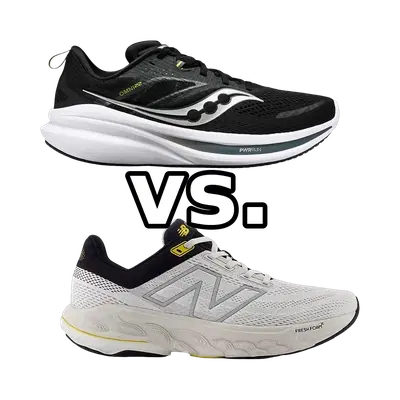
Saucony Omni 22 vs New Balance Fresh Foam X 860v14
© 2026 longrunshoes.ai | All rights reserved.
Use of materials from this site is permitted only with proper attribution and a link to longrunshoes.ai.