
Nike Structure 25 vs Brooks Adrenaline GTS 25:
Which to Choose

Verdict
These two are as close as stability trainers get: same drop, nearly identical stack and weight, same support rating, same best distances. The decision honestly comes down to foam feel and fit. Go Nike Structure 25 if you want a firmer, more road-connected ride with a little more pace versatility; go Brooks Adrenaline GTS 25 if you want softer, more forgiving cushioning for comfort-first daily and long miles. With specs this similar, try both on — fit and foam preference, not any spec on paper, should break the tie.
Pace
3 of 6
Cushioning
4 of 6
Responsiveness
3 of 6
Stability
5 of 6
Drop
10 mm
Support
Stability
Plate
None
Distances
10KHalfMarathon
Pace
3 of 6
Cushioning
4 of 6
Responsiveness
3 of 6
Stability
5 of 6
Drop
10 mm
Support
Stability
Plate
None
Distances
10KHalfMarathon
At a Glance
Nike Structure 25Brooks Adrenaline GTS 25
Who Should Choose Each Shoe
Choose
Nike Structure 25
Choose the Nike Structure 25 if you like a firm, grounded ride with genuine road feedback and a planted, structured platform under you — the classic "supportive daily trainer" feel. It's the better pick for the overpronator who wants that support built solidly into a wide base, and for runners who occasionally nudge the pace up toward moderate tempo on their 10K and half-marathon work, since it stays composed a touch faster than the Adrenaline before going flat.
Choose
Brooks Adrenaline GTS 25
Choose the Brooks Adrenaline GTS 25 if you want the same dependable overpronation support but with a softer, more forgiving underfoot feel for easy and long training miles. It's especially well suited to heel strikers logging steady, relaxed distance where comfort matters more than speed, and to runners who prefer the subtle, non-intrusive GuideRails approach — support that stays quiet until you fatigue — over a more traditional structured platform.
Head-to-Head
Start with how close these two actually are. Both are stability shoes with a 10mm drop, both sit right around 36mm of heel stack (roughly 36mm on the Brooks, 37mm on the Nike) over a similar ~25–26mm forefoot, and both weigh essentially the same on the scale — about 295g for the Adrenaline and about 302g for the Structure in a men's US 9 — so neither is light, and the gap between them is negligible in the hand. Neither uses a plate, and both deliver steady, resilient energy return rather than any true pop. The real split is in foam character and how each handles pronation. Nike's Cushlon 3.0 is the firmer, more road-connected of the two: it gives you feedback and a grounded, planted stance, with support engineered into a wide, structured platform. Brooks counters with full-length DNA Loft v3, a softer, more forgiving nitrogen-infused foam that cushions impact without springing back, and leans on its GuideRails system — raised sidewalls that quietly correct your stride as you fatigue — rather than a traditional medial post. The second real difference is pace range: the Structure's firmer ride stretches a bit faster and more versatile, comfortable from roughly 5:00–6:00 min/km and able to dip toward 4:45 before it feels flat, while the Adrenaline sits more squarely in relaxed-distance territory at 5:30–6:30 min/km and starts to feel heavy and flat past about 5:00. Both use a breathable engineered mesh/knit upper and a durable rubber outsole, so day-to-day the choice is firmer-and-slightly-more-versatile versus softer-and-more-forgiving.
Similar Comparisons

Brooks Adrenaline GTS 24 vs Brooks Adrenaline GTS 25

Nike Structure 25 vs Nike Structure Plus
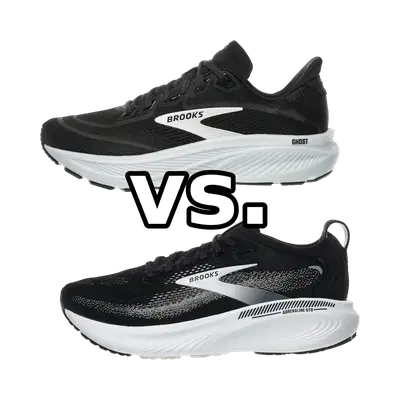
Brooks Ghost 18 vs Brooks Adrenaline GTS 25

Nike Structure 25 vs New Balance Fresh Foam X 860v14
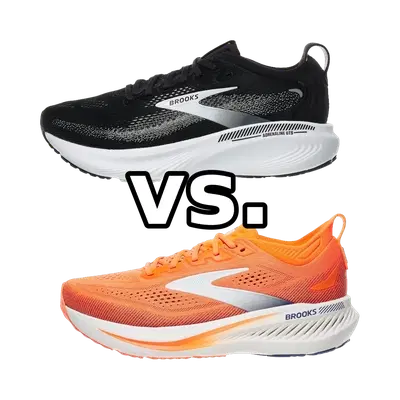
Brooks Adrenaline GTS 25 vs Brooks Glycerin GTS 23

Nike Structure 25 vs Asics GT-2000 13

Brooks Adrenaline GTS 25 vs Brooks Beast GTS 26

Nike Structure 25 vs Asics GT-2000 14
© 2026 longrunshoes.ai | All rights reserved.
Use of materials from this site is permitted only with proper attribution and a link to longrunshoes.ai.