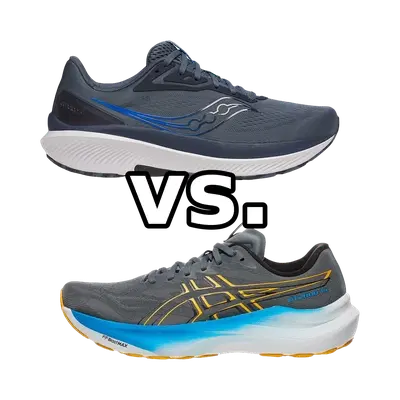
Saucony Echelon 10 vs Asics GT-2000 13:
Which to Choose
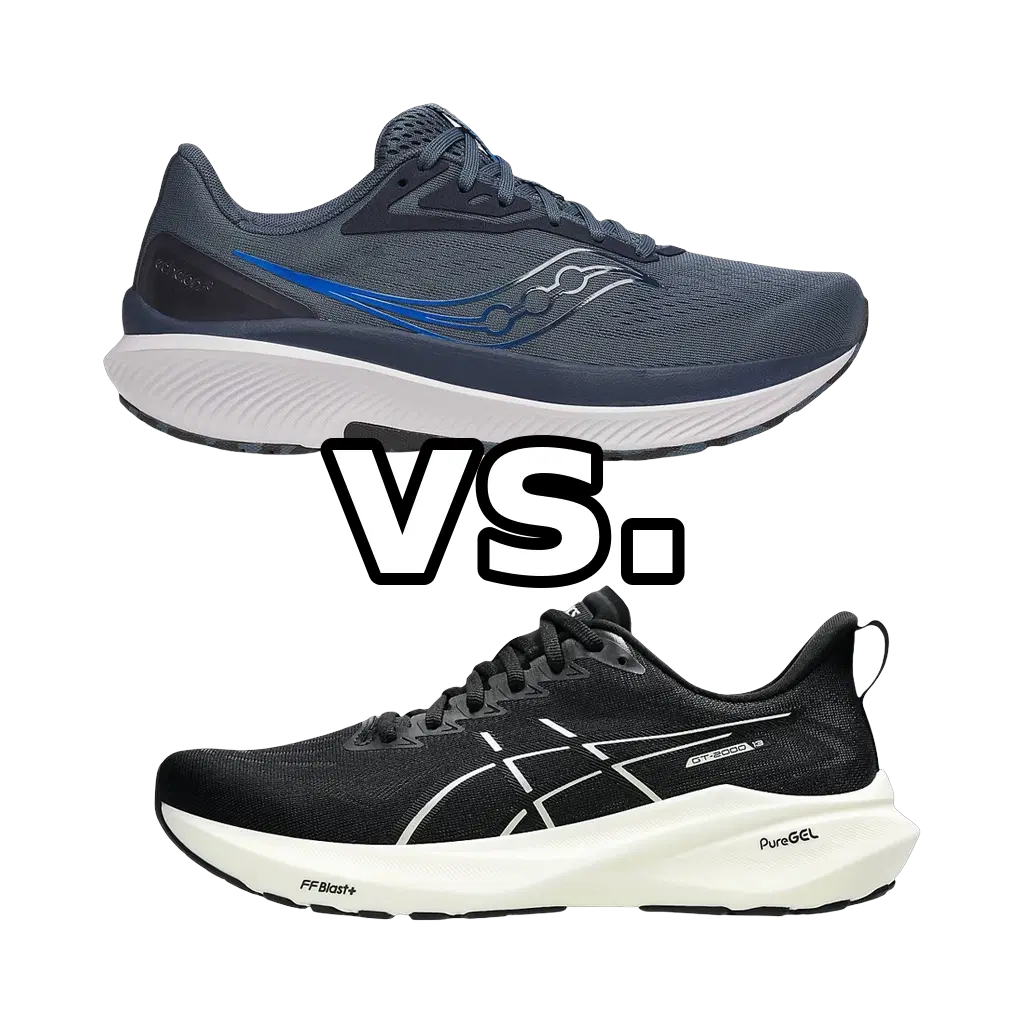
Verdict
These are close cousins, so the decision hinges on fit and foot mechanics rather than any one being better. Go GT-2000 13 if you mildly overpronate, train up to the marathon, or want the lighter shoe; go Echelon 10 if you have wide feet or wear orthotics and want a roomy, accommodating, correction-free platform for 10K-to-half mileage. If your feet are average width and your stride is neutral, the GT-2000 13's lower weight and longer distance range make it the more versatile default.
Pace
3 of 6
Cushioning
4 of 6
Responsiveness
3 of 6
Stability
5 of 6
Drop
8 mm
Support
Stable Neutral
Plate
None
Distances
10KHalf
Pace
3 of 6
Cushioning
4 of 6
Responsiveness
3 of 6
Stability
5 of 6
Drop
8 mm
Support
Stability
Plate
None
Distances
10KHalfMarathon
At a Glance
Saucony Echelon 10Asics GT-2000 13
Who Should Choose Each Shoe
Choose
Saucony Echelon 10
Choose the Echelon 10 if you want accommodating comfort and a secure platform without an aggressive pronation-control element — it's the pick for wide feet, for orthotic wearers who need room to drop an insert in, and for beginners or easy-day runners who prize a calm, roomy, forgiving fit. It's ideal if your mileage centers on relaxed 10Ks, halves, and long conversational base runs rather than marathon buildups, and you don't mind a slightly heavier shoe in exchange for that spacious, planted feel.
Choose
Asics GT-2000 13
Choose the GT-2000 13 if you mildly overpronate and genuinely want guidance underfoot, since its LITETRUSS medial system corrects in a way the neutral Echelon simply doesn't. It's also the better choice if your training reaches marathon distance or if you just want the lighter of the two on your foot — at roughly 270g it's meaningfully nimbler for steady long efforts, and its slightly softer, taller FF Blast+ Eco ride suits runners logging high weekly mileage who want durable protection without extra heft.
Head-to-Head
The headline difference is the kind of stability each one offers. The GT-2000 13 is a true stability shoe: it builds in Asics' LITETRUSS medial support, so it actively guides a foot that mildly overpronates and holds your form together when things get sloppy late in a run. The Echelon 10 is stable-neutral — it earns its security from a wide, flat platform and a roomy last rather than any medial post, which makes it the better fit for runners who want calm, planted support without a correction element dictating their stride, and especially for anyone who wears orthotics. Weight is the other real separator: the GT-2000 13 comes in around 270g (9.5 oz) in a men's 9, while the Echelon 10 is noticeably heavier at about 308g (10.8 oz), a gap you feel when you try to lift the pace. On stack they're close, with the GT-2000 13 sitting slightly taller at 36.5mm heel / 28.5mm forefoot versus the Echelon's 35mm / 27mm, both at the same 8mm drop. Foam character tracks with that: the GT-2000's FF Blast+ Eco is the lighter, marginally more cushioned compound and rides soft-but-muted, while the Echelon's PWRRUN is honest and supportive but fairly plain, with modest rebound. Neither is springy and neither wants to sprint — both feel a touch dull when pushed past roughly 8:00/mile. The clearest ride distinction is reach: the GT-2000 13 is comfortable stretching to the full marathon, whereas the Echelon 10 tops out most convincingly at the half. Where the Echelon claws back ground is fit, offering a genuinely generous upper with wide and extra-wide options that the GT-2000's more standard engineered mesh doesn't match.
Similar Comparisons
Asics GT-1000 14 vs Asics GT-2000 13
Saucony Echelon 10 vs New Balance Fresh Foam X Vongo v6
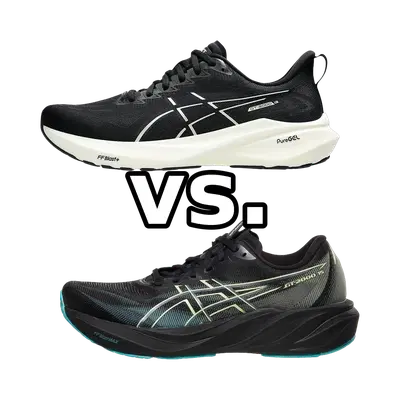
Asics GT-2000 13 vs Asics GT-2000 15
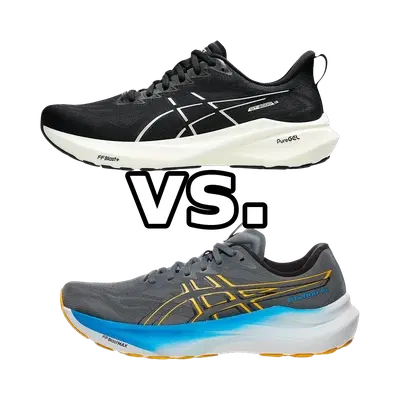
Asics GT-2000 13 vs Asics GT-2000 14
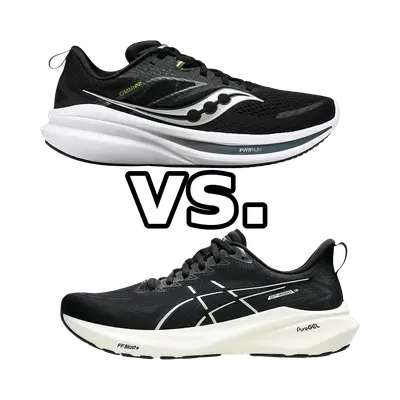
Saucony Omni 22 vs Asics GT-2000 13
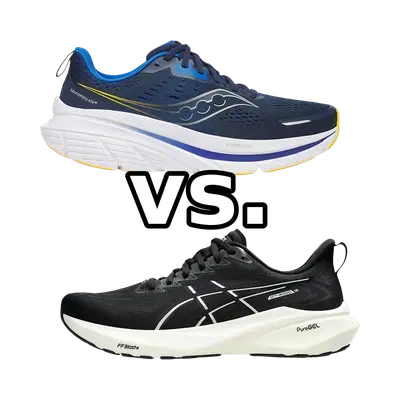
Saucony Guide 18 vs Asics GT-2000 13
Nike Structure 25 vs Asics GT-2000 13
New Balance Fresh Foam X 860v14 vs Asics GT-2000 13
© 2026 longrunshoes.ai | All rights reserved.
Use of materials from this site is permitted only with proper attribution and a link to longrunshoes.ai.