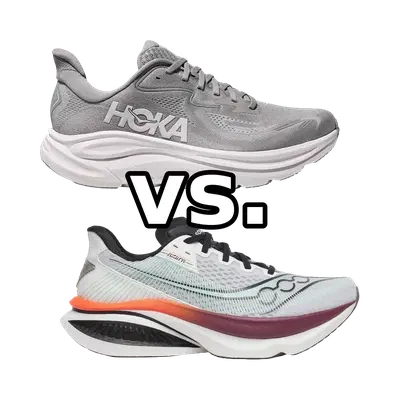
Saucony Endorphin Azura vs Hoka Clifton Pro:
Which to Choose
Verdict
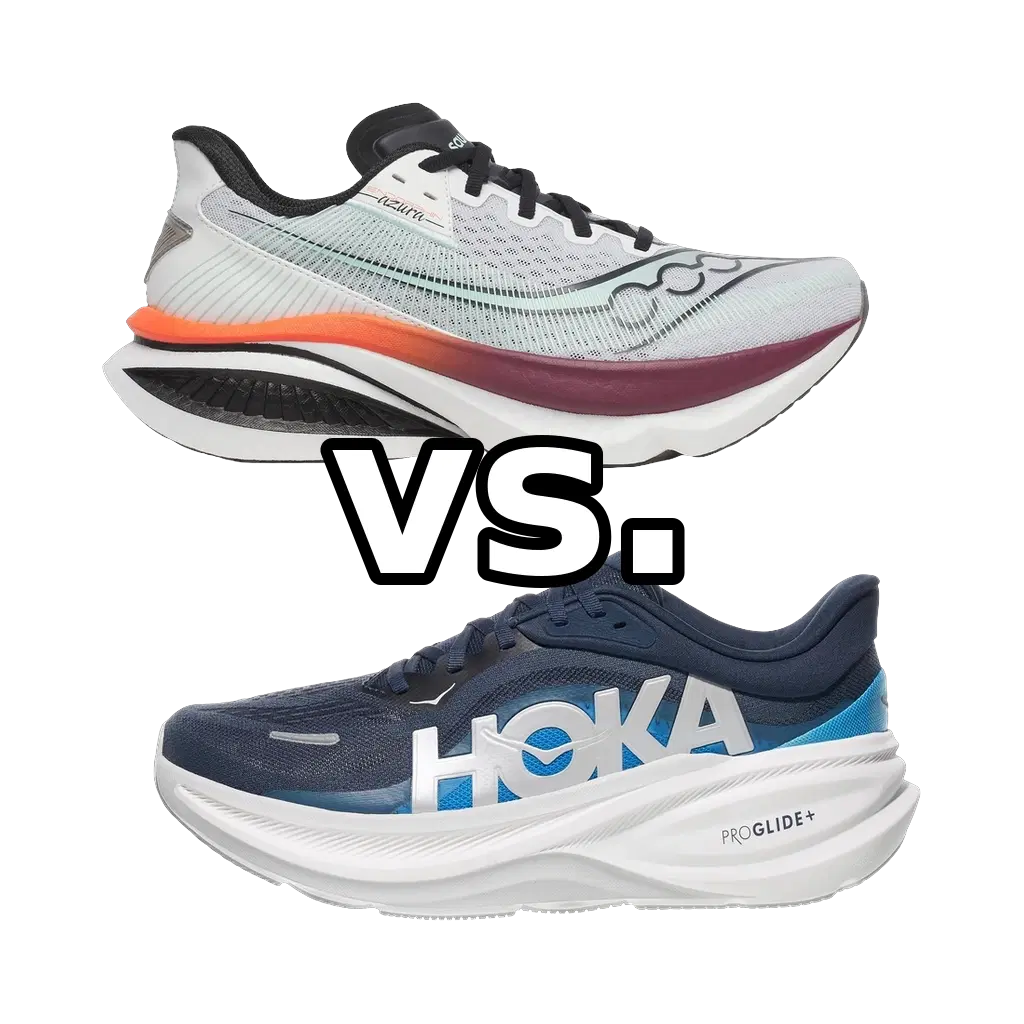
Both are excellent no-plate neutral trainers for 10K-to-marathon duty, so it comes down to ride feel rather than capability. Go with the Endorphin Azura for a softer, bouncier, lighter shoe that rewards faster efforts, and the Clifton Pro for a firmer, more planted, rocker-driven ride with a bit more stability and durability for higher-volume easy miles.
Pace
4 of 6
Cushioning
5 of 6
Responsiveness
5 of 6
Stability
3 of 6
Drop
8 mm
Support
Neutral
Plate
None
Distances
10KHalfMarathon
Pace
4 of 6
Cushioning
5 of 6
Responsiveness
5 of 6
Stability
4 of 6
Drop
8 mm
Support
Stable Neutral
Plate
None
Distances
10KHalfMarathon
At a Glance
Saucony Endorphin AzuraHoka Clifton Pro
Who Should Choose Each Shoe
Choose
Saucony Endorphin Azura
Choose the Azura if you're an intermediate-to-experienced neutral runner who wants a soft, energetic ride and plans to use one shoe for everything from steady miles to tempo work and progression long runs. Its lighter weight and bouncy PEBA foam reward running with purpose, and it's the better pick if you like a rolling, springy feel and don't mind a slightly tippy platform at very slow paces. Runners cross-shopping this against a carbon racer — but who don't want the rigid, all-or-nothing feel of one — will find it the more versatile choice.
Choose
Hoka Clifton Pro
Choose the Clifton Pro if you want cushioning without the sink-in softness — a firmer, planted ride with a wider, stable-neutral base and a rocker that carries you through easy miles and long efforts. It suits recreational and intermediate runners who prioritize stability and durability, log a lot of easy-to-moderate mileage, and prefer propulsion that comes from smooth rocker geometry rather than a soft, reactive foam. It's the safer pick if you find tall, soft PEBA stacks feel unstable underfoot.
Head-to-Head
The clearest split is the midsole. The Azura runs on a full PWRRUN PB beaded PEBA foam that feels genuinely soft and lively, with a springy rebound that comes alive when you lean into a faster gear; transitions are smooth and rolling rather than mechanically snappy, since nothing is forcing the pace. The Clifton Pro uses ProGlide+ supercritical EVA paired with an aggressive MetaRocker, and it feels lively but moderately firm rather than pillowy — the rocker tips you forward and drives the rebound, so propulsion comes from geometry as much as from the foam. Stack heights are close (41mm heel / 33mm forefoot on the Azura, 43/33mm on the Clifton Pro), but the ride feel diverges: the Azura's tall, soft PEBA stack is a touch tippy and less planted at slow jogging speeds, while the Clifton Pro's wider, stable-neutral platform feels more locked-down — it earns the higher stability rating (4/6 vs 3/6) without any medial posting. Weight also favors the Azura at 241g in a men's US9 against roughly 264g for the Clifton Pro, and that shows up in the pace windows: the Azura is happiest at 4:30–5:15/km and stays sharp down to about 4:15/km, while the Clifton Pro is tuned a touch more toward daily and long-run pace at 4:45–5:45/km, holding up to roughly 4:20/km before a dedicated racer makes more sense. Neither is a pure recovery slipper and neither is a 5K weapon; the difference is that the Azura leans energetic-and-uptempo while the Clifton Pro leans planted-and-protective, with end-to-end rubber coverage aiding its durability.
Similar Comparisons
Hoka Clifton 11 vs Hoka Clifton Pro

Adidas Adizero Evo SL vs Saucony Endorphin Azura
Asics Superblast 3 vs Hoka Clifton Pro
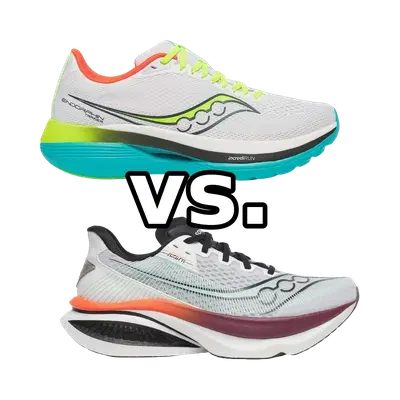
Saucony Endorphin Trainer vs Saucony Endorphin Azura
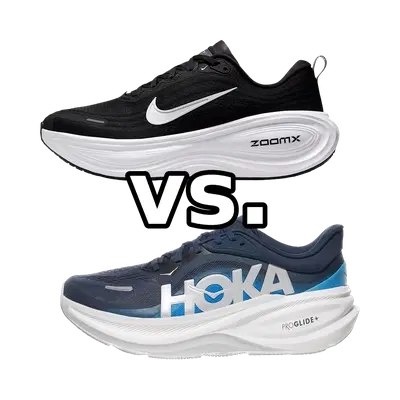
Nike Vomero Plus vs Hoka Clifton Pro
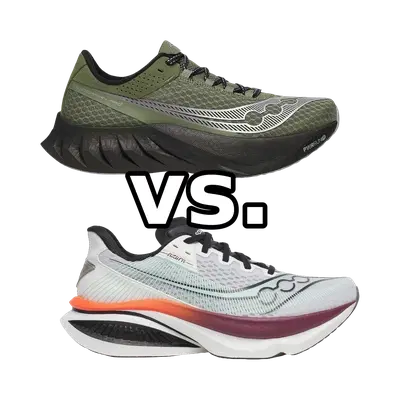
Saucony Endorphin Pro 4 vs Saucony Endorphin Azura
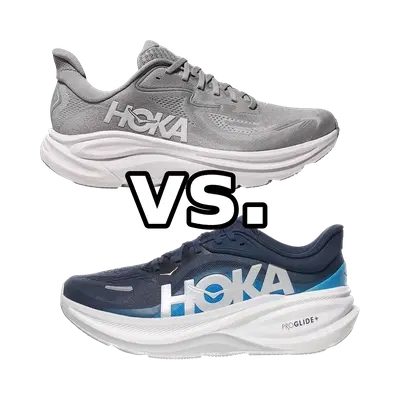
Hoka Clifton 10 vs Hoka Clifton Pro
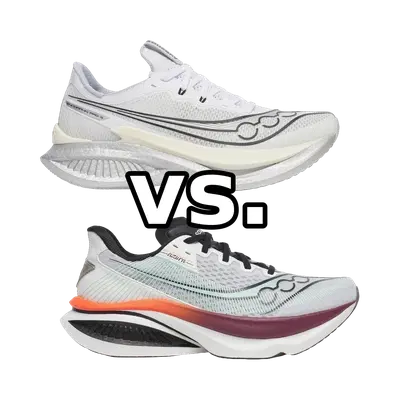
Saucony Endorphin Pro 5 vs Saucony Endorphin Azura
© 2026 longrunshoes.ai | All rights reserved.
Use of materials from this site is permitted only with proper attribution and a link to longrunshoes.ai.