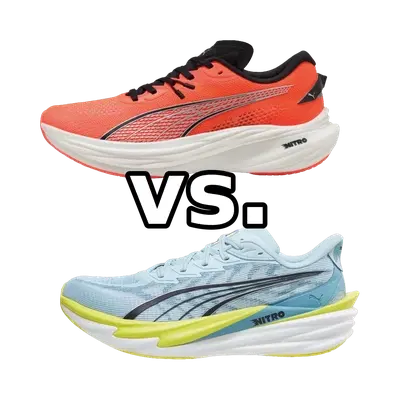
Puma Deviate Nitro 4 vs Puma Deviate Pure Nitro:
Which to Choose
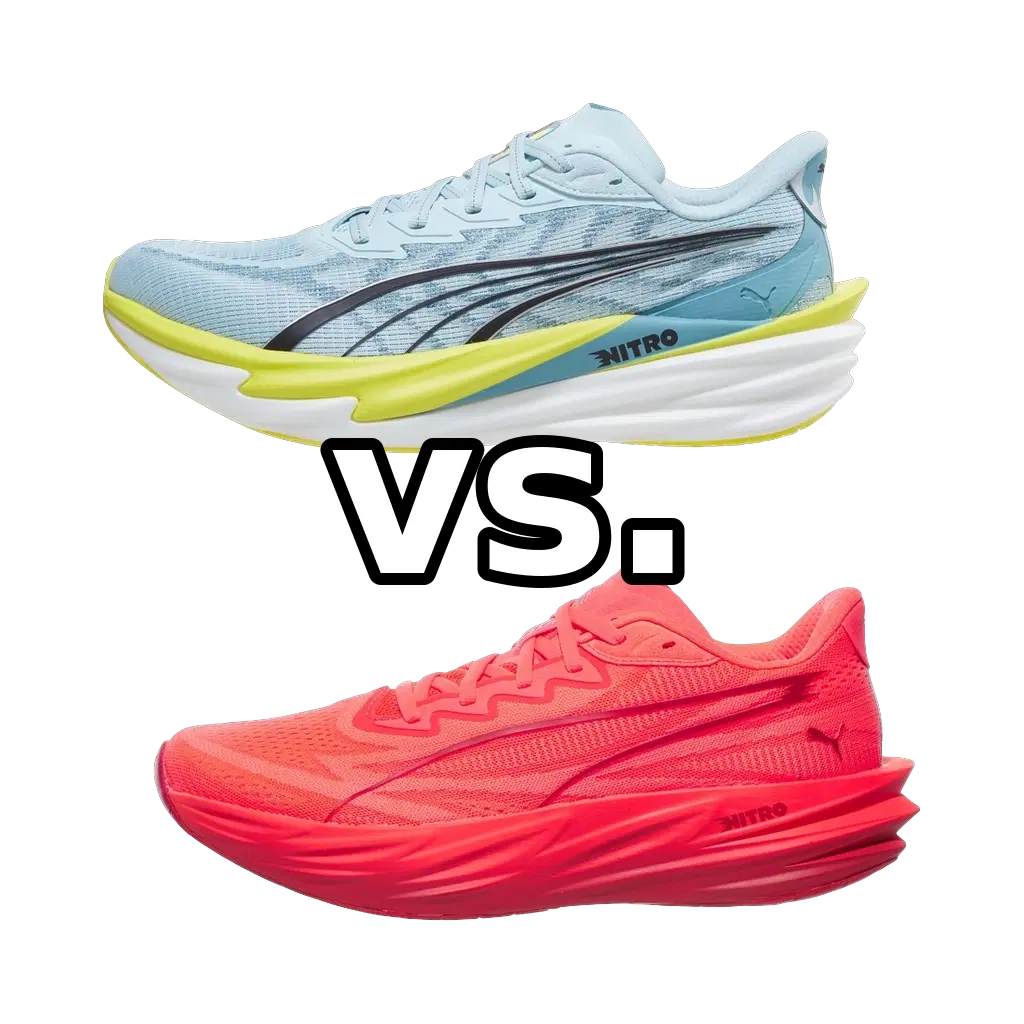
Verdict
It comes down to the plate. If you want propulsion, a stable planted platform, and a shoe that rolls you forward at marathon pace, the plated Deviate Nitro 4 is the one; if you'd rather have a lighter, more flexible, foam-driven ride with more ground feel and a touch more stack, the plateless Pure Nitro is the better fit. Same foam, same mission — pick based on whether you run better with a carbon plate under you or without one.
Pace
4 of 6
Cushioning
4 of 6
Responsiveness
5 of 6
Stability
4 of 6
Drop
7 mm
Support
Neutral
Plate
Carbon
Distances
10KHalfMarathon
Pace
4 of 6
Cushioning
4 of 6
Responsiveness
5 of 6
Stability
3 of 6
Drop
9 mm
Support
Neutral
Plate
Composite
Distances
10KHalfMarathon
At a Glance
Puma Deviate Nitro 4Puma Deviate Pure Nitro
Who Should Choose Each Shoe
Choose
Puma Deviate Nitro 4
Choose the Deviate Nitro 4 if you want that carbon-plate propulsion — the rolling, forward-driving toe-off that helps you lock into and hold a faster rhythm over 10K, half, and marathon efforts. It's the better pick for the runner who values a planted, stable, slightly stiffer platform and is regularly pushing tempo and marathon-pace work, and who doesn't mind carrying a little extra weight to get the plated ride.
Choose
Puma Deviate Pure Nitro
Choose the Deviate Pure Nitro if you prefer a lighter, more flexible, more natural-feeling trainer and don't want a plate dictating your footstrike — you get the same bouncy PEBA foam, a bit more stack height, and noticeably less weight on foot. It suits improvers and intermediates who want one versatile shoe for easy days and uptempo efforts, who like ground feel and a higher heel-to-toe drop, and who find stiff plated rides unforgiving at everyday paces.
Head-to-Head
Underfoot, both ride on nitrogen-injected PEBA NITROFOAM that feels springy and lively rather than pillowy, and both prefer to be moving — each can feel a touch firm and businesslike at true recovery-jog speeds. The defining split is the plate. The Nitro 4 runs a full-length PWRPLATE carbon plate, which gives it a smooth, rolling, propulsive toe-off and a stiffer, more planted platform; the Pure Nitro has no carbon plate at all — just a small midfoot shank for structure — so its rebound comes purely from the foam, and the ride is more flexible, more connected to the ground, and more natural underfoot. That shows up in stability, where the plate-stiffened Nitro 4 rates a notch higher (4/6 vs. 3/6). Geometry differs too: the Nitro 4 sits lower and firmer at a measured 34/27mm with a 7mm drop, while the Pure Nitro is the taller, slightly steeper shoe at 37/28mm with roughly a 9mm drop — so the Pure Nitro gives you a bit more stack and a higher heel, the Nitro 4 a bit more forefoot ground feel. Weight runs the other way from what the plate might suggest: the plateless Pure Nitro is the lighter shoe at about 215g, versus 247g for the carbon-plated Nitro 4. Both peg the half marathon as their sweet spot and both are happiest at uptempo rather than all-out racing paces, with the Nitro 4 tuned to a marginally quicker window (roughly 4:15–5:15 min/km vs. the Pure Nitro's 4:30–5:30), and its carbon roll makes it the more convincing choice when you want to hold marathon pace late in a long effort.
Similar Comparisons

Adidas Adizero Evo SL vs Puma Deviate Pure Nitro
Puma Deviate Nitro 4 vs Puma Deviate Nitro Elite 4
Asics Novablast 6 vs Puma Deviate Pure Nitro

Puma Deviate Nitro 4 vs Hoka Mach 7

Saucony Endorphin Speed 5 vs Puma Deviate Pure Nitro
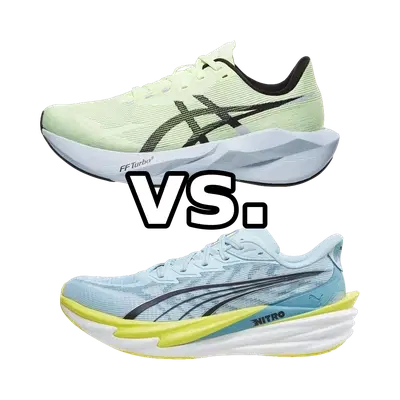
Asics Novablast 6 vs Puma Deviate Nitro 4

On Cloudswift 4 vs Puma Deviate Pure Nitro
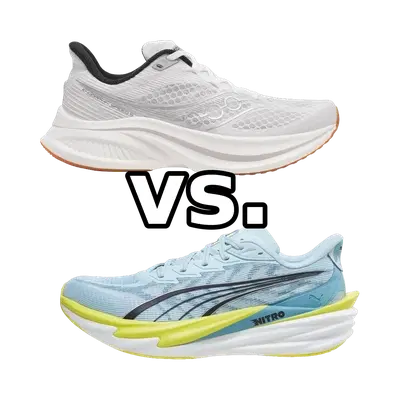
Saucony Endorphin Speed 5 vs Puma Deviate Nitro 4
© 2026 longrunshoes.ai | All rights reserved.
Use of materials from this site is permitted only with proper attribution and a link to longrunshoes.ai.