
Asics Novablast 6 vs Puma Deviate Nitro 4:
Which to Choose
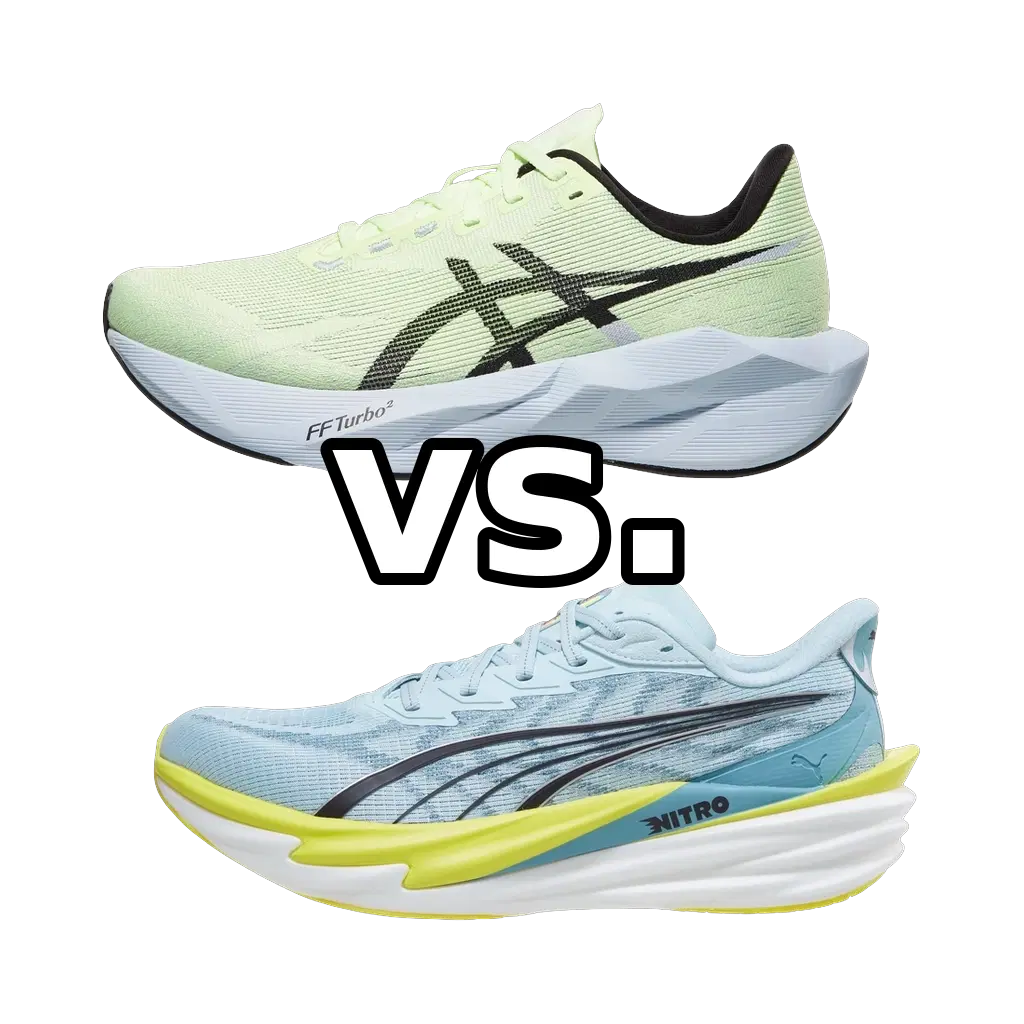
Verdict
These two serve the same job at the same level, so it comes down to ride preference, not quality. Pick the Novablast 6 if you want a taller, softer, springier shoe that favors comfort and forgiving easy miles; pick the Deviate Nitro 4 if you want a lower, firmer, carbon-plated platform that feels more stable and more eager the faster you go. If you mostly run easy and love plush cushioning, go Asics; if you want propulsion and a planted feel for uptempo training, go Puma.
Pace
4 of 6
Cushioning
5 of 6
Responsiveness
5 of 6
Stability
3 of 6
Drop
7 mm
Support
Neutral
Plate
None
Distances
10KHalfMarathon
Pace
4 of 6
Cushioning
4 of 6
Responsiveness
5 of 6
Stability
4 of 6
Drop
7 mm
Support
Neutral
Plate
Carbon
Distances
10KHalfMarathon
At a Glance
Asics Novablast 6Puma Deviate Nitro 4
Who Should Choose Each Shoe
Choose
Asics Novablast 6
Choose the Novablast 6 if you prioritize soft, bouncy cushioning and a forgiving ride for easy days, long runs, and higher-mileage weeks, and you'd rather feel a tall, energetic platform than a stiff plate underfoot. It's an easy pick for beginners or neutral runners who want one plush shoe that still has enough pop for occasional tempo work, and for anyone who finds carbon-plated shoes too rigid at conversational paces. Just know the tall stack trades away some planted stability when you're tired and shuffling.
Choose
Puma Deviate Nitro 4
Choose the Deviate Nitro 4 if you want a lower, firmer, more connected ride and a platform that comes alive when you lean into the pace — the carbon plate gives it a rolling, propulsive toe-off that suits progression runs and steady tempo efforts. Its wider, plate-stiffened base feels more planted and stable than the Novablast's tall stack, making it the better match for runners who dislike a tippy feel or who want a taste of plated-shoe propulsion in a daily trainer. It's less ideal if your week is mostly slow recovery miles, where it can feel stiff and overly businesslike.
Head-to-Head
Start with the overlap, because it's genuine: both are neutral shoes with no pronation correction, both run a 7 mm heel-to-toe drop, and they weigh within a couple of grams of each other — 249 g for the Novablast 6 versus 247 g for the Deviate Nitro 4 in men's US 9. From there they diverge in ways you feel immediately. The Novablast is the taller, cushier of the two, sitting on a 39 mm heel / 32 mm forefoot stack of bouncy FF Blast Max foam with a forefoot pod for extra rebound and no plate; it's rated higher on cushioning (5/6) and delivers a soft, lively, springy ride that rewards a quicker cadence. The trade-off is stability: that tall stack can feel a touch tippy and unsteady at slow, flat-footed paces, which is reflected in its 3/6 stability score. The Deviate Nitro 4 takes the opposite approach — a lower 34 mm heel / 27 mm forefoot platform of PEBA-based NITROFOAM stiffened by a full-length PWRPLATE carbon plate. That plate gives it a smooth, rolling toe-off and a more planted, confident feel (4/6 stability), but it also makes the ride firmer and more businesslike, and it can feel stiff at very easy jogging speeds. In short: the Asics is more forgiving and springy underfoot and better suited to a runner who wants plush, protective cushioning for easy and long days; the Puma is lower, more connected to the ground, and leans into pace thanks to the carbon plate, feeling snappiest when you push toward tempo. Both top out as capable uptempo trainers rather than dedicated racers.
Similar Comparisons
Puma Deviate Nitro 3 vs Puma Deviate Nitro 4

Asics Novablast 6 vs Nike Pegasus 42
Puma Deviate Nitro 4 vs Puma Deviate Nitro Elite 4

Asics Novablast 6 vs Asics Superblast 3

Puma Deviate Nitro 4 vs Hoka Mach 7
Asics Novablast 6 vs Asics Megablast

Saucony Endorphin Speed 5 vs Puma Deviate Nitro 4

Asics Novablast 6 vs Saucony Ride 19
© 2026 longrunshoes.ai | All rights reserved.
Use of materials from this site is permitted only with proper attribution and a link to longrunshoes.ai.