Asics Novablast 5 vs Asics Novablast 6:
Which to Choose
Verdict
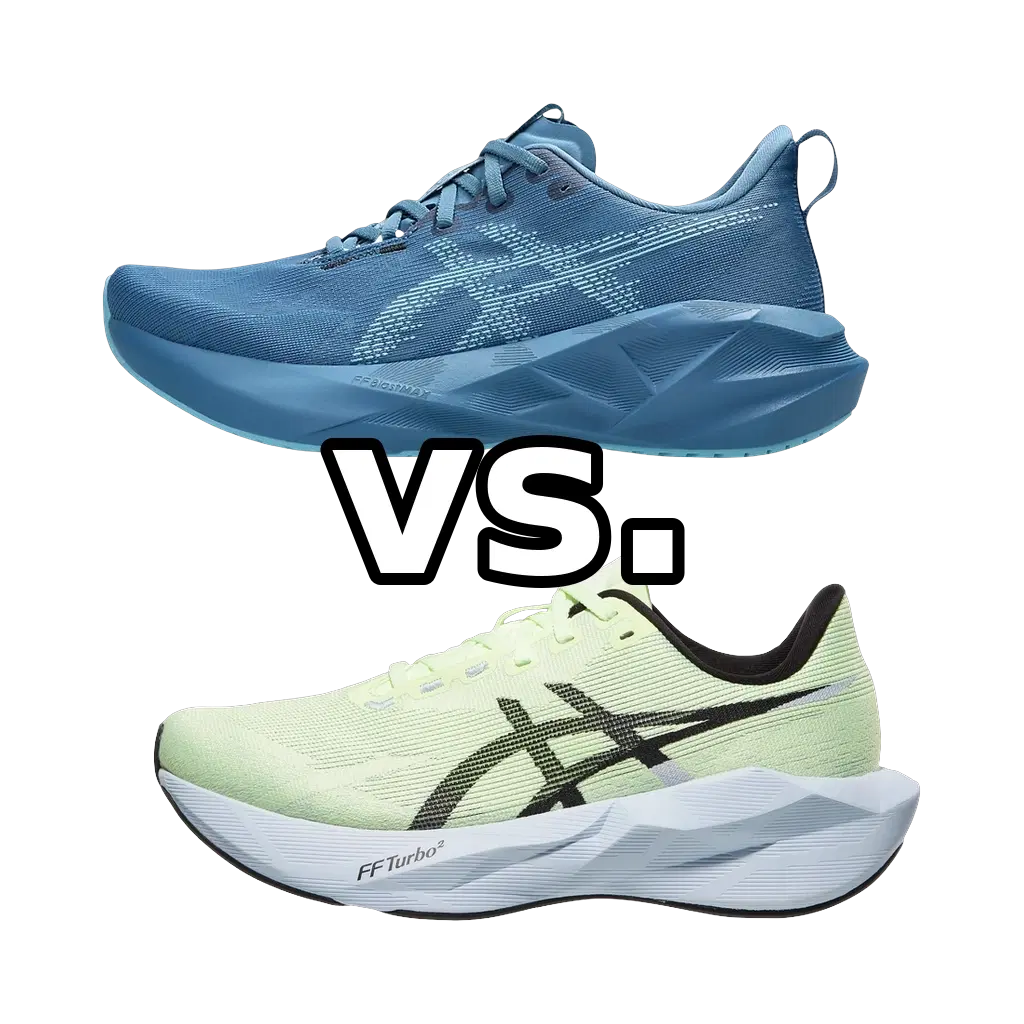
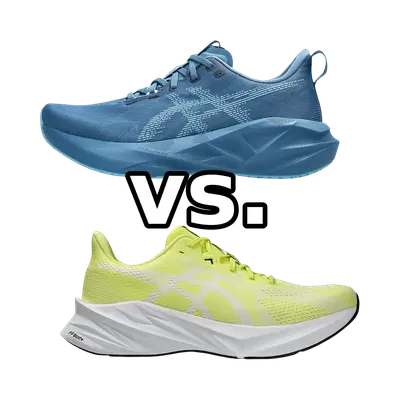
These are two versions of one shoe, not two different shoes, so the decision hinges on how much you value forefoot responsiveness versus stability. The Novablast 6 is the more polished, slightly lower and lighter, punchier ride thanks to its forefoot pod, and it's the clear default for a new buyer. But if you already run and love the Novablast 5, it isn't a dramatic leap — upgrade for the sharper toe-off and versatility, but stick with the 5 if you mainly want soft, planted long-run cushioning and value its wider, more stable base.
Pace
4 of 6
Cushioning
5 of 6
Responsiveness
5 of 6
Stability
4 of 6
Drop
8 mm
Support
Neutral
Plate
None
Distances
10KHalfMarathon
Pace
4 of 6
Cushioning
5 of 6
Responsiveness
5 of 6
Stability
3 of 6
Drop
7 mm
Support
Neutral
Plate
None
Distances
10KHalfMarathon
At a Glance
Asics Novablast 5Asics Novablast 6
Who Should Choose Each Shoe
Choose
Asics Novablast 5
Choose the Novablast 5 if you prize a soft, uniform, protective ride over forefoot snap, and you want the most planted version of this platform — its wider base and 4/6 stability make the tall stack more predictable, especially on long, easy-paced training runs. It's also the natural pick if you're a heel or midfoot striker who likes the slightly taller stack and 8mm drop, and you care more about smooth cushioning underfoot than chasing tempo pop. Runners who already own and love the 5 and mostly log relaxed mileage have little reason to feel they're missing out.
Choose
Asics Novablast 6
Choose the Novablast 6 if you want the same do-everything cushioned trainer but with more life at the front of the foot — the FF Turbo Squared forefoot pod delivers a snappier toe-off that rewards a quicker cadence and makes uptempo and steady sessions more fun. It's the better fit for runners who occasionally push the pace, want a slightly lower, lighter, more agile ride, and don't mind trading a bit of planted stability for that responsiveness. First-time Novablast buyers should default here, since it's the more refined execution of the concept.
Head-to-Head
On paper these two share a spine — both are neutral, plateless, cushioned 5/6 trainers with 5/6 responsiveness driven by the same FF Blast Max superfoam, and both are happiest from 10K up through the half and marathon, with long and steady runs as the daily home base. The differences are real but incremental. The Novablast 6 sits on a slightly lower platform (39mm heel / 32mm forefoot) versus the 5's taller 41.5mm heel, and it drops the offset a touch from 8mm to 7mm, so it rides a little closer to the ground. It's also fractionally lighter — roughly 249g in a men's US 9 against about 255g for the 5 — though that gap is small enough that you feel the geometry more than the grams. The biggest functional change is at the front of the foot: the 6 adds an FF Turbo Squared "trampoline" pod in the forefoot, giving a noticeably snappier, more contrasted toe-off, where the 5's ride is softer and more uniform end to end. That extra pop, plus a narrower, more agile platform, makes the 6 feel a bit quicker and more eager to lift the pace — its sweet spot for uptempo work tightens to around 4:15–4:45 min/km. The trade-off is stability: the 5 rates 4/6 on its wide, flared base, while the 6 comes in at 3/6, and both share the tall-stack quirk of feeling slightly tippy and floaty at very slow, flat-footed paces — a sensation the 6's narrower platform doesn't fully cure. The 6 also swaps the 5's engineered mesh upper for a lighter woven one with improved breathability, and reworks the outsole with ASICSGRIP through the forefoot for better grip and wear life.
Similar Comparisons
Asics Novablast 6 vs Nike Pegasus 42

Adidas Adizero Boston 13 vs Asics Novablast 5
Asics Novablast 6 vs Asics Superblast 3
Adidas Adizero SL2 vs Asics Novablast 5
Asics Novablast 6 vs Asics Megablast
Asics Superblast 2 vs Asics Novablast 5
Asics Novablast 6 vs Saucony Ride 19
Asics Novablast 5 vs Asics Dynablast 5
© 2026 longrunshoes.ai | All rights reserved.
Use of materials from this site is permitted only with proper attribution and a link to longrunshoes.ai.