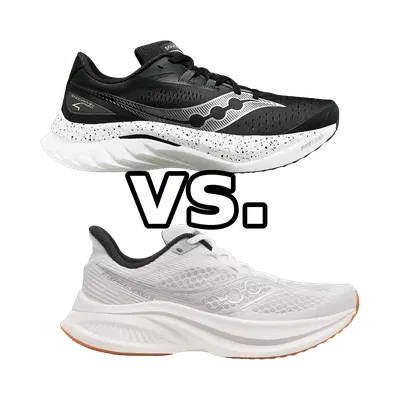
Saucony Endorphin Speed 5 vs Puma Deviate Nitro 4:
Which to Choose
Verdict
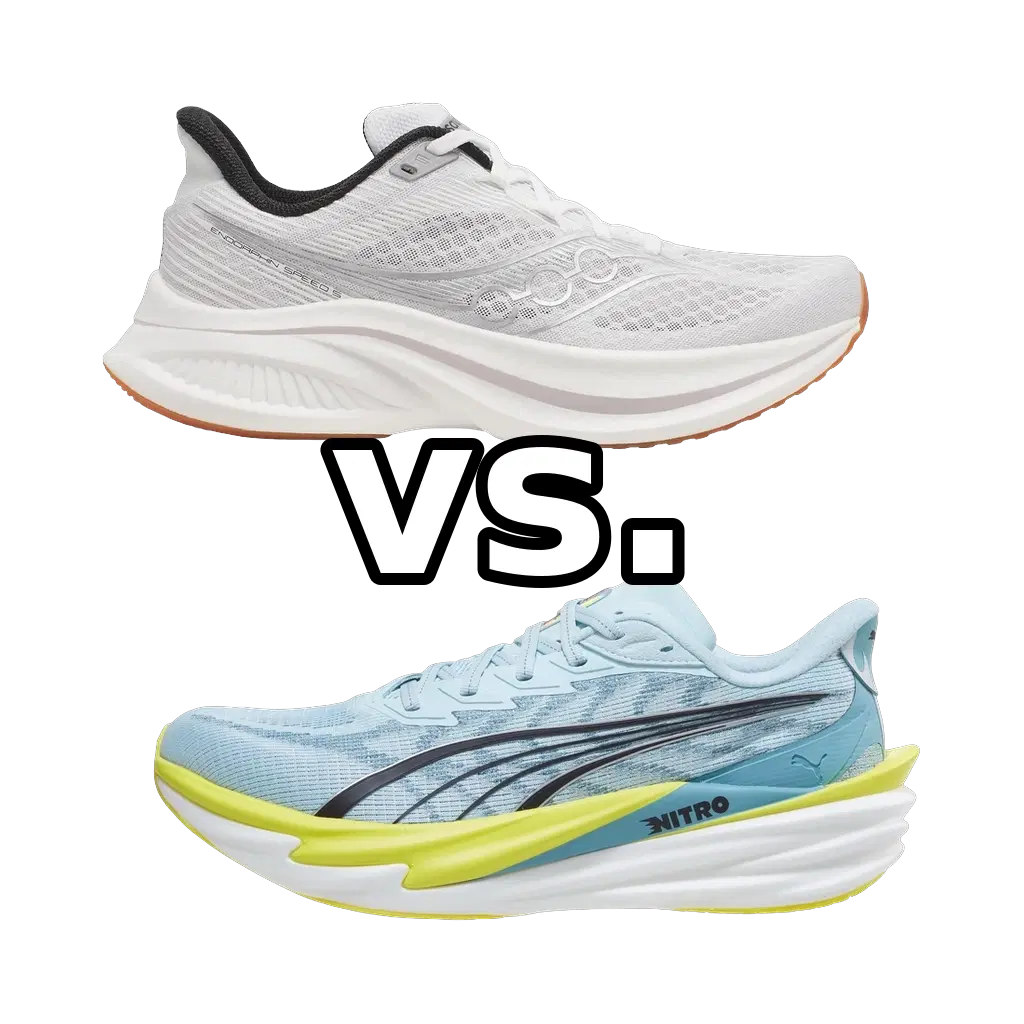
It comes down to intent, not quality — both are excellent, closely matched plated trainers. Go with the Endorphin Speed 5 if you want the more versatile shoe that can also race, with a softer, taller ride and a forgiving nylon plate. Go with the Deviate Nitro 4 if you want a lower, more planted carbon-plated daily trainer that thrives at uptempo rather than race pace.
Pace
5 of 6
Cushioning
5 of 6
Responsiveness
5 of 6
Stability
3 of 6
Drop
8 mm
Support
Neutral
Plate
Composite
Distances
10KHalfMarathon
Pace
4 of 6
Cushioning
4 of 6
Responsiveness
5 of 6
Stability
4 of 6
Drop
7 mm
Support
Neutral
Plate
Carbon
Distances
10KHalfMarathon
At a Glance
Saucony Endorphin Speed 5Puma Deviate Nitro 4
Who Should Choose Each Shoe
Choose
Saucony Endorphin Speed 5
Choose the Endorphin Speed 5 if you want one shoe that can legitimately double as your race-day flat — intermediate to experienced runners doing real tempo work and marathon-training long runs who'd rather not buy a separate carbon racer. Its taller, softer PEBA stack and forgiving nylon plate make it the better pick if you want propulsion without the rigid, locked-in feel of carbon, and if you're chasing times at the sharper end of your paces.
Choose
Puma Deviate Nitro 4
Choose the Deviate Nitro 4 if you're a recreational, neutral runner who wants one pair to cover most of the week — steady daily miles plus the occasional tempo or progression run — rather than a shoe optimized for a single fast race. Its lower, carbon-stiffened platform is the more planted and stable of the two, so it suits runners who value a confident, agile daily ride and don't need the Endorphin's extra stack height or top-end racing ceiling.
Head-to-Head
On paper these two are strikingly close: the Endorphin Speed 5 weighs 241g in a men's US 9 to the Deviate Nitro 4's 247g, both ride on an identical 27mm forefoot, and the drops are within a millimeter of each other (8mm stated for the Saucony, 7mm for the Puma). The decisive differences are the plate and the stack. The Endorphin runs a full-length semi-rigid winged nylon plate, which guides and rolls you through toe-off rather than snapping — it feels smooth, forgiving, and flexible enough to drop into easy miles. The Deviate uses a full-length carbon PWRPLATE, which is stiffer and delivers a more insistent, rolling forward push that wants pace to feel its best. Underfoot, the Saucony sits taller and softer at a 37mm heel versus the Puma's 34mm, giving it more protective, race-tuned cushioning (it rates a notch higher on both cushioning and top-end pace), while the Deviate's lower, carbon-stiffened platform feels more planted and agile — it earns the edge in stability despite both being neutral. In practice the Endorphin Speed 5 is the more genuine one-shoe racer, happiest when you push toward roughly 3:45–4:15 min/km; the Deviate Nitro 4 is pitched a touch slower, optimized for an uptempo-training zone around 4:15–5:15 min/km and explicitly not built as a dedicated racer. Both feel busy and slightly stiff at jogging pace and reward leaning in, so neither is a plush recovery cruiser.
Similar Comparisons
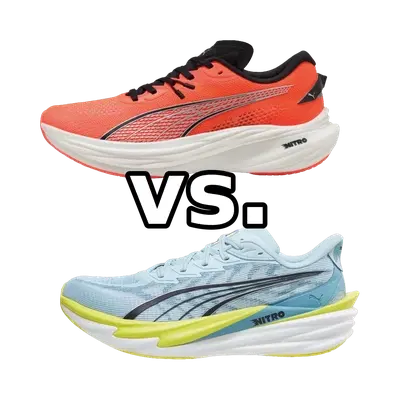
Puma Deviate Nitro 3 vs Puma Deviate Nitro 4

Adidas Adizero Evo SL vs Saucony Endorphin Speed 5
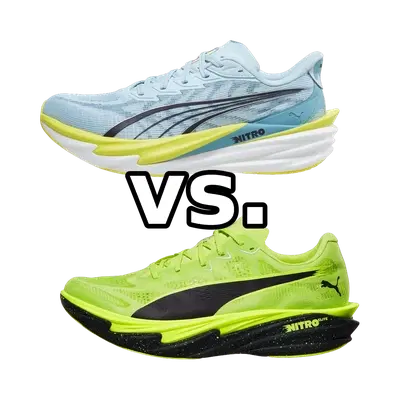
Puma Deviate Nitro 4 vs Puma Deviate Nitro Elite 4

Adidas Adizero Boston 13 vs Saucony Endorphin Speed 5
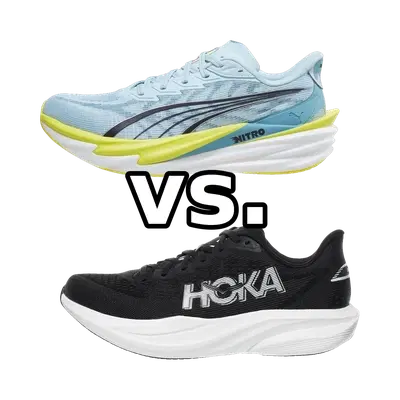
Puma Deviate Nitro 4 vs Hoka Mach 7
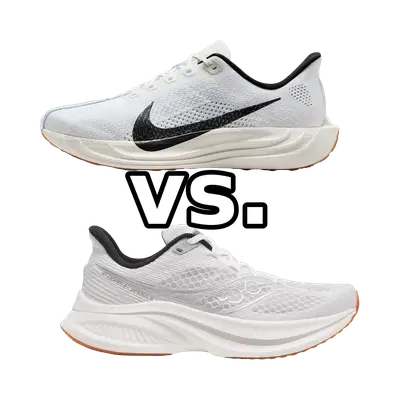
Nike Pegasus Plus vs Saucony Endorphin Speed 5
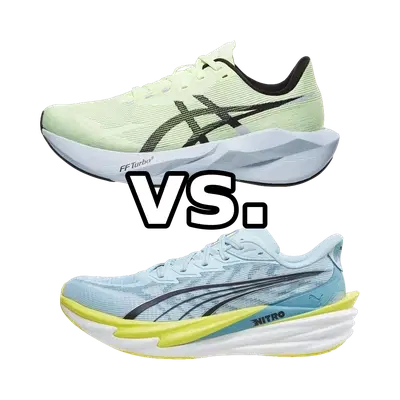
Asics Novablast 6 vs Puma Deviate Nitro 4
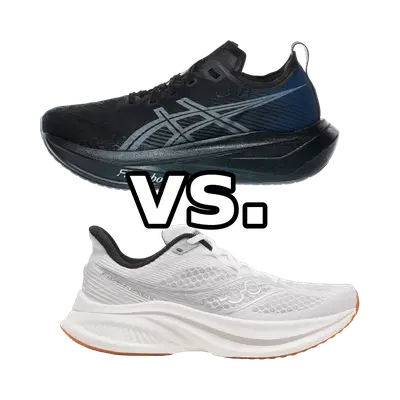
Asics Megablast vs Saucony Endorphin Speed 5
© 2026 longrunshoes.ai | All rights reserved.
Use of materials from this site is permitted only with proper attribution and a link to longrunshoes.ai.