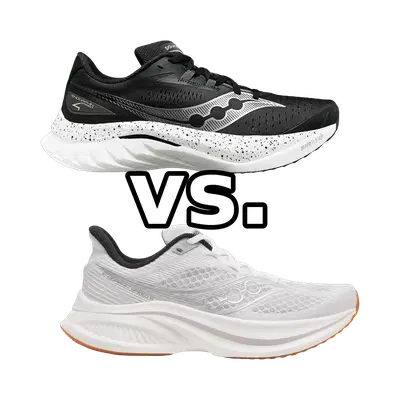
Saucony Endorphin Speed 5 vs Puma Deviate Pure Nitro:
Which to Choose
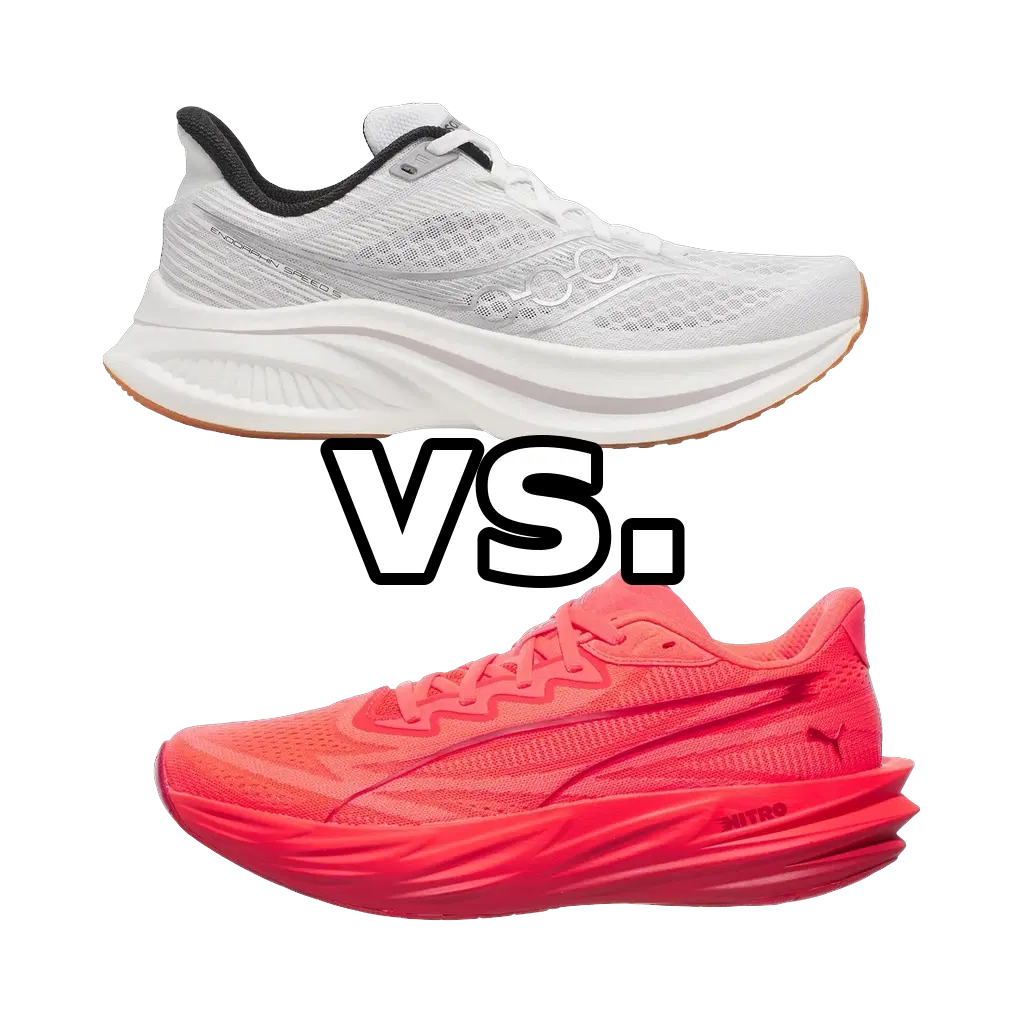
Verdict
It comes down to how fast you actually intend to run and whether you want a plate doing the work. If you need one shoe that can also race — pushing toward 4:00 min/km and under with propulsion and more forefoot cushioning — the Endorphin Speed 5 is the more capable, do-it-all choice. If you'd rather have the lighter, simpler, more natural foam-only ride for tempo and long steady miles and are content leaving all-out racing to a dedicated plated shoe, the Deviate Pure Nitro is the smarter buy. Same category, genuinely different missions.
Pace
5 of 6
Cushioning
5 of 6
Responsiveness
5 of 6
Stability
3 of 6
Drop
8 mm
Support
Neutral
Plate
Composite
Distances
10KHalfMarathon
Pace
4 of 6
Cushioning
4 of 6
Responsiveness
5 of 6
Stability
3 of 6
Drop
9 mm
Support
Neutral
Plate
Composite
Distances
10KHalfMarathon
At a Glance
Saucony Endorphin Speed 5Puma Deviate Pure Nitro
Who Should Choose Each Shoe
Choose
Saucony Endorphin Speed 5
Choose the Endorphin Speed 5 if you want one shoe to cover tempo sessions, long marathon-training miles, and race day without buying a separate carbon racer — the nylon plate and deeper cushioning make it the more capable choice as paces drop toward 3:45–4:15 min/km. It suits intermediate to experienced runners who like a propulsive, rolling toe-off and want a touch more foam protection under the forefoot for long efforts. If your goal races are the half or marathon and you'd rather not own a dedicated racer, this is the more complete tool.
Choose
Puma Deviate Pure Nitro
Choose the Deviate Pure Nitro if you want a lighter, more natural-feeling trainer that comes alive at uptempo and steady efforts but doesn't demand you push into racing paces to enjoy it. At roughly 215g with a plateless, ground-connected ride, it rewards a quicker cadence and versatile daily use — ideal for improvers and recreational-to-intermediate runners chasing tempo work and longer runs who don't want the firmer, more mechanical feel of a plate. It's the better pick if you value low weight and a clean, foam-driven ride over top-end propulsion.
Head-to-Head
The headline difference is the plate. The Endorphin Speed 5 runs a full-length semi-rigid winged nylon plate through its PWRRUN PB midsole, which guides and stiffens the ride, adds a rolling forward propulsion, and lends a bit of structure to the platform even though it's still a neutral shoe. The Deviate Pure Nitro has no propulsion plate at all — just a small midfoot shank for torsional structure — so every bit of its spring comes from the NITROFOAM itself, giving a more natural, connected, ground-feel-forward ride rather than a mechanical snap. That shows up in intended pace: the Endorphin is tuned for a genuinely fast window (optimal around 4:00–4:45 min/km and best near 3:45–4:15), while the Deviate sits a notch calmer (optimal 4:30–5:30, happiest around 4:15–4:45) and openly cedes the top gears to a plated racer. Cushioning tracks the same story — both stack 37mm at the heel, but the Endorphin's forefoot measures 27mm to the Deviate's 28mm, and the Endorphin's PEBA is rated the more protective, plusher-riding of the two, where the Deviate reads firmer and eager, preferring to be moving over being cosseted at a jog. Weight flips the advantage: the Deviate Pure Nitro is the lighter shoe at roughly 215g versus the Endorphin Speed 5's 241g (men's), a real gap you feel on the foot. Drop is effectively a wash — both are listed at 8mm, measuring close to 10mm on the Endorphin and around 9mm on the Deviate. Net: the Endorphin is the more versatile do-everything-including-race option with a firmer plated bite, while the Deviate is the lighter, simpler, more instinctive foam-only trainer.
Similar Comparisons

Adidas Adizero Evo SL vs Puma Deviate Pure Nitro

Adidas Adizero Evo SL vs Saucony Endorphin Speed 5

Asics Novablast 6 vs Puma Deviate Pure Nitro

Adidas Adizero Boston 13 vs Saucony Endorphin Speed 5

On Cloudswift 4 vs Puma Deviate Pure Nitro

Nike Pegasus Plus vs Saucony Endorphin Speed 5

Brooks Hyperion Max 4 vs Puma Deviate Pure Nitro
Asics Megablast vs Saucony Endorphin Speed 5
© 2026 longrunshoes.ai | All rights reserved.
Use of materials from this site is permitted only with proper attribution and a link to longrunshoes.ai.