
Brooks Hyperion Max 4 vs Puma Deviate Pure Nitro:
Which to Choose
Verdict
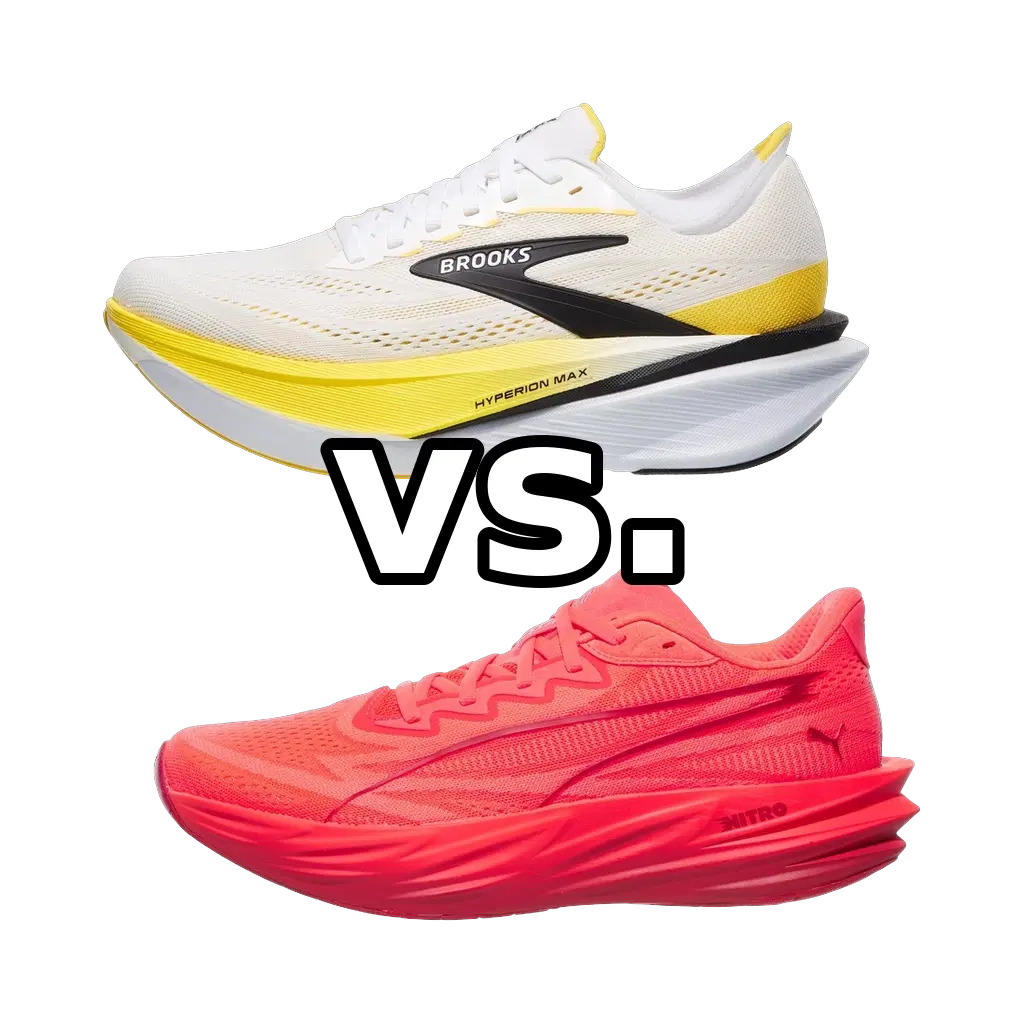
It genuinely depends on how you'll use the shoe. Go with the Hyperion Max 4 if you want the taller, more cushioned, plated ride built specifically for long tempo and marathon race pace, and don't mind the extra weight. Go with the Deviate Pure Nitro if you want a lighter, lower, plate-free trainer with a wider everyday range — including easy days and the 10K — and prefer a flexible, connected feel over maximum cushioning. Both nail the same sweet-pace window; the decision is really cushioning-and-plate versus lightweight versatility.
Pace
4 of 6
Cushioning
5 of 6
Responsiveness
5 of 6
Stability
3 of 6
Drop
10 mm
Support
Neutral
Plate
Composite
Distances
HalfMarathon
Pace
4 of 6
Cushioning
4 of 6
Responsiveness
5 of 6
Stability
3 of 6
Drop
9 mm
Support
Neutral
Plate
Composite
Distances
10KHalfMarathon
At a Glance
Brooks Hyperion Max 4Puma Deviate Pure Nitro
Who Should Choose Each Shoe
Choose
Brooks Hyperion Max 4
Choose the Hyperion Max 4 if you want maximum cushioning and protection for half and full marathons finished at goal pace, and you value a smooth, plate-assisted rocker that rewards effort on long tempo runs. It's the better pick for a midfoot or forefoot striker who wants one plated shoe to blur the line between hard training and race day, and who doesn't mind carrying more weight and stack to get that plush-but-purposeful ride. If most of your key sessions are 90 minutes or longer and legs-saving cushioning matters more than versatility, this is the shoe.
Choose
Puma Deviate Pure Nitro
Choose the Deviate Pure Nitro if you want one lighter, more versatile trainer that handles everything from easy days through 10K, half, and marathon efforts without feeling like too much shoe when you slow down. It suits recreational and improving runners who prefer a springy, flexible, ground-connected ride and don't want or need a propulsion plate. If you're building a single-shoe rotation and want nimbleness and range over maximum stack, the plate-free Puma is the more adaptable everyday choice.
Head-to-Head
The clearest split is size and weight. The Hyperion Max 4 is the bigger, more cushioned shoe, riding on a 45 mm heel / 35 mm forefoot platform and weighing roughly 292 g in men's US9; the Deviate Pure Nitro is noticeably trimmer and lighter at a 37 mm / 28 mm stack and about 215 g. That ~77 g difference is felt directly: the Puma is nimble and eager from the first stride, while the Brooks reads as "a lot of shoe" at easy jogging paces and only justifies its heft once you press the pace. Drop is close — 10 mm for the Brooks versus 9 mm for the Puma — so neither dramatically changes the heel-to-toe feel. The bigger structural difference is the plate: the Hyperion Max 4 runs a forked nylon SpeedVault plate through a dual-density midsole (softer DNA Gold PEBA over firmer DNA Flash v2 EVA), giving a smooth, gently rockered roll-through that firms up and stiffens as you accelerate, whereas the Deviate Pure Nitro is plate-free — just a full slab of springy NITROFOAM over a small midfoot shank — for a more flexible, connected, natural ride with better ground feel. Neither has a snappy carbon "pop"; both are propulsive in a rounded, forgiving way rather than an aggressive one. On stability they're evenly matched (both neutral, both moderate), though the Puma's lower, lighter platform feels a touch more planted underfoot while the Brooks' tall stack prefers straight, even ground. Use cases mostly overlap at tempo and marathon pace, but the Puma stretches a little further in both directions — it officially covers the 10K and is the more comfortable option for genuine easy miles — while the Brooks concentrates its strengths on longer tempo efforts and race-day cushioning.
Similar Comparisons

Adidas Adizero Evo SL vs Puma Deviate Pure Nitro

Saucony Endorphin Speed 5 vs Brooks Hyperion Max 4

Asics Novablast 6 vs Puma Deviate Pure Nitro

Brooks Hyperion Max 2 vs Brooks Hyperion Max 4

Saucony Endorphin Speed 5 vs Puma Deviate Pure Nitro

On Cloudswift 4 vs Puma Deviate Pure Nitro

Puma Deviate Pure Nitro vs Puma Velocity Nitro 5
© 2026 longrunshoes.ai | All rights reserved.
Use of materials from this site is permitted only with proper attribution and a link to longrunshoes.ai.