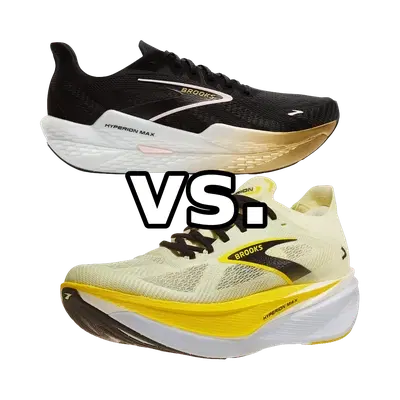
Brooks Hyperion Max 2 vs Brooks Hyperion Max 4:
Which to Choose
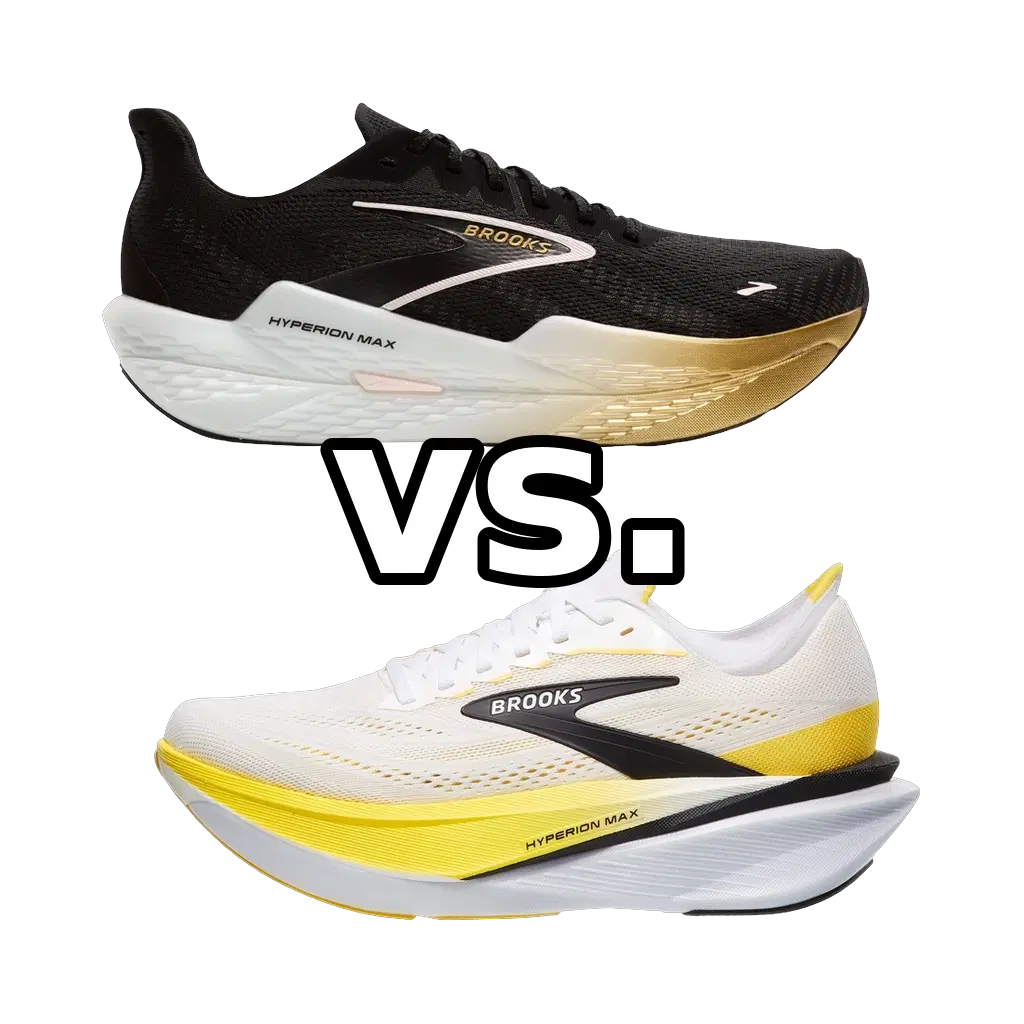
Verdict
These aren't really rival versions of the same shoe — they solve different problems, so pick by distance and pace. Go with the lighter, lower, plateless Max 2 for 5K-to-half speed where snappy turnover matters most; go with the taller, plated, more cushioned Max 4 if your priority is long tempo work and half-to-full-marathon race days on more forgiving foam. Runners chasing short-course speed want the Max 2; runners building toward the marathon want the Max 4.
Pace
5 of 6
Cushioning
4 of 6
Responsiveness
5 of 6
Stability
3 of 6
Drop
6 mm
Support
Neutral
Plate
None
Distances
5K10KHalf
Pace
4 of 6
Cushioning
5 of 6
Responsiveness
5 of 6
Stability
3 of 6
Drop
10 mm
Support
Neutral
Plate
Composite
Distances
HalfMarathon
At a Glance
Brooks Hyperion Max 2Brooks Hyperion Max 4
Who Should Choose Each Shoe
Choose
Brooks Hyperion Max 2
Choose the Hyperion Max 2 if your fast days are 5K, 10K, and the half, and you value a light, low, responsive ride that snaps at genuinely quick paces. It's the better match for intermediate-to-experienced runners doing intervals, tempo reps, and shorter races who want that lively foam feedback without a plate and don't need marathon-grade cushioning. If you already like low-drop, minimal-stack speed shoes and want turnover over plush protection, this is the one.
Choose
Brooks Hyperion Max 4
Choose the Hyperion Max 4 if you want one plated shoe to handle uptempo training and longer race days — half and full marathons finished around goal pace — without swapping into a firmer racer. Its taller PEBA stack, 10mm drop, and nylon plate suit runners who prioritize cushioned, purposeful protection over long tempo efforts and progression runs, and who appreciate the calf-friendly higher drop as the miles pile up. It's the better pick if your key sessions are measured in tens of kilometers rather than fast, short bursts.
Head-to-Head
The clearest split is in weight, geometry, and how each shoe wants to be run. The Max 2 comes in around 258g in a men's US9 on a lower platform of roughly 36mm heel / 30mm forefoot with a 6mm drop, so it feels quick, low, and eager to turn over. The Max 4 is a substantially bigger shoe: about 292g in the same size on a tall 45mm/35mm stack with a 10mm drop, so there is more foam under you and a more pronounced heel bias that eases calf and Achilles load over long efforts. Underfoot, the Max 2 relies purely on resilient DNA Flash v2 for a springy, controlled push with no plate, whereas the Max 4 layers plush PEBA-based DNA Gold over a firmer DNA Flash v2 EVA base and splits it with a forked nylon SpeedVault plate — that plate delivers a smooth, gentle rocker rather than the aggressive snap of a carbon racer. Both are neutral with moderate stability (3/6) and neither is a corrective shoe, though the Max 2's lower, narrower base feels most planted at genuine speed while the Max 4's taller platform is happiest on straight, even ground. Their ideal pace zones barely overlap: the Max 2 comes alive around 3:40–4:00 min/km and peaks at the 10K, while the Max 4's sweet spot is long tempo work near 4:15–4:45 min/km stretching out to the marathon. In short, the Max 2 is the lighter, lower, faster short-course specialist; the Max 4 is the cushioned, plated distance shoe that rewards sustained effort but feels like a lot of shoe when you slow down.
© 2026 longrunshoes.ai | All rights reserved.
Use of materials from this site is permitted only with proper attribution and a link to longrunshoes.ai.