
New Balance FuelCell Rebel v4 vs Brooks Hyperion Max 2:
Which to Choose
Verdict
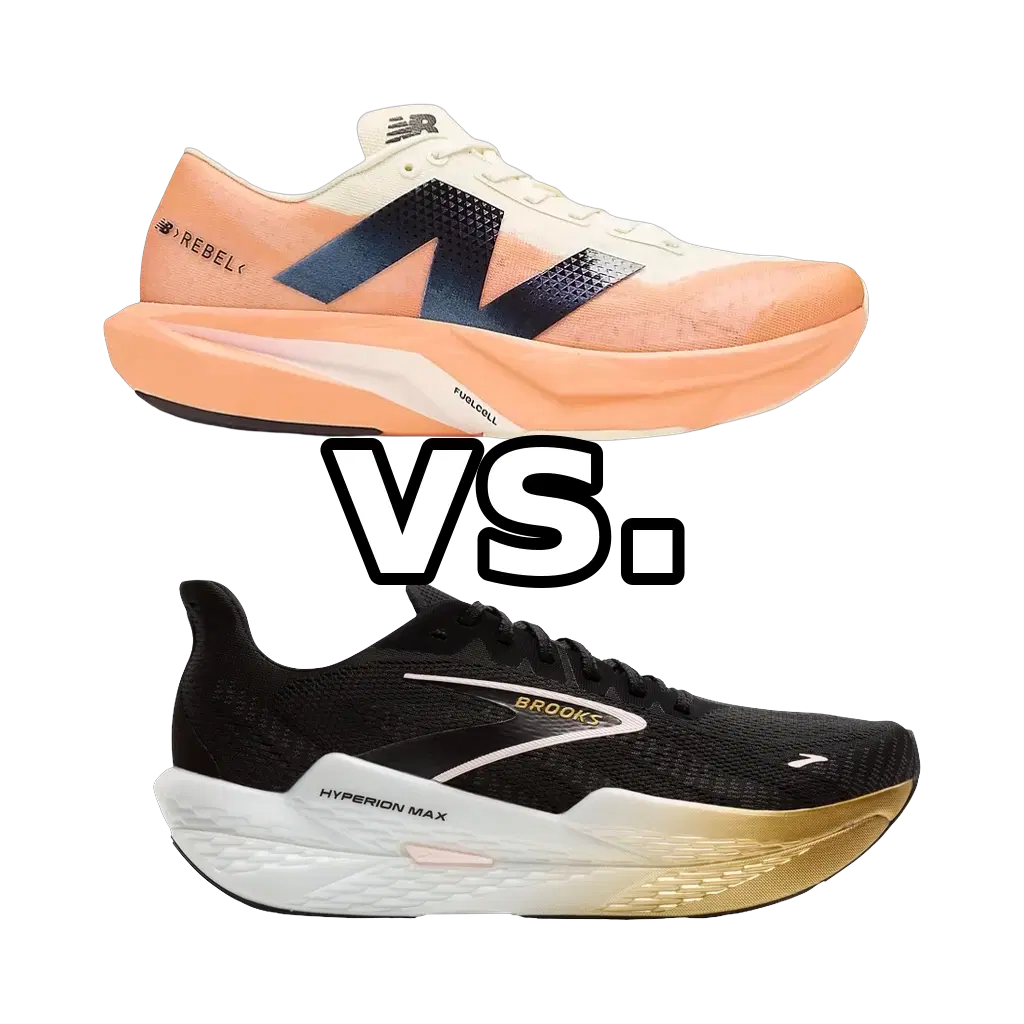
It genuinely depends — on whether you value weight or cushion, and soft or firm. If you want the lightest, softest, most playful shoe for the shorter, faster end, the Rebel v4 wins; if you want more stack, a firmer rocker ride and more protection for half-marathon efforts, the Hyperion Max 2 is the one. The quiet tiebreaker is fit: the Rebel's wider, more forgiving base versus the Hyperion's narrow, speed-focused platform may decide it before any spec does, so let your foot shape and your typical race distance make the call.
Pace
5 of 6
Cushioning
4 of 6
Responsiveness
5 of 6
Stability
3 of 6
Drop
6 mm
Support
Neutral
Plate
None
Distances
5K10KHalf
Pace
5 of 6
Cushioning
4 of 6
Responsiveness
5 of 6
Stability
3 of 6
Drop
6 mm
Support
Neutral
Plate
None
Distances
5K10KHalf
At a Glance
New Balance FuelCell Rebel v4Brooks Hyperion Max 2
Who Should Choose Each Shoe
Choose
New Balance FuelCell Rebel v4
Pick the Rebel v4 if your priority is the lightest, springiest possible non-carbon shoe for strides, 5Ks and 10Ks — a runner who loves a soft, poppy foam and wants quick turnover with nothing weighing the foot down. The moderately wide base also makes it the slightly more forgiving of the two for midfoot strikers who want a shoe that doesn't punish them when the pace eases off. Just go in knowing the lightweight outsole is the thing you'll replace first.
Choose
Brooks Hyperion Max 2
Choose the Hyperion Max 2 if you want more foam under you — its extra stack adds protection that pays off as efforts stretch toward the half marathon — and if you prefer a firmer, more controlled push and a rocker that rewards a quick forward-rolling stride over a soft, bouncy one. It's the better fit for a runner who's happy with a narrower platform and spends most of their time genuinely moving, where that snug, planted feel comes into its own. You accept a bit more weight in exchange for a more substantial, structured ride.
Head-to-Head
Start with weight, because it's the clearest gap: the Rebel v4 comes in around 213g (7.5 oz) versus roughly 262g (9.2 oz) for the Hyperion Max 2 — nearly 50 grams, which you feel every time you flick the foot over at speed. The trade for that lightness is stack: the Rebel sits lower at about 28mm heel / 21.5mm forefoot, while the Hyperion lives up to its "Max" name at roughly 33mm heel / 26mm forefoot, giving it more foam underfoot for protection on the longer end of the range. Both shoes rate the same for cushioning, responsiveness, pace and stability, but the character is different: the Rebel's FuelCell PEBA is soft and distinctly bouncy, with a moderately wide, forgiving base, whereas the Hyperion's DNA Flash v2 feels firmer and more controlled and leans on a gentle rocker to roll you forward over a noticeably narrower platform. That geometry shapes who stays planted — the Rebel's wider base is a touch more settled when you dial the pace back, while the Hyperion feels most secure only once you're actually moving and can read as firm and slightly unsteady at a crawl. Neither uses a propulsive plate; the rebound is pure foam in both. One honest caveat on the Rebel: its thin, largely exposed-foam outsole is a deliberate durability trade-off for the low weight, so high-mileage runners should expect it to wear faster than a more conventionally rubbered trainer.


© 2026 longrunshoes.ai | All rights reserved.
Use of materials from this site is permitted only with proper attribution and a link to longrunshoes.ai.