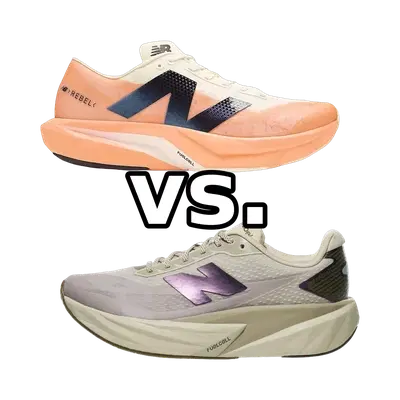
New Balance FuelCell Rebel v4 vs Adidas Adizero Evo SL:
Which to Choose
Verdict
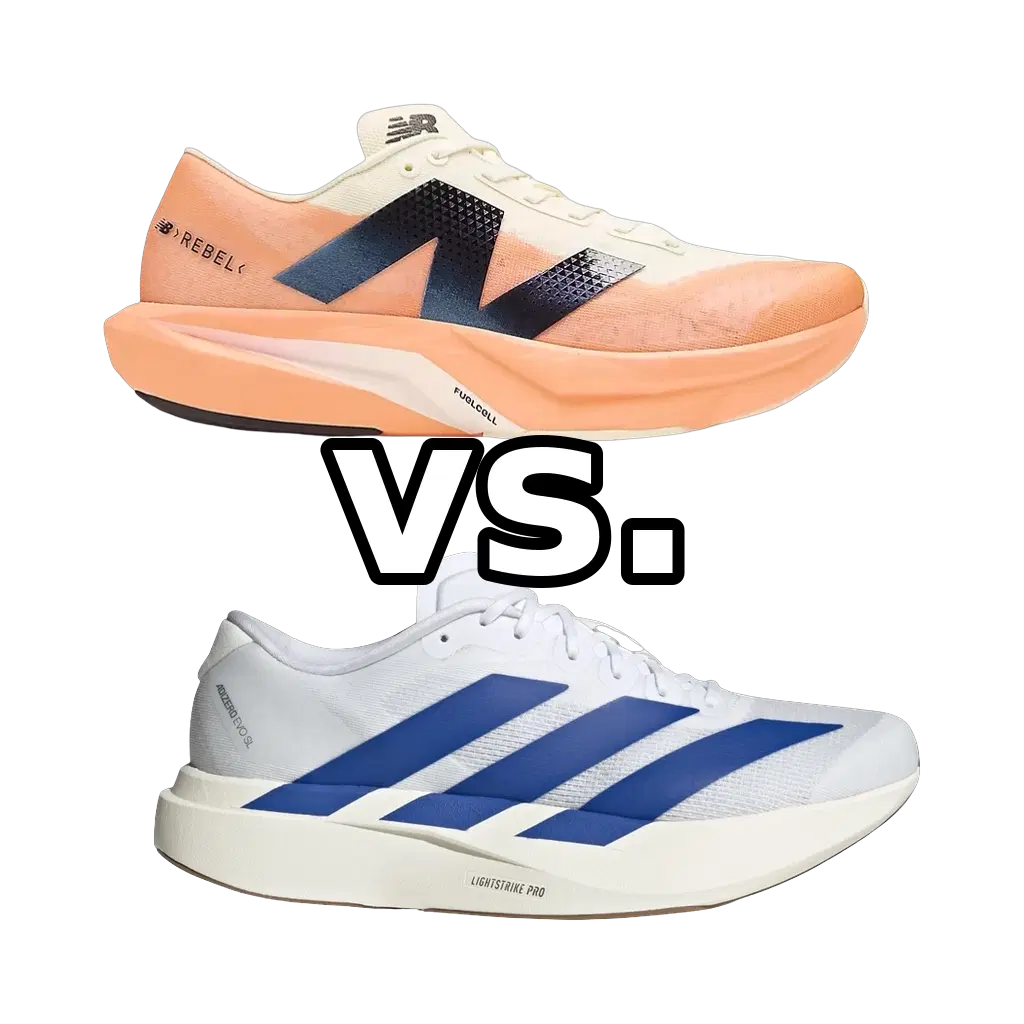
These two are genuinely close — same purpose, same plateless PEBA formula, same 6mm drop and best-distance range — so it comes down to how much shoe you want. Go Rebel v4 if you prioritize low weight, a lower-to-the-ground ride, and stability at speed for shorter, sharper sessions; go Evo SL if you want more stack and more cushioning to stretch comfortably toward the half. Both are excellent do-it-all fast trainers, and neither is a wrong answer — pick the ride height that matches where your fast miles happen.
Pace
5 of 6
Cushioning
4 of 6
Responsiveness
5 of 6
Stability
3 of 6
Drop
6 mm
Support
Neutral
Plate
None
Distances
5K10KHalf
Pace
5 of 6
Cushioning
5 of 6
Responsiveness
5 of 6
Stability
3 of 6
Drop
6 mm
Support
Neutral
Plate
None
Distances
5K10KHalf
At a Glance
New Balance FuelCell Rebel v4Adidas Adizero Evo SL
Who Should Choose Each Shoe
Choose
New Balance FuelCell Rebel v4
Choose the FuelCell Rebel v4 if you want the lightest, most ground-connected version of this concept — an intermediate-to-experienced runner who prizes quick turnover, strides, and 5K–10K sharpness and likes feeling the road through a lower platform. Its lower stack and lighter weight make it the more stable and the more responsive-feeling at genuine tempo-to-race effort, so it suits efficient midfoot strikers who find taller shoes a bit vague. Pick it if your bread and butter is fast, shorter sessions rather than grinding out long half-marathon reps.
Choose
Adidas Adizero Evo SL
Choose the Adizero Evo SL if you want the same lively, plateless speed but with more foam underfoot for protection — the taller 38/32mm stack carries comfort deeper into the half marathon and takes some sting out of longer tempo efforts. It is the better pick for runners who do a lot of their fast work at half-marathon-style distances and want cushioning closer to a max-stack trainer without losing the rolling, snappy feel. Just know you're accepting a bit more weight and a slightly looser, taller platform at slow paces in exchange for that cushion.
Head-to-Head
Start with the foam, because that is what drives both shoes — nitrogen-infused FuelCell PEBA in the Rebel, full-length Lightstrike Pro (also PEBA-class) in the Evo SL — and in both cases there is no plate doing the work, just soft-yet-springy foam that rewards a quick, purposeful footstrike. Where they genuinely diverge is geometry and weight. The Rebel v4 sits at 30mm heel / 24mm forefoot, while the Evo SL is noticeably taller at 38mm / 32mm; both land on the same 6mm drop, but the Adidas gives you roughly 8mm more stack front and back, which translates to a more protective, longer-legged ride. The Rebel answers back on the scale: in a men's 9 it comes in around 6.9 oz versus about 7.9 oz for the Evo SL, so the New Balance is the lighter, more immediate shoe — transitions feel quicker and the platform sits closer to the ground, which also makes it the steadier of the two at speed. The Evo SL's extra foam is exactly why it earns the higher cushioning rating; it carries more comfort into the back half of a half marathon, but that tall, soft neutral base is also the more tippy of the two at easy paces, and both shoes share the classic soft-fast-foam caveat of exposed, lightly-covered outsoles that wear faster than an everyday trainer. In short: same mission, same formula, but the Rebel is the lower-slung, lighter, more connected-to-the-road option, and the Evo SL trades a little immediacy for more cushion and a more cushioned long-rep feel.
Similar Comparisons
Adidas Adizero Evo SL vs Asics Magic Speed 4
New Balance FuelCell Rebel v4 vs Brooks Hyperion Max 2

Adidas Adizero Evo SL vs Nike Structure 26
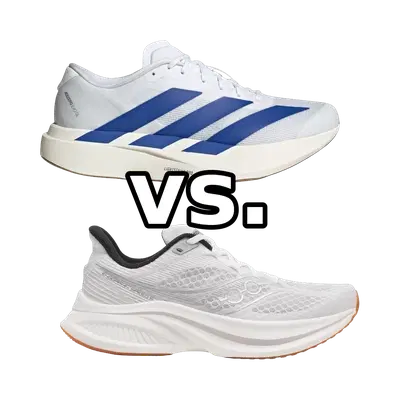
Adidas Adizero Evo SL vs Saucony Endorphin Speed 5
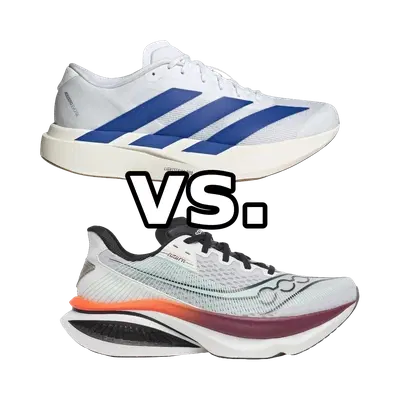
Adidas Adizero Evo SL vs Saucony Endorphin Azura
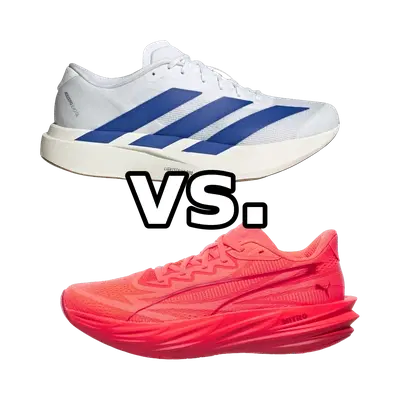
Adidas Adizero Evo SL vs Puma Deviate Pure Nitro

Adidas Adizero Evo SL vs Hoka Mach 7
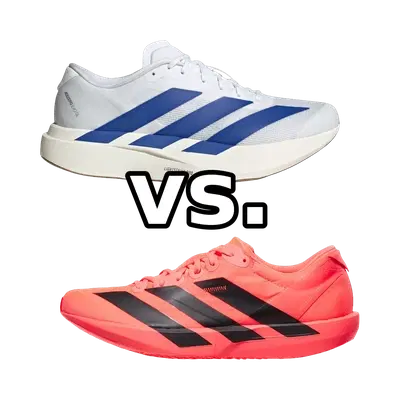
Adidas Adizero Evo SL vs Adidas Adizero Adios 9
© 2026 longrunshoes.ai | All rights reserved.
Use of materials from this site is permitted only with proper attribution and a link to longrunshoes.ai.