
Brooks Hyperion Max 3 vs Brooks Hyperion Max 4:
Which to Choose
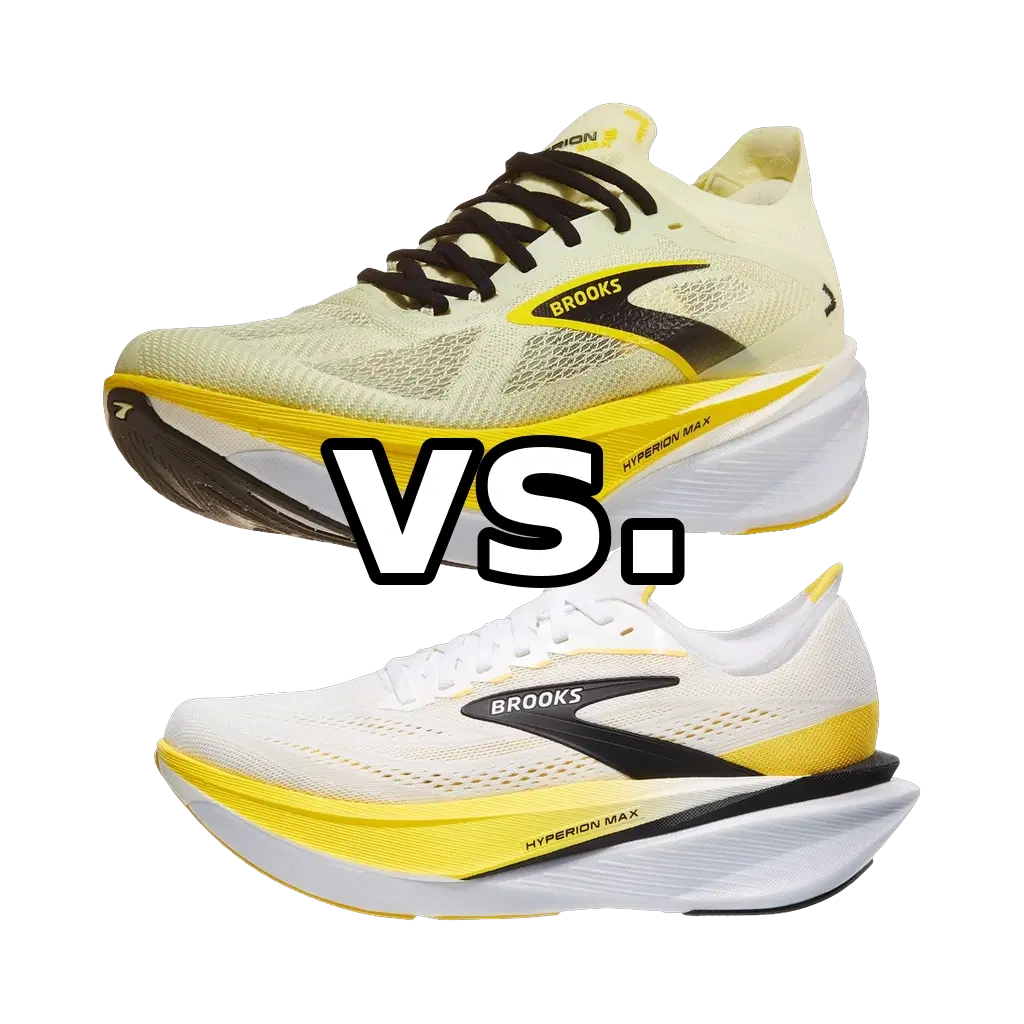
Verdict
This is a genuine "it depends," and what it depends on is your pace and your priorities — not a clear generational leap. The Max 4 is the more refined package on top with its lighter, better-locking upper and a slightly firmer, tempo-focused ride, but it's heavier and a touch less versatile than the Max 3, which remains the lighter, bouncier, faster-friendly option that still handles the 10K. If you're a current Max 3 owner happy with the fit, there's no urgent reason to switch; upgrade when yours wears out, or sooner if the new upper and steadier long-run ride specifically appeal to you.
Pace
5 of 6
Cushioning
6 of 6
Responsiveness
5 of 6
Stability
3 of 6
Drop
11 mm
Support
Neutral
Plate
Composite
Distances
10KHalfMarathon
Pace
4 of 6
Cushioning
5 of 6
Responsiveness
5 of 6
Stability
3 of 6
Drop
10 mm
Support
Neutral
Plate
Composite
Distances
HalfMarathon
At a Glance
Brooks Hyperion Max 3Brooks Hyperion Max 4
Who Should Choose Each Shoe
Choose
Brooks Hyperion Max 3
Choose the Hyperion Max 3 if you want the more versatile and faster of the two — a runner who mixes 10Ks and half marathons into the rotation and wants a super trainer that still feels lively when the pace drops toward 4:00 min/km. It's the lighter, bouncier pick, and if you already own and enjoy it, there's little in the Max 4 that justifies replacing it before it's worn out. It rewards runners chasing a race-day feel on training days across a broad range of paces.
Choose
Brooks Hyperion Max 4
Choose the Hyperion Max 4 if your bread-and-butter is long tempo efforts and half-to-marathon race days run around goal pace, and you value a secure, breathable upper and a firmer, more grounded ride over outright liveliness. It's the better fit for a runner who rarely dips below 4:15 min/km and wants that steady, purposeful roll under sustained effort. Existing Max 3 owners should mainly upgrade for the improved upper and refreshed fit, not for a transformed ride.
Head-to-Head
These two are close cousins, and the honest headline is that the platform barely moved. The stack is nearly identical — 46mm/35mm on the Max 3 versus 45mm/35mm on the Max 4, so the newer shoe sits a hair lower in the heel — and the drop is comparable, roughly 11mm on the Max 3 and 10mm on the Max 4, both giving a distinctly heel-biased feel that eases calf and Achilles load. The most measurable change actually runs the "wrong" way for a successor: the Max 4 is heavier, at about 292g in a men's US9 against 283g for the Max 3, and you feel those extra grams most when you slow down. Ride character shifts subtly too — the Max 3 is the bouncier, livelier of the pair (cushioning rated at its maximum) with a flexible nylon plate and RapidRoll rocker that make it feel connected and eager at faster paces, while the Max 4 reads firmer and more purposeful, its DNA Gold sitting over a firmer DNA Flash v2 EVA base and a forked SpeedVault plate that rolls you forward smoothly rather than snapping. That tuning narrows the Max 4's happy zone: it's dialed for long tempo efforts at roughly 4:15–4:45 min/km and shines at the half and full marathon, whereas the Max 3 runs faster and wider, comfortable pushing toward 3:45–4:10 min/km and still credible down at the 10K. Neither shoe offers medial posting — both are tall, neutral platforms best on straight, even ground. Where the Max 4 genuinely pulls ahead is up top: it swaps in a lighter, more breathable warp-knit upper with a stretchy gusseted tongue in place of the older sock-like construction, for a cleaner, more secure lockdown.
Similar Comparisons

Saucony Endorphin Speed 5 vs Brooks Hyperion Max 4

Asics Superblast 3 vs Brooks Hyperion Max 3
Brooks Hyperion Max 2 vs Brooks Hyperion Max 4
Asics Superblast 2 vs Brooks Hyperion Max 3

Hoka Skyward X vs Brooks Hyperion Max 3

Brooks Hyperion 3 vs Brooks Hyperion Max 3

Brooks Ghost Max 3 vs Brooks Hyperion Max 3

Brooks Glycerin Max vs Brooks Hyperion Max 3
© 2026 longrunshoes.ai | All rights reserved.
Use of materials from this site is permitted only with proper attribution and a link to longrunshoes.ai.