
Hoka Skyward X vs Brooks Hyperion Max 3:
Which to Choose
Verdict
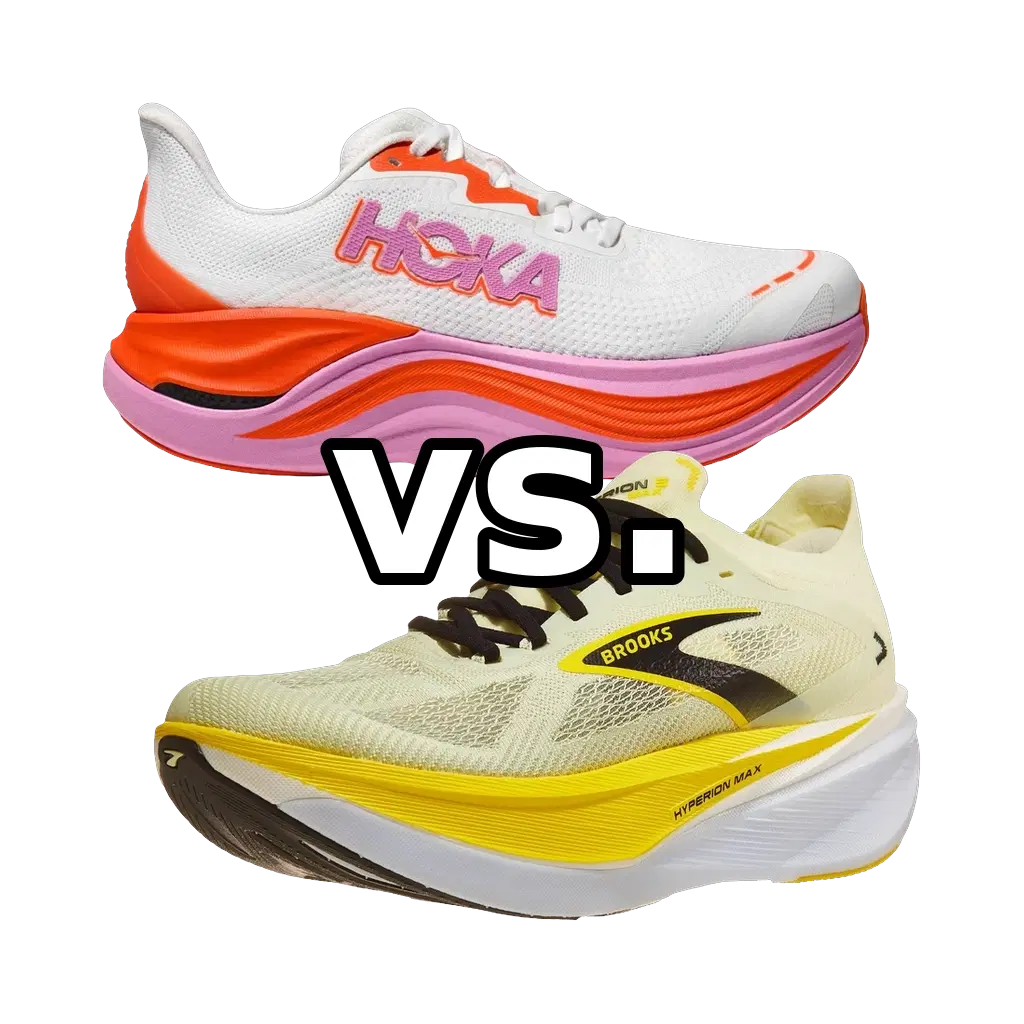
Both are excellent max-cushion, PEBA, plated trainers, so it genuinely comes down to how fast and how firm you want to run. Go with the Skyward X if you want the softer, more protective, low-drop long-run cruiser that thrives at steady efforts; go with the Hyperion Max 3 if you want the lighter, faster, more versatile super trainer that turns over quickly and rewards tempo work. Put simply: comfort-first marathon building leans Skyward X, speed-first everyday versatility leans Hyperion Max 3.
Pace
4 of 6
Cushioning
6 of 6
Responsiveness
5 of 6
Stability
4 of 6
Drop
5 mm
Support
Stable Neutral
Plate
Carbon
Distances
HalfMarathon
Pace
5 of 6
Cushioning
6 of 6
Responsiveness
5 of 6
Stability
3 of 6
Drop
11 mm
Support
Neutral
Plate
Composite
Distances
10KHalfMarathon
At a Glance
Hoka Skyward XBrooks Hyperion Max 3
Who Should Choose Each Shoe
Choose
Hoka Skyward X
Choose the Hoka Skyward X if you're a neutral to mildly efficient recreational runner building marathon volume and you want maximum, forgiving protection for long, steady efforts without beating up your legs. It's the better pick for runners who cruise at a moderate, consistent tempo (roughly 4:30–5:30 min/km), value a low-drop, plush, guided ride over quick turnover, and don't mind carrying a bit more shoe in exchange for comfort. If your priority is finishing long runs feeling fresh rather than chasing fast splits, this is the one.
Choose
Brooks Hyperion Max 3
Choose the Brooks Hyperion Max 3 if you're an intermediate to experienced neutral runner who wants a single shoe to handle tempo sessions, uptempo long runs, and steady mileage with a race-day feel. Its lighter weight, faster-tuned PEBA, and rolling rocker make it the better tool if you regularly push toward 3:45–4:10 min/km and want responsiveness from the 10K up through the marathon. Pick it if you prefer a bouncy, quick, versatile trainer over a plush cruiser — and if a higher, more heel-biased drop suits your stride.
Head-to-Head
The clearest split is weight and intent: the Skyward X comes in around 320g in a men's US 9, while the Hyperion Max 3 is markedly lighter at 283g — that ~37g gap is felt every time you try to turn the legs over quickly. Both run a tall platform, but they distribute it differently: the Skyward X stacks 48/43mm for a low 5mm drop and a huge, even slab of forefoot cushion, whereas the Hyperion Max 3 sits at 46/35mm with a much more heel-biased ~11mm lab drop (Brooks markets it as 6mm). That geometry shapes the ride. The Skyward X uses a rigid winged carbon plate that delivers a guided, propulsive roll-through and rewards a long, consistent stride, but its height and mass mean it prefers momentum to quick, choppy turnover — it comes alive when you lengthen out rather than when you sprint. The Hyperion Max 3 instead pairs a flexible nylon SpeedVault plate with RapidRoll geometry, giving a smoother, rolling transition rather than a hard snap, and its lighter build and faster-tuned foam let it hit noticeably quicker paces — it's optimized for roughly 3:45–4:45 min/km, whereas the Skyward X's sweet spot sits slower at about 4:30–5:30 min/km. On cushioning both rate maximum and both lean on PEBA, so neither is short on protection, but the Skyward X feels plusher and more forgiving underfoot while the Hyperion Max 3 feels bouncier and more controlled, staying lively without going soft. Stability is similar — both are wide-based neutral shoes with no medial posting — though the Skyward X's very wide platform makes the tall stack feel a touch steadier, while the Hyperion Max 3 can feel slightly tippy at very slow jogging paces. In short: overlapping use cases (both cover the half and marathon well), but the Skyward X is the softer, more protective long-run cruiser and the Hyperion Max 3 is the lighter, faster do-it-all trainer that also stretches down to the 10K.
Similar Comparisons

Brooks Hyperion Max 2 vs Brooks Hyperion Max 3
Brooks Hyperion Max 3 vs Brooks Hyperion Max 4

Asics Superblast 3 vs Brooks Hyperion Max 3
Asics Superblast 2 vs Brooks Hyperion Max 3

Brooks Hyperion 3 vs Brooks Hyperion Max 3

Brooks Ghost Max 3 vs Brooks Hyperion Max 3

Brooks Glycerin Max vs Brooks Hyperion Max 3
© 2026 longrunshoes.ai | All rights reserved.
Use of materials from this site is permitted only with proper attribution and a link to longrunshoes.ai.