
Hoka Skyward X vs Hoka Skyward X 2:
Which to Choose
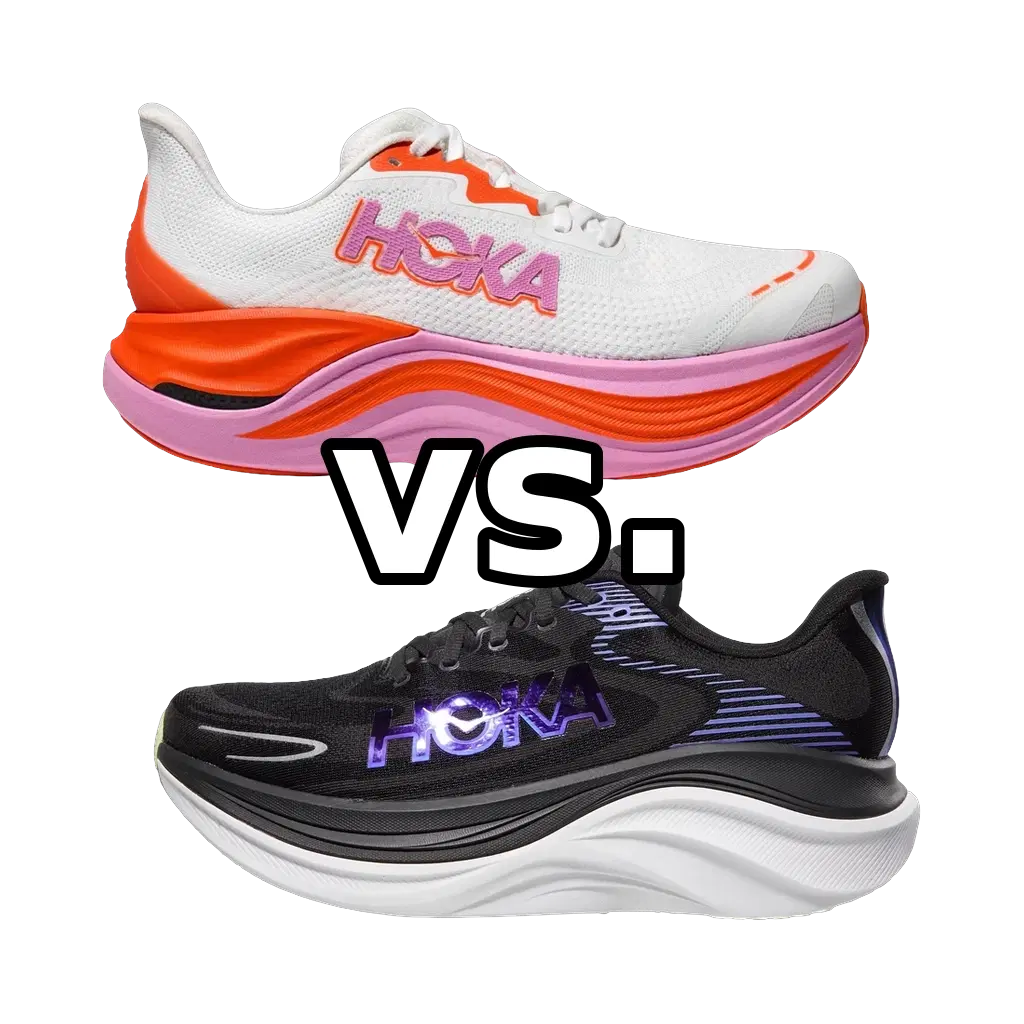
Verdict
For most existing Skyward X owners, the X 2 is a genuine upgrade rather than a sidegrade: it's meaningfully lighter, a touch lower, and more stable, which suits the long, steady miles this line is really built for. Stick with — or seek out — the original only if you specifically prefer its taller 5mm-drop platform and the extra liveliness of its dual-density PEBA when you push toward tempo; the X 2 trades a little of that snap for lighter, more planted all-day comfort.
Pace
4 of 6
Cushioning
6 of 6
Responsiveness
5 of 6
Stability
4 of 6
Drop
5 mm
Support
Stable Neutral
Plate
Carbon
Distances
HalfMarathon
Pace
3 of 6
Cushioning
6 of 6
Responsiveness
5 of 6
Stability
5 of 6
Drop
8 mm
Support
Stable Neutral
Plate
Carbon
Distances
HalfMarathon
At a Glance
Hoka Skyward XHoka Skyward X 2
Who Should Choose Each Shoe
Choose
Hoka Skyward X
Choose the original Skyward X if you like your max-cushion trainer tall and want that dual-density PEBA "snap" that comes alive when you stretch out to uptempo daily miles and steady half efforts around 4:45–5:30 min/km. It's the pick for a neutral runner who prefers a lower 5mm drop and doesn't mind carrying a bit more shoe (~320g) in exchange for a livelier, more propulsive feel once momentum builds.
Choose
Hoka Skyward X 2
Choose the Skyward X 2 if your priority is comfortable, stable, high-volume mileage — easy days, long runs, and relaxed-effort half and full marathons at cruising paces around 5:00–6:00 min/km. Its lighter ~286g build, slightly lower 46/38mm platform, higher 8mm drop, and more planted feel make it the better daily companion for a neutral-to-mildly-stable runner who wants protection and a smooth rocker over outright bounce, plus a plusher jacquard upper.
Head-to-Head
On paper these are close cousins, but the changes are more meaningful than a typical yearly refresh. The X 2 is the lighter shoe at roughly 286g in a men's US 9 versus about 320g for the original — a real ~34g drop that you feel across a long run. Hoka also trimmed the platform: the X sits on a 48/43mm stack, while the X 2 comes down to 46/38mm, so it rides slightly lower and less towering underfoot. Drop moves from 5mm on the X to 8mm on the X 2, nudging the newer shoe toward a more heel-friendly, natural roll rather than the flatter balance of the original over its tall base. The midsole philosophy shifts too: the original stacks dual-density PEBA around its winged carbon plate for a livelier, springier snap once you press into it, whereas the X 2 pairs a PEBA-based top foam over a supercritical EVA layer around a re-engineered carbon plate — protective and planted, but a touch more damped and less overtly bouncy. That tracks with how each is tuned: the X 2 rates a hair more stable (5/6 vs 4/6) thanks to its wide, planted base, and it's dialed for relaxed cruising (optimal around 5:00–6:00 min/km) versus the original's slightly more uptempo lean (4:45–5:30 min/km), where lengthening your stride wakes the shoe up. Both share max cushioning, high responsiveness, stable-neutral support, a carbon plate, and the same half/marathon sweet spot; the X 2 also swaps in a premium jacquard mesh upper. Net difference: the X 2 is lighter, lower, higher-drop, and more comfort-and-stability oriented, while the original is taller and rewards a stronger, faster cadence with a bit more pop.


© 2026 longrunshoes.ai | All rights reserved.
Use of materials from this site is permitted only with proper attribution and a link to longrunshoes.ai.