Hoka Bondi 9 vs Hoka Skyward X 2:
Which to Choose
Verdict
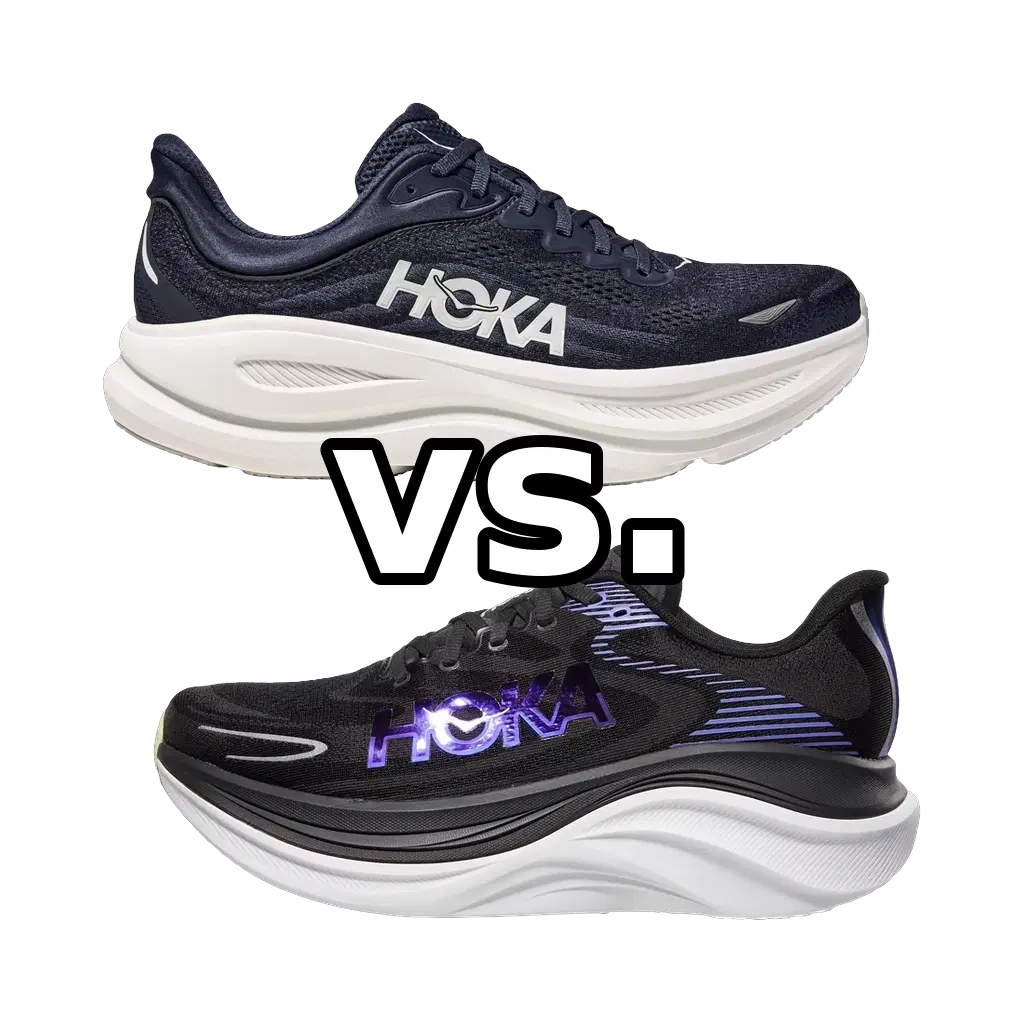
These are close cousins, not opposites, so it comes down to intent rather than quality. If you mostly want a soft, protective shoe for easy miles and long runs up to the half, the simpler, lower-drop Bondi 9 is the honest choice. If you're going marathon-long or want a plush trainer that still has some spring and roll when you cruise, the plated, bouncier, higher-stack Skyward X 2 is worth it — just don't expect either one to feel fast.
Pace
2 of 6
Cushioning
6 of 6
Responsiveness
3 of 6
Stability
5 of 6
Drop
5 mm
Support
Stable Neutral
Plate
None
Distances
10KHalf
Pace
3 of 6
Cushioning
6 of 6
Responsiveness
5 of 6
Stability
5 of 6
Drop
8 mm
Support
Stable Neutral
Plate
Carbon
Distances
HalfMarathon
At a Glance
Hoka Bondi 9Hoka Skyward X 2
Who Should Choose Each Shoe
Choose
Hoka Bondi 9
Choose the Bondi 9 if your priority is pure, forgiving protection on easy days, recovery runs, and building volume — especially if you're a beginner, a heavier runner, or someone who just wants a soft, planted landing rather than any bounce. It's the better pick if your longest regular efforts are 10K to half-marathon distance and you run them at a conversational pace. Runners who find plated shoes too firm or too "nervous" underfoot will appreciate its simple, low-drop, foam-only feel.
Choose
Hoka Skyward X 2
Choose the Skyward X 2 if you want that same max-cushion comfort but plan to go longer and occasionally steadier — it's aimed at recreational runners logging long training efforts and cruising through half and full marathons. The carbon plate and PEBA blend give it more rebound and a smoother, more propulsive roll, so it rewards you when you want to hold a cruising effort rather than just plod. Pick it if the marathon is on your calendar, if you like a slightly higher 8 mm drop, or if the Bondi's pure-EVA ride feels too flat when you try to press.
Head-to-Head
Both sit at the top of the cushioning scale (6/6) and both offer the same wide, stable-neutral platform (5/6 stability), so neither is a corrective shoe — they're planted rather than motion-controlling. The clearest split is in the midsole. The Bondi 9 uses a single supercritical-EVA foam and no plate, which is why it feels deeply protective but somewhat muted and "dead" when you pick up the pace (responsiveness 3/6). The Skyward X 2 layers a bouncier PEBA-based top foam over a supercritical-EVA base around a carbon fiber plate, which keeps its tall stack from going mushy and gives it noticeably more rebound (5/6) and a livelier roll-through. Geometry reinforces that: the Skyward is the taller shoe at 46 mm heel / 38 mm forefoot versus the Bondi's 42 mm / 37 mm, and it runs a higher 8 mm drop against the Bondi's 5 mm, so the Skyward feels a touch more heel-biased and rolls you forward harder while the Bondi sits lower and flatter. Weight is close — the Bondi 9 comes in around 297 g and the Skyward X 2 around 286 g in a men's US 9 — so despite carrying a plate and more foam, the Skyward isn't the heavier shoe; neither, though, is light enough to "disappear" at speed, and both admit as much. Where they land is the deciding factor: the Bondi is happiest on easy 10K efforts and steady half-distance long runs at relaxed aerobic paces, topping out usefully around 5:30 min/km, while the Skyward is built to stretch further, with the marathon as its sweet spot and a slightly quicker ceiling near 4:45 min/km thanks to the plate.
Similar Comparisons
Hoka Skyward X vs Hoka Skyward X 2
Hoka Bondi 9 vs Asics Gel-Nimbus 28
Hoka Clifton Pro vs Hoka Skyward X 2
Hoka Bondi 9 vs Saucony Paramount Max
Asics Superblast 3 vs Hoka Skyward X 2
Hoka Bondi 9 vs Brooks Ghost Max 3
Hoka Bondi 9 vs Brooks Glycerin Max 2
Hoka Bondi 9 vs Hoka Clifton 11
© 2026 longrunshoes.ai | All rights reserved.
Use of materials from this site is permitted only with proper attribution and a link to longrunshoes.ai.