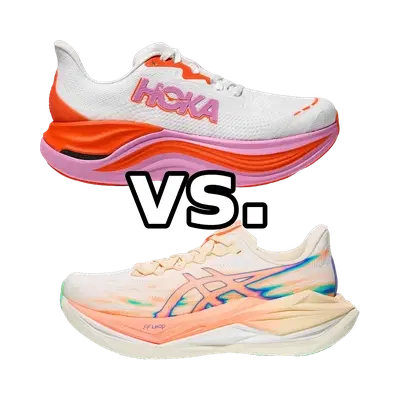
Hoka Skyward X vs On Cloudspark:
Which to Choose
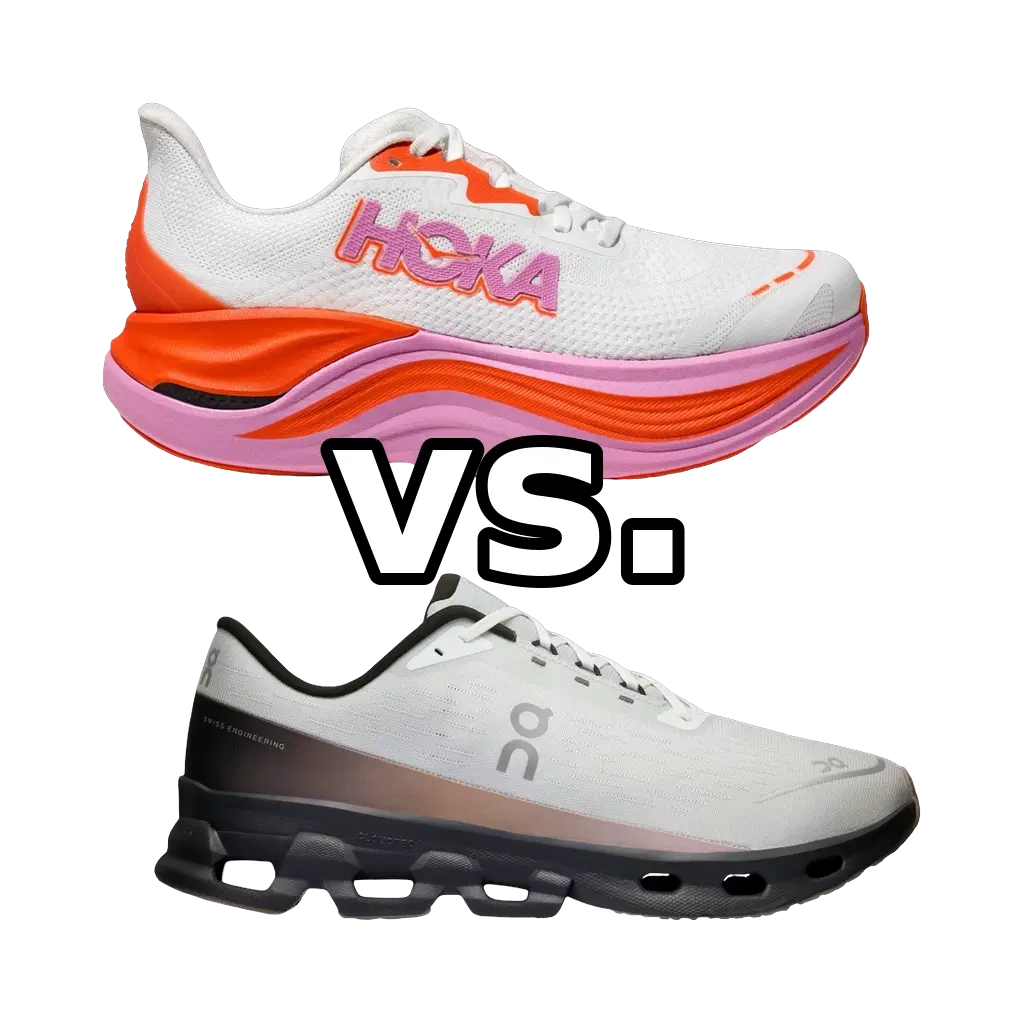
Verdict
It comes down to distance and intent, not which shoe is better. Go with the Hoka Skyward X if most of your running is long and steady and you want cushioned, carbon-assisted protection for half and full marathons; go with the On Cloudspark if you want a lighter, firmer, faster shoe for short races and speed sessions up to 10K. Picking the wrong one for your distance — a heavy maximal shoe for a 5K, or a modestly cushioned speed shoe for a marathon — is the main mistake to avoid.
Pace
4 of 6
Cushioning
6 of 6
Responsiveness
5 of 6
Stability
4 of 6
Drop
5 mm
Support
Stable Neutral
Plate
Carbon
Distances
HalfMarathon
Pace
5 of 6
Cushioning
3 of 6
Responsiveness
4 of 6
Stability
3 of 6
Drop
8 mm
Support
Neutral
Plate
Composite
Distances
5K10K
At a Glance
Hoka Skyward XOn Cloudspark
Who Should Choose Each Shoe
Choose
Hoka Skyward X
Choose the Skyward X if you're building half-marathon or marathon volume and want a plush, protective ride that keeps your legs fresh on long, steady efforts and uptempo daily miles. It's ideal for neutral to mildly efficient recreational runners who like to cruise at a controlled tempo and value cushioning and a smooth carbon roll-through over nimbleness — just don't expect it to feel quick in a 5K.
Choose
On Cloudspark
Choose the Cloudspark if your training revolves around intervals, tempo runs, and 5K–10K races, and you want a firm, lightweight shoe that feels eager and propulsive when you turn the pace up. It's best for intermediate to experienced runners who prioritize speed and ground feel over plush cushioning — and because the upper runs somewhat narrow, it's worth confirming the fit before committing.
Head-to-Head
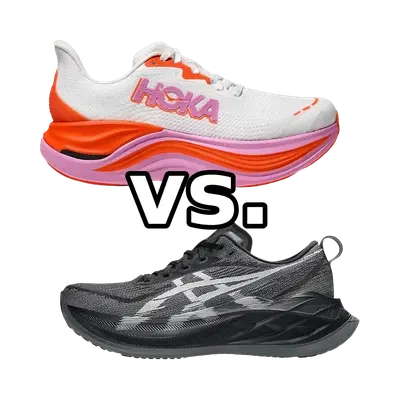
The clearest split is stack and distance. The Skyward X sits on a towering 48/43mm dual-density PEBA platform and leans on a winged carbon plate, so it feels tall, plush, and guided — it rewards a steady, lengthening stride and comes into its own over the half and the full marathon. The Cloudspark is far more modest underfoot at 34/26mm with On's firmer Helion foam and a composite Speedboard plate; it feels lively and snappy rather than cushioned, and it's happiest from 5K to 10K at genuinely fast paces. Weight follows the same logic: the Skyward X is a substantial shoe at roughly 320g in a men's US 9, while the Cloudspark is lighter at about 281g (9.9 oz), which is a meaningful difference when you're turning the legs over quickly. Drop differs too — 5mm on the Hoka keeps you balanced over that big platform, versus 8mm on the On, a slightly more traditional feel that suits forefoot and midfoot strikers pushing the pace. On cushioning they're not close: the Hoka is maximal and forgiving for high mileage, the On deliberately medium and better kept to shorter, sharper efforts. Stability is comparable in intent — both are neutral — but the Skyward X leans on a very wide base to steady its height, while the Cloudspark is a narrower, lighter speed platform. In short, these aren't two takes on the same shoe; they're near-opposite tools, and the real question is long-and-cushioned versus short-and-fast.
© 2026 longrunshoes.ai | All rights reserved.
Use of materials from this site is permitted only with proper attribution and a link to longrunshoes.ai.