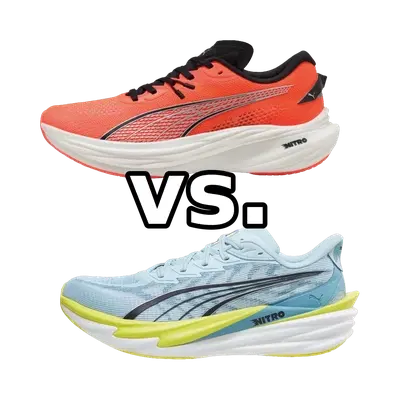
Puma Deviate Nitro 3 vs Saucony Endorphin Speed 5:
Which to Choose
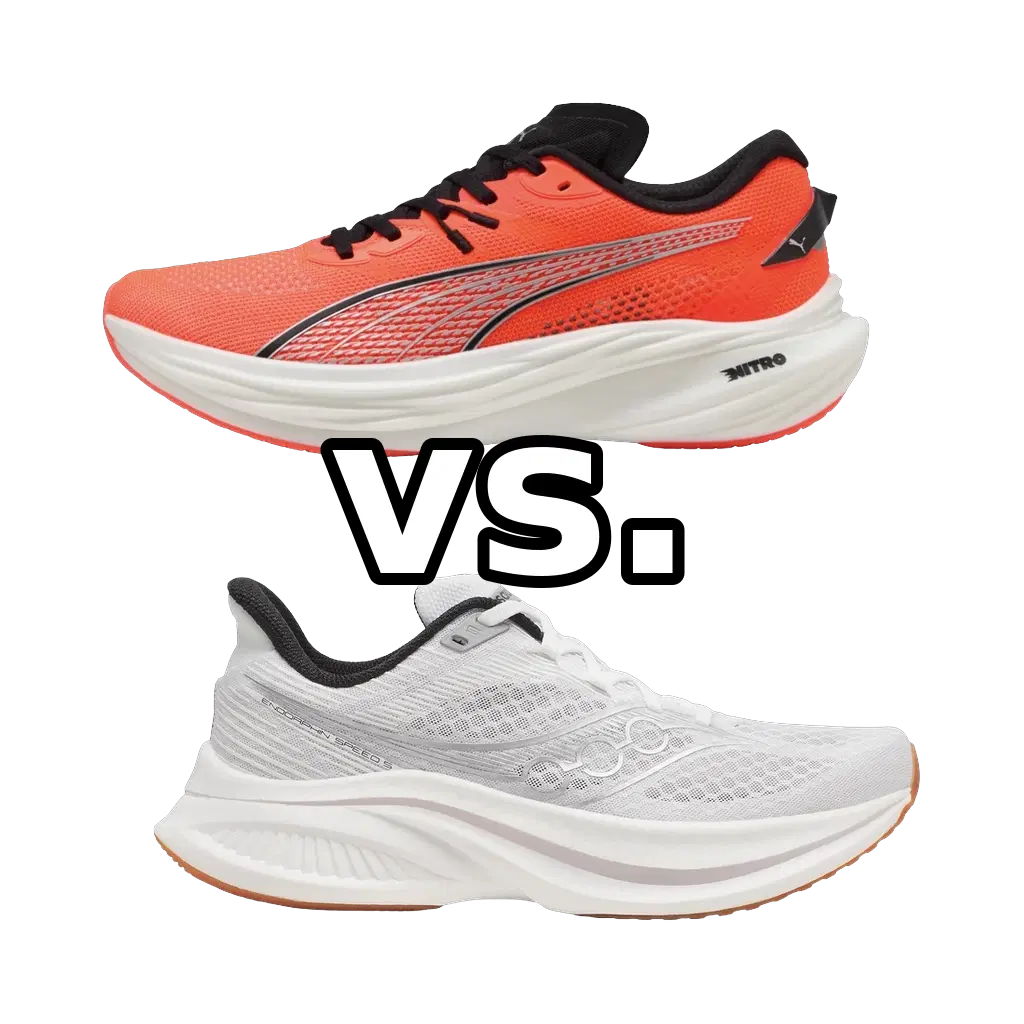
Verdict
It genuinely depends on what you want from the plate and the platform. Go Puma Deviate Nitro 3 for the more stable, structured feel and the firm propulsive pop of carbon with a traditional 10mm heel bias; go Saucony Endorphin Speed 5 if you'd rather have a lighter, lower, more flexible shoe with a forgiving nylon plate that flows across a wider range of paces. Both excel from 10K to the marathon with the half as their peak — so pick the ride character, not the spec sheet.
Pace
4 of 6
Cushioning
5 of 6
Responsiveness
5 of 6
Stability
4 of 6
Drop
10 mm
Support
Neutral
Plate
Carbon
Distances
10KHalfMarathon
Pace
5 of 6
Cushioning
5 of 6
Responsiveness
5 of 6
Stability
3 of 6
Drop
8 mm
Support
Neutral
Plate
Composite
Distances
10KHalfMarathon
At a Glance
Puma Deviate Nitro 3Saucony Endorphin Speed 5
Who Should Choose Each Shoe
Choose
Puma Deviate Nitro 3
Choose the Deviate Nitro 3 if you want one secure, planted trainer to cover most of the week — steady miles, regular uptempo efforts, and race day — and you value a stable, composed platform and the firm propulsive snap of a true carbon plate. It's the better pick for heel and midfoot strikers who like a traditional 10mm drop, and for recreational runners targeting 10K through the marathon who don't mind carrying a little more shoe in exchange for a durable, locked-in, no-surprises ride.
Choose
Saucony Endorphin Speed 5
Choose the Endorphin Speed 5 if you're an intermediate-to-experienced runner who wants the lightest, lowest, most flexible version of this concept — a shoe that handles tempo sessions and long marathon-training miles but still flexes and flows at steadier paces thanks to its guiding nylon plate. Its lower 8mm drop, lower stack, and 27g weight savings make it the pick for runners who prioritize a quick, connected, fast-feeling ride and who want a plate that smooths transitions rather than demanding you stay on the gas.
Head-to-Head
The headline difference is the plate. The Deviate Nitro 3 runs a full-length PWRPLATE carbon plate, which gives a firmer, more propulsive snap and a rigid roll-through once you're up to pace; the Endorphin Speed 5 uses a full-length winged semi-rigid nylon plate that guides rather than cracks you forward, so transitions feel smoother and more forgiving and the shoe stays willing to flex at easier efforts. Both midsoles are PEBA-class — Puma's dual NITROFOAM (a Nitro Elite layer over a Nitro base) versus Saucony's beaded PWRRUN PB — and both deliver a bouncy, lively ride that rewards picking up the pace rather than plodding. Weight and geometry then separate them: the Endorphin Speed 5 is the lighter shoe at 241g (men's US 9) versus the Deviate Nitro 3's 268g, and it sits lower and closer to the ground on a 37/27mm heel/forefoot stack against the Puma's taller 39/29mm. Drop differs too — 10mm on the Puma for a more traditional heel bias that suits heel and midfoot strikers, 8mm on the Saucony for a slightly more balanced, midfoot-friendly feel. On stability, the Puma edges ahead (4/6 vs 3/6) thanks to its broad, planted platform, though neither offers true pronation support — both are genuinely neutral. In practice the Puma feels like the more structured, do-everything trainer that happens to have a racing gear, while the lighter, lower, nylon-plated Saucony (pace 5/6 vs 4/6) leans a touch more toward fast, flexible tempo and marathon work.
Similar Comparisons
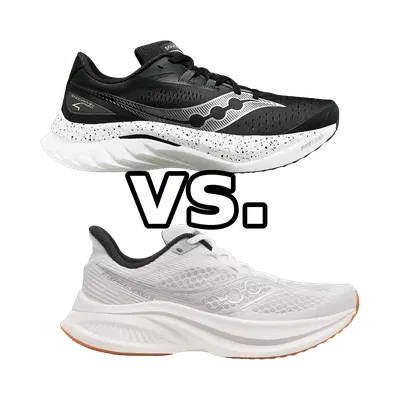
Saucony Endorphin Speed 4 vs Saucony Endorphin Speed 5
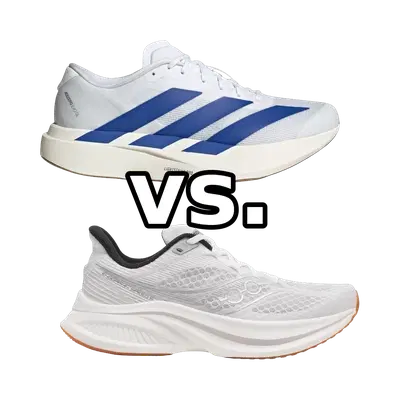
Adidas Adizero Evo SL vs Saucony Endorphin Speed 5
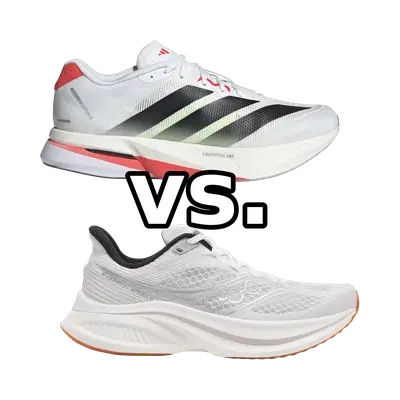
Adidas Adizero Boston 13 vs Saucony Endorphin Speed 5
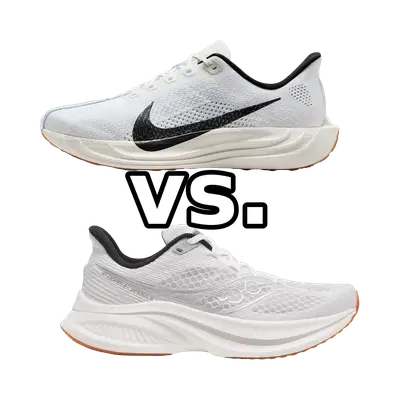
Nike Pegasus Plus vs Saucony Endorphin Speed 5
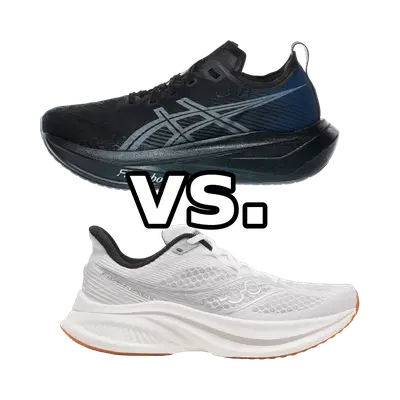
Asics Megablast vs Saucony Endorphin Speed 5
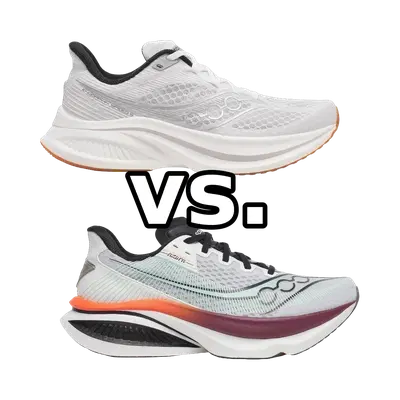
Saucony Endorphin Speed 5 vs Saucony Endorphin Azura
Saucony Endorphin Trainer vs Saucony Endorphin Speed 5
Saucony Endorphin Speed 5 vs Brooks Hyperion Max 4
© 2026 longrunshoes.ai | All rights reserved.
Use of materials from this site is permitted only with proper attribution and a link to longrunshoes.ai.