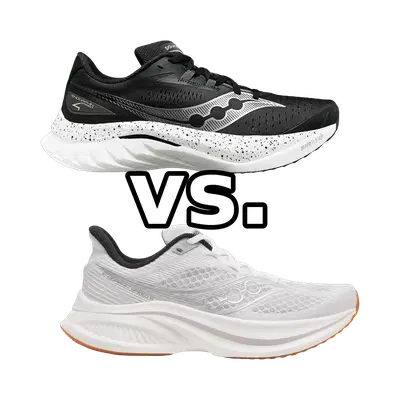
Saucony Endorphin Speed 5 vs Saucony Endorphin Azura:
Which to Choose
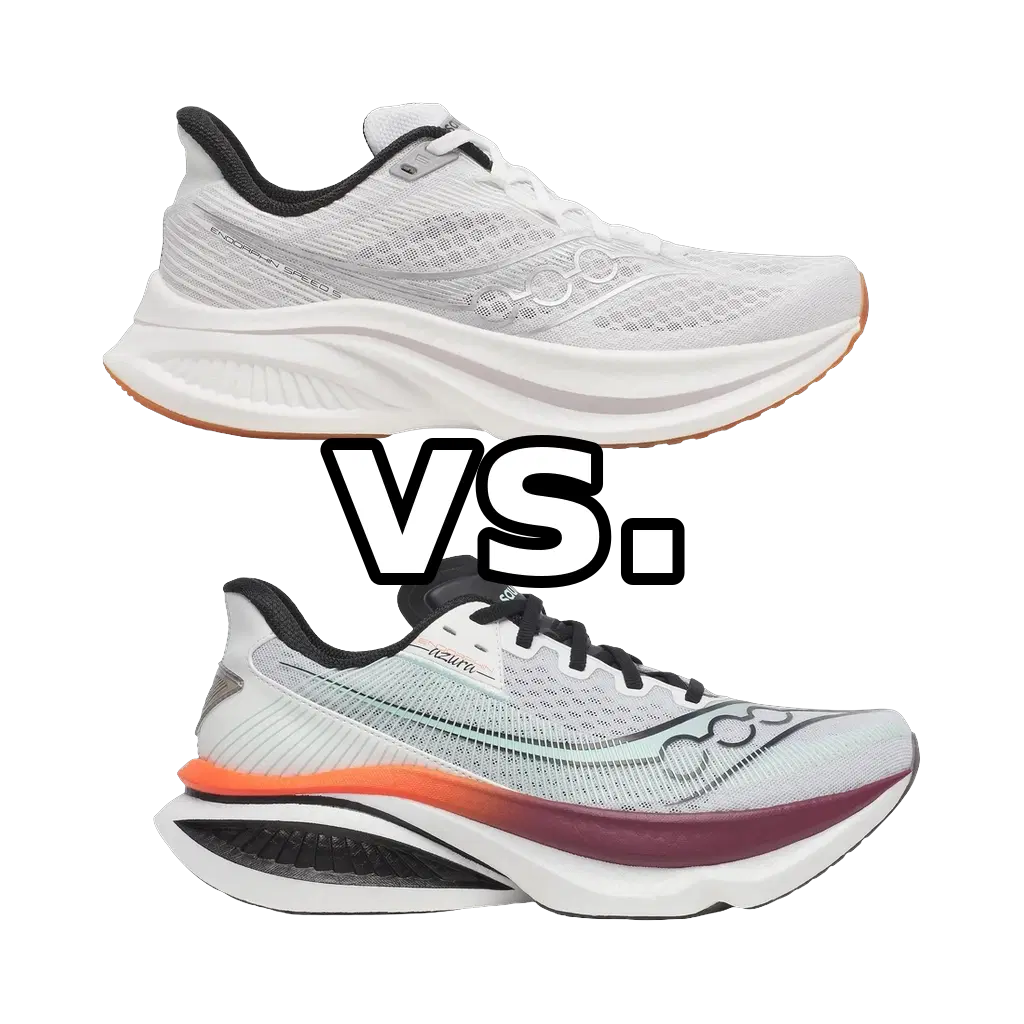
Verdict
These are two takes on the same great foam, so pick by role, not by which is "better." Go Speed 5 if you want propulsion and a shoe that can genuinely race — the nylon plate and lower, more connected stack reward faster paces. Go Azura if you want a taller, softer, plateless daily trainer that does a bit of everything and stays comfortable at easier efforts. Fast and snappy versus soft and versatile is the whole decision.
Pace
5 of 6
Cushioning
5 of 6
Responsiveness
5 of 6
Stability
3 of 6
Drop
8 mm
Support
Neutral
Plate
Composite
Distances
10KHalfMarathon
Pace
4 of 6
Cushioning
5 of 6
Responsiveness
5 of 6
Stability
3 of 6
Drop
8 mm
Support
Neutral
Plate
None
Distances
10KHalfMarathon
At a Glance
Saucony Endorphin Speed 5Saucony Endorphin Azura
Who Should Choose Each Shoe
Choose
Saucony Endorphin Speed 5
Choose the Endorphin Speed 5 if you want one shoe for tempo sessions, marathon-training miles, and race day without buying a separate carbon racer. It's the pick for runners who like a propulsive, plate-driven feel with genuine snap at the front end, and who spend meaningful time at faster paces where the plate and PEBA feel most connected. If you race 10Ks up to marathons and want the shoe to actively push the pace, this is the more aggressive of the two.
Choose
Saucony Endorphin Azura
Choose the Endorphin Azura if you want a single shoe to absorb most of your week — steady daily miles, long runs, and the occasional uptempo effort — with a softer, taller, more forgiving ride. It suits neutral runners who love the PWRRUN PB bounce but find a rigid plate too all-or-nothing, and who prioritize plush protection and smooth rolling transitions over front-end snap. If your running skews toward volume and versatility rather than sharpening for races, the plateless, higher-stack Azura is the more adaptable everyday companion.
Head-to-Head
The defining difference is the plate. The Speed 5 runs a full-length semi-rigid winged nylon plate that guides you onto the forefoot and adds real snap through toe-off, so at tempo and faster it feels like the shoe is doing some of the work for you. The Azura strips the plate out entirely and leans on the foam and rocker geometry alone — the result is a smoother, rolling transition rather than a propulsive one, springy but never forcing the pace. That change reshapes the geometry too: the Azura sits on a taller, softer stack (41mm heel / 33mm forefoot) versus the Speed 5's lower-profile 37mm / 27mm, so the Azura lands plusher and more cushioned while the Speed 5 feels more connected to the ground and quicker to respond. Both keep the same 8mm drop and the same 241g weight, and both are honestly neutral — neither offers pronation support, and both feel a touch tippy at true jogging speeds before coming alive with pace. Where they diverge in intent is speed range: the Speed 5 is tuned for the faster end (best around 3:45–4:15/km and comfortable through the tempo/marathon zone of roughly 4:00–4:45/km), effectively doubling as a race-day option, while the Azura is happiest as a do-most-things trainer in the 4:30–5:15/km band and holds together down to about 4:15/km, quick but relaxed rather than razor-sharp.
Similar Comparisons
Hoka Clifton 10 vs Saucony Endorphin Azura

Adidas Adizero Evo SL vs Saucony Endorphin Speed 5

Adidas Adizero Evo SL vs Saucony Endorphin Azura

Adidas Adizero Boston 13 vs Saucony Endorphin Speed 5
Saucony Endorphin Trainer vs Saucony Endorphin Azura
Nike Pegasus Plus vs Saucony Endorphin Speed 5
Saucony Endorphin Pro 4 vs Saucony Endorphin Azura
Asics Megablast vs Saucony Endorphin Speed 5
© 2026 longrunshoes.ai | All rights reserved.
Use of materials from this site is permitted only with proper attribution and a link to longrunshoes.ai.